

Industrial SLA 3D Printers: Features, Applications and Buying Guide
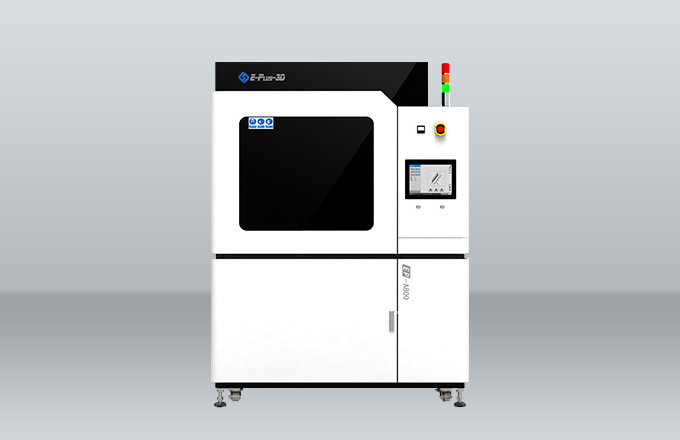
Industrial SLA 3D printers are used when manufacturers need high accuracy, smooth surface finish, fine details, and reliable resin-based part production. From engineering prototypes and dental models to master patterns, molds, product validation parts, and visual models, SLA printing is one of the most important technologies in industrial additive manufacturing.
Table of Contents
SLA stands for Stereolithography. It is a resin-based 3D printing process that uses light to cure liquid photopolymer resin layer by layer. In the industrial market, the term SLA is often used broadly for high-resolution resin 3D printing technologies, including SLA, DLP, LCD, and other vat photopolymerization systems.
For manufacturers, choosing the right industrial SLA 3D printer is not only about print resolution. Buyers must evaluate resin compatibility, build volume, accuracy, speed, post-processing, software, maintenance, operating cost, and application support.
This guide explains the key features, applications, materials, and buying factors to consider before investing in an industrial SLA or resin 3D printing system.
What Is an Industrial SLA 3D Printer?
An industrial SLA 3D printer is a professional resin 3D printing system designed for accurate and repeatable production of high-detail parts. It uses a light source to cure liquid resin into a solid object.
The basic workflow includes:
- Preparing the 3D model
- Slicing the file
- Filling or loading the resin system
- Printing the part layer by layer
- Washing the printed part
- Removing supports
- UV post-curing
- Finishing or inspection
Compared with basic desktop resin printers, industrial SLA 3D printers are designed for stronger workflow control, better repeatability, larger build capacity, validated material options, production software, and professional service support.
Why Manufacturers Choose SLA 3D Printing
Industrial users choose SLA 3D printing because it produces parts with excellent detail and smooth surfaces. This makes it suitable for applications where appearance, accuracy, and fine features are important.
SLA printing is especially useful when manufacturers need:
- High-resolution prototypes
- Smooth visual models
- Detailed dental models
- Accurate master patterns
- Clear or transparent parts
- Small functional parts
- Engineering validation models
- Short-run production components
- Mold and casting patterns
For many applications, SLA parts require less surface finishing than FDM parts because the printed surface is naturally smoother.
Key Features of Industrial SLA 3D Printers
1. High Accuracy and Fine Detail
One of the biggest advantages of SLA printing is its ability to produce fine details. Industrial SLA printers can create small features, thin walls, sharp edges, smooth curves, and detailed surface textures.
This makes SLA useful for:
- Dental models
- Engineering prototypes
- Product design models
- Miniature components
- Master patterns
- Medical models
- Display parts
- Functional validation parts
When accuracy matters, buyers should check not only the printer resolution but also real-world dimensional repeatability.
2. Smooth Surface Finish
SLA printing is known for smooth surface quality. This makes it suitable for applications where the part must look polished, professional, or close to a molded plastic component.
A smooth surface is important for:
- Product presentation models
- Consumer product prototypes
- Dental models
- Clear parts
- Fit-and-form testing
- Casting patterns
- Visual inspection models
Post-processing may still be required, but SLA generally produces a finer surface than many extrusion-based 3D printing processes.
3. Wide Resin Material Range
Industrial SLA 3D printers can support different resin materials depending on the machine and manufacturer ecosystem.
Common resin categories include:
- Standard prototyping resin
- Tough resin
- Durable resin
- High-temperature resin
- Flexible resin
- Elastic resin
- Clear resin
- Castable resin
- Dental model resin
- Surgical guide resin
- Biocompatible resin
- Ceramic-filled resin
- Engineering resin
Material selection should always be based on the final application. A resin that looks good may not have the required mechanical strength, heat resistance, flexibility, or biocompatibility.
4. Better Part Appearance
Industrial SLA 3D printers are commonly used for visual prototypes because they produce clean and attractive parts. The smooth surface can help teams present product designs, evaluate form, and communicate concepts clearly.
For consumer products, medical models, electronics housings, packaging prototypes, and industrial design samples, SLA can create parts that look closer to final molded products.
5. Suitable for Complex Geometries
SLA printers can produce complex shapes that are difficult to machine or fabricate manually. With proper support design and orientation, they can build intricate features, internal details, and thin structures.
However, support placement is important. Poor support strategy can create marks, distortion, or finishing challenges.
6. Fast Design Validation
SLA printing is useful when engineering or design teams need to test multiple versions quickly. Instead of waiting for tooling or outsourced prototypes, teams can print design iterations in-house.
This helps reduce product development time and improve decision-making during R&D.
7. Professional Software Workflow
Industrial SLA systems usually include software for part orientation, support generation, nesting, slicing, material settings, and print management.
Good software helps reduce print failures, improve consistency, and simplify operator training.
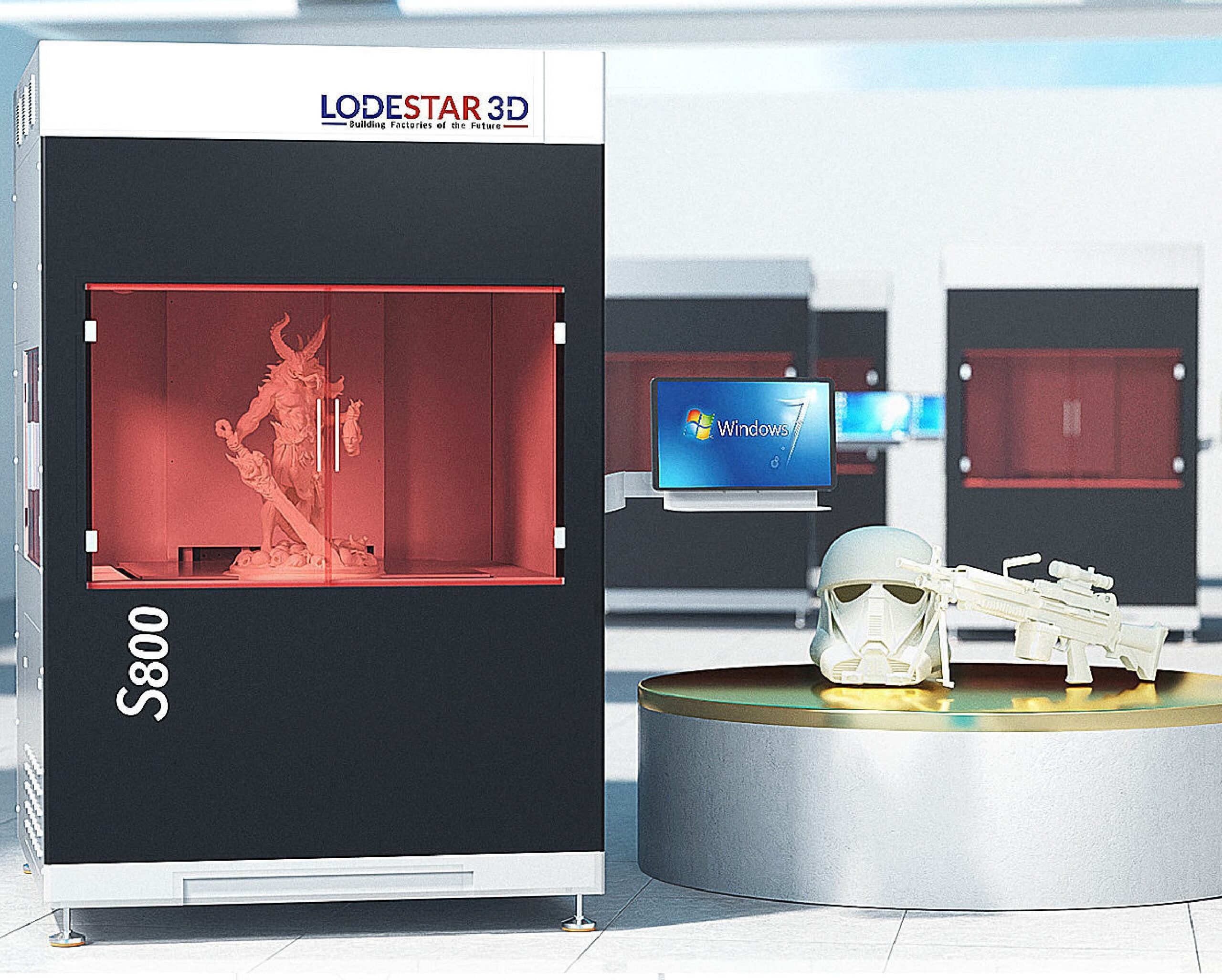
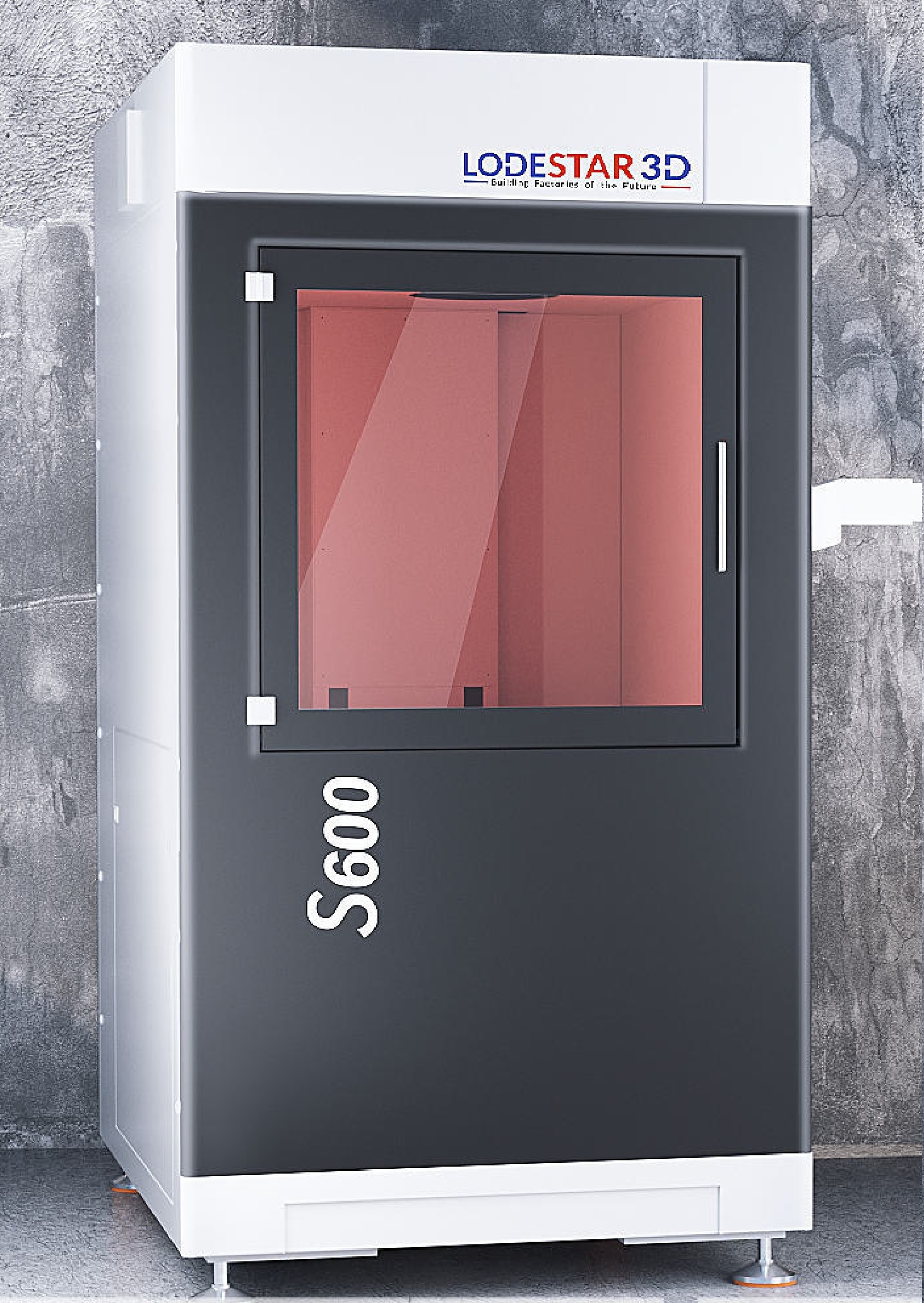
Applications of Industrial SLA 3D Printers
1. Product Design and Prototyping
SLA is widely used for product design because it provides high-detail visual models with smooth surface quality.
Applications include:
- Consumer product prototypes
- Electronics housings
- Industrial design models
- Packaging prototypes
- Medical device prototypes
- Appliance parts
- Concept models
- Investor or customer presentation models
SLA helps design teams review shape, ergonomics, surface quality, and assembly fit before investing in tooling.
2. Engineering Validation
Industrial SLA printers are useful for engineering teams that need accurate parts for fit checks, assembly trials, and functional evaluation.
Applications include:
- Fit testing
- Form validation
- Assembly models
- Fluid-flow prototypes
- Snap-fit trials
- Small functional components
- Transparent parts for visual inspection
For load-bearing parts, buyers must choose engineering resins carefully and validate mechanical performance.
3. Dental Applications
SLA and resin 3D printing are widely used in dental labs and clinics. Dental applications often require accuracy, repeatability, and validated materials.
Applications include:
- Dental models
- Surgical guides
- Splints
- Custom trays
- Denture bases
- Gingiva masks
- Temporary restorations
- Orthodontic models
Dental labs should confirm resin certification, post-curing workflow, washing requirements, and clinical application suitability before production.
4. Medical Models
SLA printers can be used to produce anatomical models, surgical planning models, training models, and device prototypes.
Medical applications require careful material selection. If the part will contact patients, instruments, or clinical environments, material certification and workflow validation are essential.
5. Jewelry and Casting Patterns
SLA printers can be used to produce castable resin patterns for jewelry, dental casting, and small precision casting applications.
Applications include:
- Jewelry prototypes
- Castable resin patterns
- Master patterns
- Wax-like resin models
- Custom ornaments
- Small casting components
For jewelry manufacturers requiring true wax patterns, MJP wax printers may be more suitable. SLA castable resin can be useful, but burnout behaviour must be validated carefully.
[Internal Link: Jewelry 3D Printers]
6. Mold Making and Tooling
Industrial SLA printers can produce master patterns, mold inserts, silicone molding masters, and tooling aids.
Applications include:
- Silicone mold masters
- Vacuum casting masters
- Investment casting patterns
- Jigs and fixtures
- Inspection aids
- Short-run tooling components
High-temperature resins may be required for tooling applications exposed to heat or pressure.
7. Transparent and Clear Parts
SLA is often selected for clear or semi-transparent parts because certain resins can produce optical clarity after polishing and post-processing.
Applications include:
- Fluid-flow models
- Lighting prototypes
- Medical models
- Transparent housings
- Lenses for early design validation
- Visual inspection components
Clear parts usually require additional polishing or coating to improve transparency.
Industrial SLA vs Other 3D Printing Technologies
Technology | Best For | Key Advantage | Limitation |
SLA / Resin | High-detail parts, smooth prototypes, dental models | Excellent detail and surface finish | Resin properties vary by application |
FDM | Large low-cost prototypes, fixtures | Affordable and material-flexible | Visible layer lines and lower detail |
SLS | Functional polymer parts | Strong parts without supports | Rough powdery surface |
MJF | Production polymer parts | Good strength and batch production | Powder-bed texture |
Metal 3D Printing | Metal functional parts | High-performance metal components | Higher cost and post-processing |
MJP Wax | Jewelry wax patterns | True wax pattern workflow | Mostly application-specific |
SLA is the right choice when fine detail and surface finish matter more than large-part strength or high-volume polymer production.
How to Choose the Right Industrial SLA 3D Printer
1. Define the Application
Start with the part requirement. Do not choose a printer only based on resolution or price.
Ask:
- What parts will be printed?
- Are they prototypes, dental parts, molds, patterns, or end-use components?
- What material properties are required?
- How accurate must the part be?
- What surface finish is needed?
- How many parts are required per week or month?
The best SLA printer is the one that fits the actual production requirement.
2. Check Build Volume
Build volume determines the maximum part size and batch capacity. A larger build area can help print more parts in one job, but it may also require more resin handling and longer post-processing.
Evaluate:
- Maximum part size
- Number of parts per build
- Build height
- Resin vat capacity
- Batch nesting efficiency
- Part removal process
For dental labs and service bureaus, nesting efficiency is often more important than maximum build size.
3. Evaluate Resin Compatibility
Resin compatibility is one of the most important buying factors.
Check whether the printer supports:
- Standard resin
- Engineering resin
- Dental resin
- Biocompatible resin
- Flexible resin
- High-temperature resin
- Castable resin
- Transparent resin
- Ceramic-filled resin
Also confirm whether the machine uses an open material system or a validated proprietary resin ecosystem.
4. Review Accuracy and Repeatability
Resolution numbers alone do not guarantee accurate parts. Real-world accuracy depends on machine calibration, material behaviour, shrinkage, support strategy, curing, and post-processing.
Before buying, request sample prints using your own files and inspect:
- Dimensional accuracy
- Surface quality
- Edge definition
- Fit with mating parts
- Repeatability across multiple builds
- Support mark quality
5. Understand Post-Processing Requirements
SLA parts require post-processing after printing.
A typical workflow includes:
- Part removal
- Washing
- Drying
- Support removal
- UV post-curing
- Sanding or polishing
- Final inspection
For dental and medical applications, washing and post-curing must follow validated material instructions.
6. Calculate Total Cost of Ownership
The machine price is only one part of the investment.
Total cost includes:
- Printer cost
- Resin cost
- Resin tank or vat replacement
- Build platform maintenance
- Washing system
- Curing unit
- Consumables
- Gloves and cleaning supplies
- Software
- Operator time
- Maintenance
- Failed print cost
- Service support
Manufacturers should calculate cost per part using real build data, not only brochure specifications.
7. Evaluate Speed and Throughput
Print speed should be evaluated as part of the full workflow.
Consider:
- Build preparation time
- Print time
- Washing time
- Drying time
- Curing time
- Support removal time
- Final finishing time
- Inspection time
A fast printer may still have low throughput if post-processing is slow.
8. Check Service and Support
Industrial users need reliable service, application support, training, and spare parts availability.
Before buying, ask:
- Who will install the printer?
- Is operator training included?
- Are resins and consumables locally available?
- What is the service response time?
- Is application support available?
- Are spare parts stocked?
- Is preventive maintenance provided?
Service support is especially important for production users.
Buying Checklist for Industrial SLA 3D Printers
Before selecting an SLA 3D printer, confirm:
- Target applications are clearly defined
- Required materials are supported
- Build volume matches part size and batch needs
- Accuracy is validated with sample parts
- Surface finish meets application requirements
- Washing and curing workflow is planned
- Consumable cost is understood
- Resin handling and safety are planned
- Software workflow is easy to use
- Operators can be trained
- Service support is available
- ROI is based on real production demand
Conclusion
Industrial SLA 3D printers are a strong choice for manufacturers that need high-resolution resin parts, smooth surfaces, accurate prototypes, dental models, casting patterns, and detailed engineering components.
The right SLA printer should be selected based on application, material compatibility, build volume, accuracy, post-processing workflow, throughput, service support, and long-term cost of ownership.
For companies looking to improve product development, reduce outsourcing, produce accurate dental or engineering models, and create high-quality resin parts, industrial SLA printing can be a valuable additive manufacturing solution.
Lodestar 3D helps manufacturers, dental labs, R&D teams, and engineering companies evaluate industrial SLA and resin 3D printing systems based on real application needs, material requirements, workflow planning, and production goals.
FAQ's
What is an industrial SLA 3D printer?
An industrial SLA 3D printer is a professional resin 3D printing system that uses light to cure liquid photopolymer resin layer by layer, producing high-detail parts with smooth surfaces.
What is SLA 3D printing best used for?
SLA is best used for high-detail prototypes, dental models, medical models, casting patterns, visual models, engineering validation parts, and smooth surface components.
Is SLA better than FDM?
SLA is better for fine detail and surface finish. FDM is better for lower-cost large prototypes, fixtures, and parts requiring thermoplastic materials.
Can SLA printers make functional parts?
Yes, SLA printers can produce functional parts when the correct engineering resin is selected and the part is properly post-cured and validated.
Do SLA parts need post-processing?
Yes. SLA parts usually require washing, support removal, UV curing, and sometimes sanding, polishing, or coating.
How do I choose an industrial SLA printer?
Choose based on application, resin compatibility, build volume, accuracy, surface finish, post-processing needs, software workflow, service support, and total cost of ownership.