

Metal 3D Printing Materials Guide: Titanium, Stainless Steel, Inconel & Tool Steel Powders
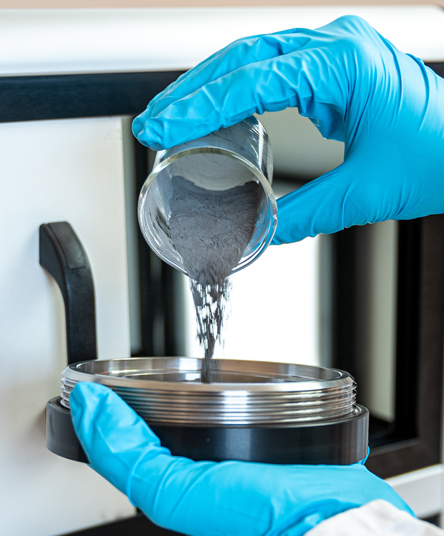
Material selection is one of the most important decisions in metal additive manufacturing. A high-end metal 3D printer can only deliver good results when the selected powder, machine parameters, post-processing route, and final application are properly matched.
Table of Contents
Different metal 3D printing materials offer different strengths. Titanium is valued for lightweight strength and biocompatibility. Stainless steel is widely used for corrosion-resistant industrial parts. Inconel is selected for high-temperature and demanding environments. Tool steels are used where hardness, wear resistance, and tooling performance are required.
For manufacturers, aerospace suppliers, medical companies, dental labs, tooling teams, R&D centres, and engineering businesses, the right metal powder can improve part performance, reduce material waste, support complex designs, and enable reliable production.
This guide explains the major metal 3D printing powders, their benefits, applications, and selection factors.
What Are Metal 3D Printing Powders?
Metal 3D printing powders are specially processed metal materials used in additive manufacturing technologies such as DMLS, SLM, laser powder bed fusion, electron beam melting, and selected directed energy deposition processes.
In powder bed fusion, a thin layer of metal powder is spread across the build platform. A laser or electron beam selectively melts the powder according to the digital model. This process repeats layer by layer until the final metal component is formed.
For successful printing, powder quality is critical. The powder must have suitable particle size distribution, flowability, purity, shape, and consistency. Poor powder quality can affect density, surface finish, strength, repeatability, and final part quality.
When selecting metal powder, manufacturers should evaluate:
- Application requirement
- Mechanical strength
- Heat resistance
- Corrosion resistance
- Fatigue performance
- Weight requirement
- Surface finish target
- Machine compatibility
- Post-processing needs
- Certification and traceability
1. Titanium Powders
Titanium is one of the most important materials in metal additive manufacturing. Titanium alloys, especially Ti-6Al-4V, are widely used where high strength, low weight, corrosion resistance, and biocompatibility are required.
Benefits of titanium 3D printing powder
Titanium offers an excellent strength-to-weight ratio. This makes it suitable for high-performance parts where reducing weight is important without sacrificing strength.
Key benefits include:
- Lightweight structure
- High strength-to-weight ratio
- Good corrosion resistance
- Biocompatibility
- Suitable for complex geometries
- Strong performance in demanding applications
- Useful for high-value parts
Applications of titanium powder
Titanium metal 3D printing is commonly used in:
- Aerospace brackets
- Aircraft structural components
- Medical implants
- Orthopedic components
- Dental-medical applications
- Lightweight defence parts
- Motorsport components
- Research and development samples
Titanium is especially suitable for aerospace and medical applications because it combines strength, weight reduction, and biological compatibility.
Things to consider
Titanium powder requires careful handling, controlled atmosphere, and strict process control. Printed titanium parts may require stress relief, heat treatment, support removal, machining, surface finishing, and inspection before final use.
2. Stainless Steel Powders
Stainless steel is one of the most widely used metal 3D printing materials because of its balance of strength, corrosion resistance, availability, and industrial usability.
Common grades include stainless steel 316L, 17-4PH, and 15-5PH, depending on the application and printer compatibility.
Benefits of stainless steel 3D printing powder
Stainless steel powders are useful for functional prototypes, industrial parts, tooling, fixtures, and end-use components.
Key benefits include:
- Good corrosion resistance
- Strong mechanical performance
- Wide industrial acceptance
- Suitable for functional parts
- Good machinability after printing
- Useful for prototypes and production parts
- Cost-effective compared with many high-performance alloys
Applications of stainless steel powder
Stainless steel is commonly used for:
- Industrial components
- Jigs and fixtures
- Medical instruments
- Food and laboratory equipment
- Fluid-contact parts
- Engineering prototypes
- Pump and valve components
- Automotive parts
- Tooling and brackets
Stainless steel 316L is often selected for corrosion-resistant parts, while precipitation-hardening stainless steels may be used where higher strength is required.
Things to consider
Stainless steel printed parts may still need heat treatment, machining, polishing, electropolishing, or passivation depending on the final application. Surface finish and corrosion performance should be validated before using the part in demanding environments.

3. Inconel and Nickel Alloy Powders
Inconel is a family of nickel-based superalloys used for high-temperature, high-stress, and corrosive environments. In metal 3D printing, Inconel 718 and Inconel 625 are commonly used materials.
These materials are selected when standard steels or aluminium alloys cannot withstand the operating conditions.
Benefits of Inconel 3D printing powder
Inconel powders provide excellent performance in heat, pressure, oxidation, and corrosive environments.
Key benefits include:
- High-temperature strength
- Oxidation resistance
- Corrosion resistance
- Good fatigue performance
- Suitable for demanding environments
- Useful for complex internal channels
- Strong performance in aerospace and energy applications
Applications of Inconel powder
Inconel metal 3D printing is used for:
- Aerospace engine components
- Turbine-related parts
- Heat exchangers
- Exhaust components
- Combustion-related parts
- Oil and gas components
- Energy-sector parts
- High-temperature tooling
- Fluid-flow components
Inconel is especially useful when the component must perform under extreme temperature or corrosive conditions.
Things to consider
Nickel alloys are more expensive than many standard metals and can require careful process optimization. Printed parts may need heat treatment, machining, surface finishing, and non-destructive testing for critical applications.
4. Tool Steel Powders
Tool steels are used where hardness, wear resistance, toughness, and thermal performance are required. In metal additive manufacturing, tool steel powders are commonly used for molds, dies, forming tools, cutting tools, and tooling inserts.
Common tool steel materials include H13, maraging steel, and other application-specific grades.
Benefits of tool steel 3D printing powder
Tool steel powders are valuable for production tooling because additive manufacturing can create complex cooling channels and optimized tool geometries.
Key benefits include:
- High hardness
- Good wear resistance
- Strong tooling performance
- Heat resistance
- Suitable for conformal cooling
- Useful for molds and dies
- Supports complex internal features
Applications of tool steel powder
Tool steel 3D printing is used for:
- Injection mold inserts
- Die casting inserts
- Forming tools
- Stamping tools
- Cutting tools
- Jigs and fixtures
- Hot-work tooling
- Conformal cooling tools
- Prototype tooling
One of the strongest use cases is conformal cooling in mold inserts. Instead of straight drilled cooling channels, metal 3D printing allows cooling channels to follow the shape of the part. This can improve thermal control and reduce cycle time in some molding applications.
Things to consider
Tool steel parts often require heat treatment to achieve final hardness and mechanical performance. Machining, polishing, coating, or surface finishing may also be needed depending on the tool application.
How to Choose the Right Metal 3D Printing Material
There is no single best metal 3D printing material. The correct choice depends on the part requirement.
Choose titanium when:
- Weight reduction is important
- Strength-to-weight ratio matters
- Biocompatibility is required
- The part is used in aerospace or medical applications
- Corrosion resistance is important
Choose stainless steel when:
- Corrosion resistance is required
- The part is for general industrial use
- Cost control is important
- Functional prototypes or production parts are needed
- Machining and finishing are part of the workflow
Choose Inconel when:
- The part operates at high temperature
- Oxidation resistance is required
- The component is used in aerospace, energy, or oil and gas
- Standard alloys cannot handle the service environment
Choose tool steel when:
- The part is a mold, die, or tooling insert
- Wear resistance is important
- Hardness is required
- Conformal cooling can improve tool performance
- The part will be used in production tooling
Post-Processing for Metal 3D Printed Materials
Most metal 3D printed parts require post-processing before final use.
Common post-processing steps include:
- Powder removal
- Support removal
- Stress relief
- Heat treatment
- Hot isostatic pressing
- CNC machining
- Shot blasting
- Surface finishing
- Electropolishing
- Coating
- Dimensional inspection
- Mechanical testing
The post-processing route depends on the material and application. For example, titanium medical parts may need surface finishing and biocompatibility validation. Tool steel inserts may need heat treatment and polishing. Inconel aerospace components may need heat treatment and non-destructive testing.
[Internal Link: Post-Processing Solutions]
Material Selection Checklist
Before finalizing a metal powder, manufacturers should check:
- Is the material compatible with the machine?
- Does it meet the strength requirement?
- Does it need corrosion or heat resistance?
- Is fatigue performance important?
- What post-processing is required?
- Is powder supply reliable?
- Are certificates and traceability available?
- Does the part require inspection or qualification?
- What is the total cost per part?
- Can the material be machined and finished properly?
A material should be selected only after reviewing the complete manufacturing workflow.
Conclusion
Selecting the right metal 3D printing materials is essential for successful additive manufacturing. Titanium, stainless steel, Inconel, and tool steel powders each serve different industrial needs.
Titanium is best for lightweight, high-strength, and biocompatible applications. Stainless steel is a practical choice for corrosion-resistant industrial parts. Inconel is ideal for high-temperature and harsh environments. Tool steel is preferred for molds, dies, and wear-resistant tooling.
The right material should be selected based on application, mechanical performance, machine compatibility, post-processing, inspection, and total cost of ownership.
Lodestar 3D helps manufacturers evaluate metal 3D printing materials, machine selection, post-processing workflows, and application suitability for industrial additive manufacturing.
FAQ's
What are the most common metal 3D printing materials?
Common metal 3D printing materials include titanium alloys, stainless steels, nickel alloys such as Inconel, tool steels, aluminium alloys, cobalt-chrome, and copper alloys.
Which metal powder is best for aerospace parts?
Titanium and Inconel are commonly used for aerospace parts. Titanium is selected for lightweight strength, while Inconel is selected for high-temperature performance.
Which stainless steel is used in metal 3D printing?
Stainless steel 316L is widely used for corrosion-resistant components. Other stainless steels such as 17-4PH and 15-5PH may be used where higher strength is required.
Is titanium suitable for medical 3D printing?
Yes. Titanium alloys are commonly used in medical and orthopedic applications because of their biocompatibility, corrosion resistance, and strength-to-weight ratio.
Which material is best for tooling?
Tool steel powders such as H13 and maraging steel are commonly used for molds, dies, inserts, and production tooling.
Do metal 3D printed parts require heat treatment?
Most metal 3D printed parts require heat treatment, stress relief, machining, or surface finishing depending on material, application, and performance requirements.