

Dental Metal 3D Printing Guide: Choosing the Right DMLS Printer for Your Dental Lab
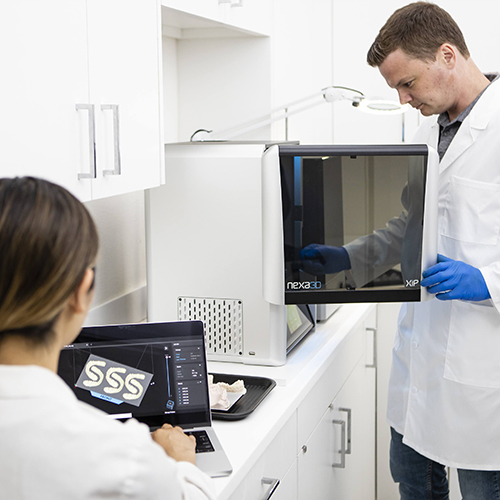
Dental laboratories are moving rapidly toward digital production. Intraoral scanning, CAD design, milling, resin printing, and metal additive manufacturing are changing how crowns, bridges, frameworks, and dental components are produced.
Table of Contents
For labs handling metal restorations, dental metal 3D printing offers a faster and more repeatable alternative to traditional casting for selected applications. A DMLS printer can help dental labs produce accurate cobalt-chrome frameworks, crowns, bridges, removable partial denture structures, implant-supported components, and other metal dental parts from digital designs.
However, choosing the right DMLS printer for a dental lab is not only about machine price or build volume. Labs must evaluate material compatibility, accuracy, surface finish, post-processing, software workflow, powder handling, quality control, and service support.
This guide explains what dental labs should know before investing in a DMLS metal 3D printer.
What Is Dental Metal 3D Printing?
Dental metal 3D printing is an additive manufacturing process used to create metal dental components layer by layer from a digital file.
In a typical DMLS workflow, a thin layer of metal powder is spread across the build platform. A laser selectively melts the powder according to the digital design. The process repeats layer by layer until the final dental parts are produced.
After printing, the parts usually require powder removal, support removal, heat treatment, surface finishing, machining, polishing, and inspection before use.
In dental labs, this process is commonly used for cobalt-chrome restorations and frameworks, although material selection depends on printer compatibility, regulatory requirements, and the intended application.
What Is a DMLS Printer?
DMLS stands for Direct Metal Laser Sintering. In dental industry language, the term is often used for laser-based metal powder bed fusion systems that build parts from metal powder.
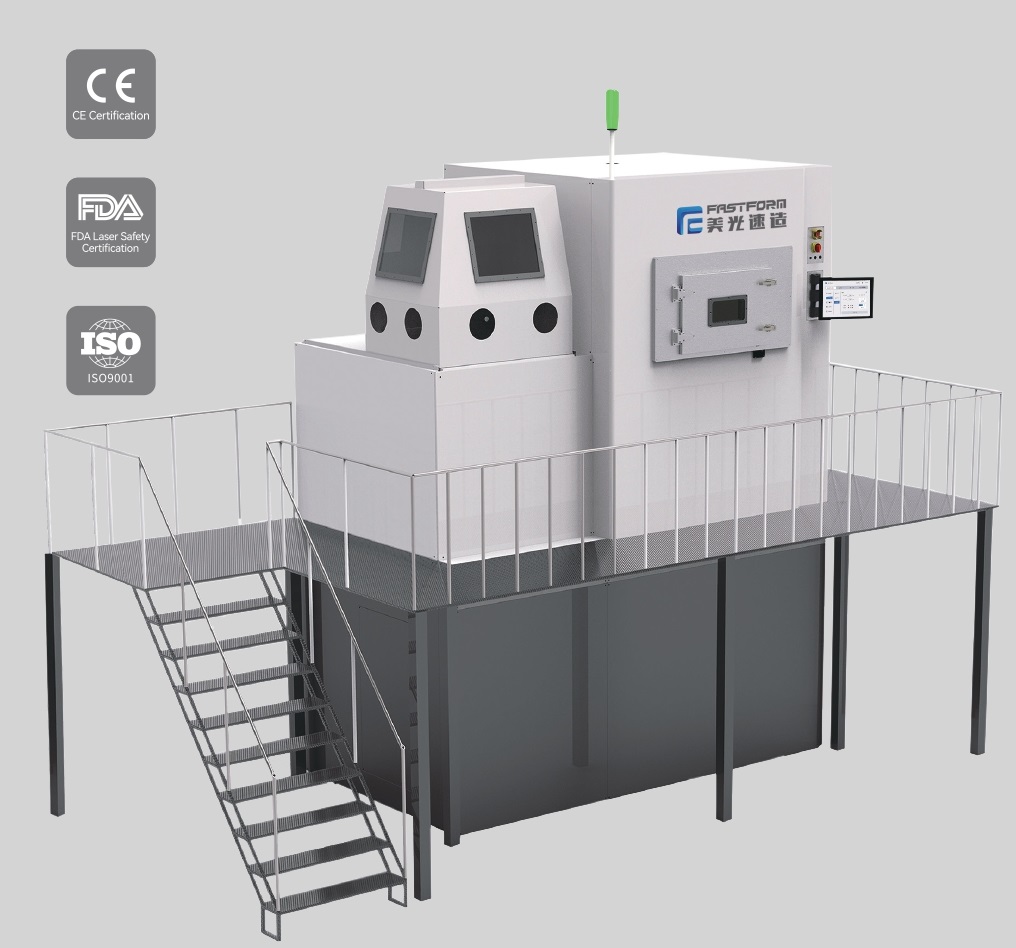
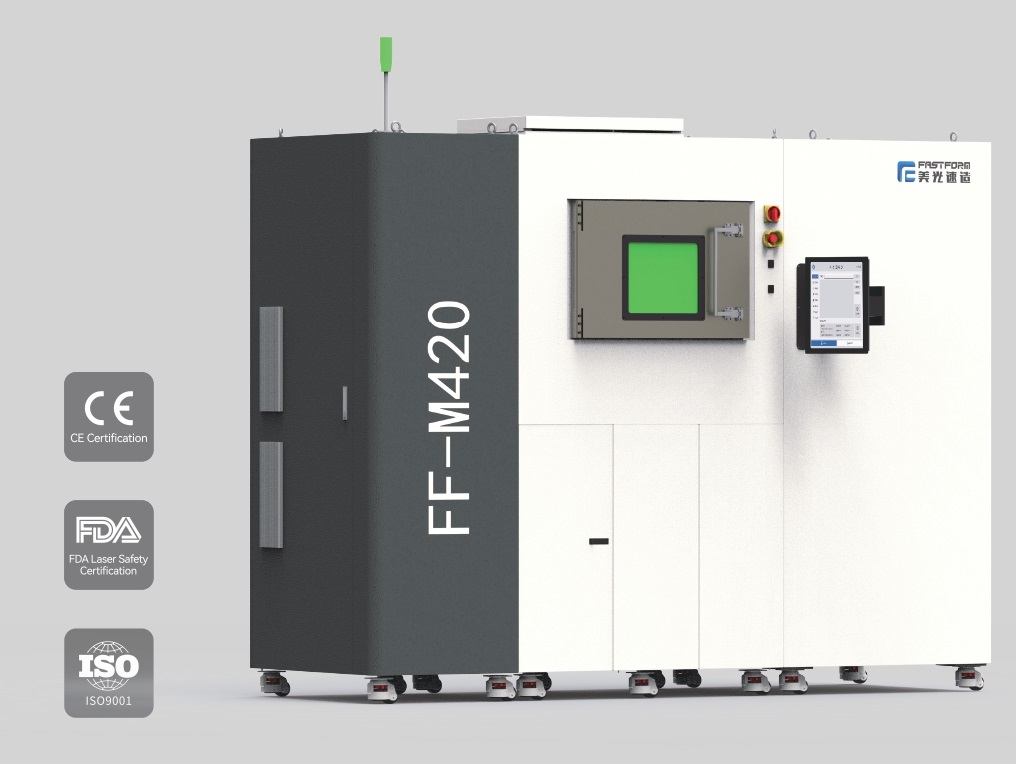
A DMLS printer is suitable for dental labs because it can produce many small, complex metal parts in one build. Instead of casting each framework separately, labs can nest multiple crowns, bridges, copings, or partial frameworks in a single production cycle.
This makes DMLS useful for labs that need digital repeatability, batch production, and faster turnaround for metal restorations.
Why Dental Labs Use DMLS Metal Printing
Dental labs use DMLS because it solves several practical production challenges.
Faster digital workflow
Traditional casting requires wax-up, investing, burnout, casting, divesting, and finishing. DMLS allows labs to move directly from CAD design to metal printing, reducing several manual steps.
Better repeatability
Once a digital design and print workflow are validated, the same process can be repeated more consistently than manual casting.
Batch production
A DMLS printer can produce multiple dental parts in one build. This is useful for labs with regular daily production.
Complex frameworks
Dental parts often have thin features, curved surfaces, connectors, clasp areas, and framework geometries that require accuracy. DMLS supports complex shapes directly from CAD files.
Reduced dependency on casting
Casting is still valuable, but DMLS can reduce dependency on manual casting for selected metal dental applications.
Common Dental Applications of DMLS
1. Crowns and bridges
DMLS can be used to produce metal substructures for crowns and bridges, especially cobalt-chrome frameworks. These parts can later be finished, veneered, or processed according to the lab workflow.
2. Removable partial denture frameworks
RPD frameworks have complex shapes, clasps, rests, major connectors, and thin sections. DMLS can produce these structures from digital designs with good repeatability.
3. Copings and frameworks
Dental labs can use DMLS to produce copings and bridge frameworks with consistent thickness and digital design control.
4. Implant-supported components
Selected implant-related dental components may be produced using metal 3D printing where material, fit, and regulatory requirements are properly validated.
5. Orthodontic and appliance components
Some metal dental appliance components may be suitable for additive manufacturing depending on design and material requirements.
Materials Used in Dental Metal 3D Printing
Cobalt-chrome
Cobalt-chrome is one of the most common materials in dental metal 3D printing. It offers strength, hardness, corrosion resistance, and suitability for many dental framework applications.
It is widely used for crowns, bridges, partial denture frameworks, and other dental metal components.
Titanium
Titanium is valued for biocompatibility, corrosion resistance, and strength-to-weight ratio. It may be used in selected implant-related or dental-medical applications where supported by the machine and validated workflow.
Stainless steel and other alloys
Some labs or R&D teams may evaluate stainless steel or other alloys for non-standard dental applications, but routine dental use depends on intended application, material certification, and regulatory suitability.
Dental labs should never select a material only because it can be printed. The material must be suitable for the final dental application, supported by the printer, and processed according to validated instructions.
Choosing the Right DMLS Printer for Your Dental Lab
1. Match the printer to your daily workload
Before buying a dental metal 3D printer, estimate your production volume.
Ask:
- How many metal crowns do we produce per day?
- How many bridges per week?
- Do we produce RPD frameworks regularly?
- How many parts can be nested per build?
- Do we need one build per day or multiple builds per week?
- Will the printer be used only for dental parts or also for R&D?
A small lab may need a compact DMLS system. A production dental lab may need a larger build volume, faster turnaround, and stronger powder-handling workflow.
2. Check build volume and nesting efficiency
Build volume is important, but nesting efficiency is more important for dental labs.
Dental parts are usually small, so the key question is how many parts can be printed reliably in one build.
Evaluate:
- Number of crowns per build
- Number of bridges per build
- RPD framework layout capacity
- Build height requirement
- Support strategy
- Powder removal access
- Build time per batch
A well-optimized dental printer should allow efficient layout of multiple parts without compromising quality.
3. Evaluate accuracy and fit
Dental parts must fit accurately. Poor fit can lead to chairside adjustment, remake cost, customer dissatisfaction, and delayed delivery.
When evaluating a DMLS printer, check:
- Crown margin accuracy
- Bridge fit
- Framework seating
- Connector consistency
- Clasp precision
- Repeatability across builds
- Dimensional stability after heat treatment
Always request sample prints using your own dental CAD files before buying.
4. Confirm material compatibility
A printer must support the dental materials your lab actually uses.
Check:
- Cobalt-chrome powder compatibility
- Titanium compatibility, if needed
- Material certification
- Powder supplier reliability
- Powder recycling rules
- Powder storage requirements
- Batch traceability
- Safety documentation
For dental production, material traceability is important because the final part may be used in patient-specific restorative workflows.
5. Review software workflow
A dental lab DMLS workflow must connect smoothly with CAD/CAM systems.
Check whether the printer workflow supports:
- Dental CAD file import
- STL handling
- Build preparation
- Part orientation
- Support generation
- Nesting
- Build reports
- Material tracking
- Print parameter control
- Quality documentation
Software should reduce operator complexity, not create a new bottleneck.
6. Understand post-processing requirements
A DMLS printer does not produce a finished dental restoration directly. Post-processing is essential.
A typical workflow may include:
- Powder removal
- Support removal
- Stress relief or heat treatment
- Sandblasting
- Surface finishing
- Polishing
- Machining of critical interfaces
- Cleaning
- Inspection
- Final finishing for lab workflow
Before purchasing a printer, confirm whether your lab has the equipment, space, and trained staff for these steps.
[Internal Link: DLyte Surface Finishing Solutions]
7. Plan powder handling and safety
Metal powder must be handled carefully. Dental labs need proper procedures for storage, loading, recovery, sieving, cleaning, and disposal.
Important requirements may include:
- Powder-safe work area
- PPE for operators
- Dust control
- Vacuum or extraction systems
- Material storage containers
- Fire safety planning
- Cleaning procedures
- Operator training
A reliable supplier should guide your team on powder safety before installation.
8. Evaluate service and uptime
For a dental lab, machine downtime can delay customer cases. Service support is a major buying factor.
Before buying, ask:
- Who installs the machine?
- Is operator training included?
- Are spare parts available?
- What is the service response time?
- Is preventive maintenance offered?
- Are software updates supported?
- Is application support available for dental workflows?
A low-cost machine without reliable service can become expensive if it stops production.
DMLS vs Casting for Dental Labs
Factor | DMLS Metal Printing | Traditional Casting |
Workflow | Digital CAD-to-metal production | Wax-up, investing, burnout, casting |
Repeatability | High with validated parameters | Depends on manual process control |
Batch Production | Strong for multiple parts per build | Labor-intensive for many units |
Complex Geometry | Good for frameworks and detailed designs | Possible but skill-dependent |
Material Waste | Powder can be managed and reused where permitted | Casting workflow waste varies |
Labor Requirement | More digital and machine-based | More manual process-based |
Fit Consistency | Strong when workflow is validated | Depends on casting control |
Casting remains useful, but DMLS gives dental labs a stronger digital production route for selected metal restorations.
ROI for Dental Labs
A DMLS printer can support ROI when it improves production speed, reduces outsourcing, increases case capacity, and reduces manual casting dependency.
Calculate ROI using:
- Monthly metal restoration volume
- Current outsourcing cost
- Manual casting labor cost
- Rework and remake rate
- Powder and consumable cost
- Build utilization
- Machine maintenance cost
- Post-processing labor
- Delivery turnaround improvement
- Ability to take more cases
For labs with regular metal framework demand, in-house DMLS production can improve control over cost, time, and quality.
Common Mistakes to Avoid
Buying only on machine price
The total cost includes powder, gas, post-processing, maintenance, software, training, and facility preparation.
Ignoring post-processing
DMLS parts require finishing before use. Post-processing must be planned before machine purchase.
Not testing real cases
Always print and evaluate your own crowns, bridges, and frameworks before finalizing the printer.
Skipping validation
Dental parts need controlled workflows, material traceability, and quality checks. Do not treat a dental metal printer like a simple prototype machine.
Conclusion
Dental metal 3D printing helps dental labs move toward faster, more repeatable, and digitally controlled metal restoration production. A DMLS printer can support crowns, bridges, copings, removable partial denture frameworks, and selected implant-related components when the material and workflow are properly validated.
The right printer should be selected based on workload, build volume, accuracy, cobalt-chrome compatibility, software workflow, powder handling, post-processing, service support, and total cost of ownership.
For dental labs planning to reduce outsourcing, improve turnaround time, and strengthen digital production, DMLS metal printing can be a strong investment.
Lodestar 3D helps dental labs evaluate the right DMLS printer, material workflow, post-processing solution, and long-term production setup based on real case volume and application requirements.
FAQ's
What is dental metal 3D printing?
Dental metal 3D printing is the production of metal dental components layer by layer from digital CAD files using technologies such as DMLS or laser powder bed fusion.
What dental parts can be made with DMLS?
DMLS can be used for crowns, bridges, copings, removable partial denture frameworks, implant-supported components, and selected dental appliance parts.
Which material is most common for dental DMLS printing?
Cobalt-chrome is commonly used for dental DMLS applications because of its strength, corrosion resistance, and suitability for dental frameworks.
Is DMLS better than casting for dental labs?
DMLS can offer better digital repeatability and batch efficiency for selected dental parts, while casting remains useful for established manual workflows.
Do DMLS dental parts need polishing?
Yes. DMLS dental parts usually require support removal, heat treatment, surface finishing, polishing, cleaning, and inspection before final use.
What should a dental lab check before buying a DMLS printer?
Check production volume, material compatibility, accuracy, nesting capacity, software workflow, powder safety, post-processing requirements, service support, and ROI.