
Call Us 24/7
+91 9900003300Send Us Mail
support@lodestar3d.com
Call Us 24/7
+91 9900003300Send Us Mail
support@lodestar3d.comUses continuously supplied welding wire rather than a powder bed.
Automated motion deposits molten metal layer by layer using an arc heat source.
Builds material close to final geometry before inspection and machining.
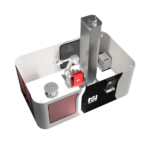
Our specialists can help you understand which WAAM configuration aligns with your technical and production needs.
Button: Schedule a Technical Consultation.
Near-net-shape structural parts, frames, rings, brackets, tooling and large-component development.
Large structures, mission-specific components, low-volume production and alloy development.
Propellers, marine structures, replacement parts and repair-oriented workflows.
Pressure-containing geometries, process equipment, cladding and hard-to-source parts.
Turbine-related parts, energy equipment, large structures and component restoration.
Large tools, dies, mould bases, fixtures and near-net-shape tooling for finish machining.
Restore material on high-value parts or modify existing components where qualified.
Study alloys, thermal behaviour, robotics, sensors, digital twins and process control.
| Benefit | Description |
|---|---|
| High Deposition Productivity | Wire-and-arc deposition can build larger volumes efficiently compared with processes designed primarily for fine, small parts. |
| Reduced Material Waste | Near-net-shape deposition minimizes material removal, reducing waste compared with machining components entirely from billet. |
| Accessible Wire Feedstock | Industrial welding wires are widely available across many alloy families and are easier to store and handle than fine metal powders. |
| Large-Part Capability | Robot arms, positioners, sliders, and gantry systems can be configured to manufacture parts far larger than conventional 3D printer build volumes. |
| Repair & Modification | Material can be deposited on selected regions for qualified repair, design modifications, refurbishment, or remanufacturing of existing components. |
| Flexible Automation | Robots, multi-axis positioners, sensors, process monitoring, and software can be integrated to create customized automated manufacturing workflows. |
| System | Best Suited For | Published / Representative Capability | Key Strength |
|---|---|---|---|
| Lab System | Universities, research centres, training facilities, and industrial R&D environments. |
Footprint: 2 × 1 × 2.2 m. Maximum component size: approximately Ø0.5 × 0.5 m. 6 robot axes with 2 optional positioner axes. One station with 250 kg positioner payload. |
Flexible process development, materials research, prototyping, and education. |
| Compact System | Innovation centres, prototyping teams, and manufacturers moving into repeatable WAAM production. |
Supports parts up to approximately Ø0.7 × 0.7 m or 1 × 0.5 × 0.7 m. One- or two-station layouts. Positioner payloads up to 1,000 kg depending on configuration. |
Plug-and-play manufacturing cell with integrated safety, robotics, and process monitoring. |
| Special System | Heavy engineering, aerospace, maritime, defence, energy, and customized large-part manufacturing. | Custom configurations with skyhook, drop-centre and rotary positioners, sliders, Z-axes, gantries, and multi-station layouts. | Custom-engineered solution for large components, heavy payloads, and factory-specific production workflows. |
| Material Family | Potential Uses | Planning Considerations |
|---|---|---|
| Carbon & Low-Alloy Steels | Structural components, tooling, heavy engineering, fabrication, and repair applications. | Heat input, distortion control, interpass temperature management, and machining allowance. |
| Stainless Steels | Process equipment, corrosion-resistant components, energy systems, and maritime applications. | Shielding gas selection, oxidation control, thermal cycling, and corrosion performance. |
| Aluminium Alloys | Aerospace, automotive, marine, lightweight structures, and transportation components. | Heat management, porosity prevention, oxide control, and process qualification. |
| Nickel-Based Alloys | Energy, aerospace, high-temperature equipment, and repair of critical components. | Process stability, cracking risk, inspection requirements, and post-process heat treatment. |
| Copper Alloys | Thermal management, electrical applications, heat exchangers, and specialized industrial components. | Arc characteristics, heat dissipation, process control, and material qualification. |
| Special & New Alloys | Research projects, alloy development, prototype validation, and application-specific manufacturing. | Controlled trials, parameter optimization, testing, inspection, and material validation. |
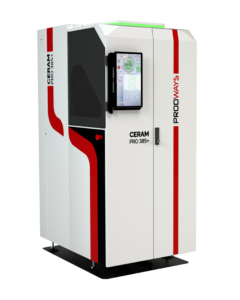
From the first conversation to production-ready ceramic parts, we’re with you at every step.
| Organization Type | Typical Requirements | Recommended System |
|---|---|---|
| University or Research Institute | Teaching, robotic programming, process trials, alloy development, sensor integration, and digital twin research. | Lab System |
| Innovation or Prototype Centre | Integrated manufacturing cell for process development, prototype production, demonstrators, and medium-size components. | Compact System |
| Industrial Manufacturer | Repeatable robotic deposition, defined production stations, process monitoring, and automated part handling. | Compact System or Special System |
| Large or Heavy Components | Extended robot reach, high payload capacity, large positioners, multiple workstations, sliders, or gantry-based systems. | Special System |