HIP for Castings: How Hot Isostatic Pressing Improves Cast Components

Hot Isostatic Pressing process for reducing internal porosity in metal castings
Source by lodestar3d.com

Metal casting is widely used to manufacture complex parts in a variety of alloys. However, the casting process can sometimes leave small internal pores, shrinkage voids or other discontinuities inside a component.These defects may not be visible from the outside, yet they can influence material consistency, fatigue life and overall component performance.

Table of Contents

Hot Isostatic Pressing (HIP) is a post-processing technology used to reduce suitable internal porosity in cast components. By combining elevated temperature with high, uniformly applied gas pressure, HIP can densify a casting and improve its internal material structure.

Why Does Porosity Occur in Metal Castings?

When molten metal is poured into a mould, it begins to cool and solidify. During this process, the volume of the metal changes.

If molten material does not adequately feed areas that are shrinking, small cavities may form. Gas can also become trapped during melting, pouring or solidification.

Common causes of casting porosity include:

  • Solidification shrinkage
  • Trapped gas
  • Incomplete feeding
  • Irregular cooling
  • Complex component geometry
  • Process contamination
  • Variations in casting parameters

Porosity may occur as isolated microscopic pores or larger internal voids.

Although a casting may look acceptable externally, internal pores can act as stress-concentration points when the component is placed under mechanical loading.

What Is HIP for Castings?

HIP for castings is a densification process in which a cast component is placed inside a high-pressure vessel containing an internal furnace.

The component is exposed to:

  1. Elevated temperature
  2. High gas pressure
  3. A controlled holding period

Argon is commonly used as the process gas because it is inert under many HIP processing conditions.

The gas surrounds the casting and applies pressure uniformly from every direction. At the same time, elevated temperature makes the material more responsive to deformation and diffusion.

Together, these conditions can help shrink and close suitable internal pores.

How Does HIP Reduce Casting Porosity?

HIP reduces internal porosity through several material mechanisms.

Plastic Deformation

High external pressure causes the material surrounding an internal pore to deform. As this occurs, the volume of the pore decreases.

Creep

At elevated temperatures, metals can slowly deform under sustained pressure. This gradual movement helps continue the pore-closing process throughout the HIP cycle.

Diffusion Bonding

Once the internal surfaces of a pore come into contact, atomic diffusion can help bond the surfaces together.

The combined effects of pressure, temperature and time can therefore transform a porous region into a denser and more continuous material structure.

Typical HIP Process for Castings

A casting HIP cycle generally follows several controlled stages.

1. Casting Preparation

The component is inspected and prepared before processing.

The casting surface should generally be sufficiently gas-tight so that the external processing gas does not directly enter the internal pore structure.

2. Loading

The casting or batch of castings is positioned inside the usable hot zone of the HIP furnace.

The available diameter and length of the hot zone must therefore match the component dimensions and intended production batch.

3. Vessel Closure

The pressure vessel is securely closed and the required operational checks are completed.

4. Gas Pressurisation and Heating

An inert gas is introduced while the internal furnace raises the component to the required temperature.

Pressure and temperature are increased according to a material-specific HIP cycle.

5. Holding

The system maintains the specified conditions for a defined period. This is when much of the porosity reduction and densification occurs.

6. Cooling and Depressurisation

After the processing stage, the system follows a controlled cooling and pressure-release sequence.

7. Inspection

The casting is removed and may undergo dimensional inspection, density measurement, non-destructive testing or mechanical-property evaluation.

Benefits of HIP for Castings

Reduced Internal Porosity

The primary benefit is the reduction of suitable sealed internal voids that conventional machining cannot reach.

Improved Casting Density

As pores close, the proportion of solid material within the component increases. This produces a denser and more uniform internal structure.

Better Fatigue Performance

Internal pores can become initiation points for fatigue cracks.

Reducing these defects can improve the ability of a suitable casting to withstand repeated loading.

Improved Material Consistency

Porosity can create variations in properties within a single component or between production batches.

HIP can help reduce this variability and provide more consistent material behaviour.

Improved Ductility and Toughness

Depending on the alloy and HIP cycle, reducing internal defects may contribute to improved ductility and fracture resistance.

Cleaner Machined Surfaces

Machining can expose pores that were hidden below the original casting surface.

Processing the casting with HIP before final machining can reduce the likelihood of exposing internal voids later.

Reduced Scrap Risk

High-value castings may sometimes be rejected because of internal porosity.

When the defect type is suitable for HIP, densification may reduce rejection risk and improve material utilisation.

Schedule A Call

+91 990-000-3300

Which Cast Materials Can Be Considered for HIP?

Hot Isostatic Pressing can be evaluated for many suitable casting materials, including:

  • Aluminium alloys
  • Titanium alloys
  • Nickel-based superalloys
  • Cobalt alloys
  • Stainless steels
  • Copper alloys
  • Other iron- and non-ferrous alloys

The required pressure, temperature and holding time vary considerably between materials.

There is no single HIP cycle that works for every casting.

Can HIP Repair Every Casting Defect?

No.

HIP is highly effective for certain sealed internal pores, but it should not be viewed as a universal casting-repair process.

HIP may not correct:

  • Surface-connected porosity
  • Large cracks
  • Incorrect alloy chemistry
  • Dimensional errors
  • Severe inclusions
  • Contaminated defects
  • Major manufacturing defects

If a pore is connected to the surface, the pressurised gas may enter it. When the pressure inside and outside the pore becomes similar, the pressure difference required to collapse the void can be reduced.

For this reason, defect type and surface condition should be reviewed before selecting HIP.

When Should HIP Be Considered for a Casting?

HIP may be worth evaluating when:

  • Internal porosity affects component quality
  • Fatigue performance is important
  • Castings have high manufacturing value
  • Machining may expose subsurface pores
  • Consistent mechanical properties are required
  • Component rejection is costly
  • The part will experience demanding service conditions

HIP should complement good casting design and process control rather than replace them.

Choosing a HIP System for Casting Applications

The appropriate HIP system depends on several factors:

  • Casting dimensions
  • Required hot-zone diameter
  • Required hot-zone length
  • Alloy type
  • Processing temperature
  • Required pressure
  • Batch quantity
  • Component weight
  • Production frequency

Small laboratory systems may be used for alloy research and process development, while larger production HIP systems support bigger castings and repeated industrial batches.

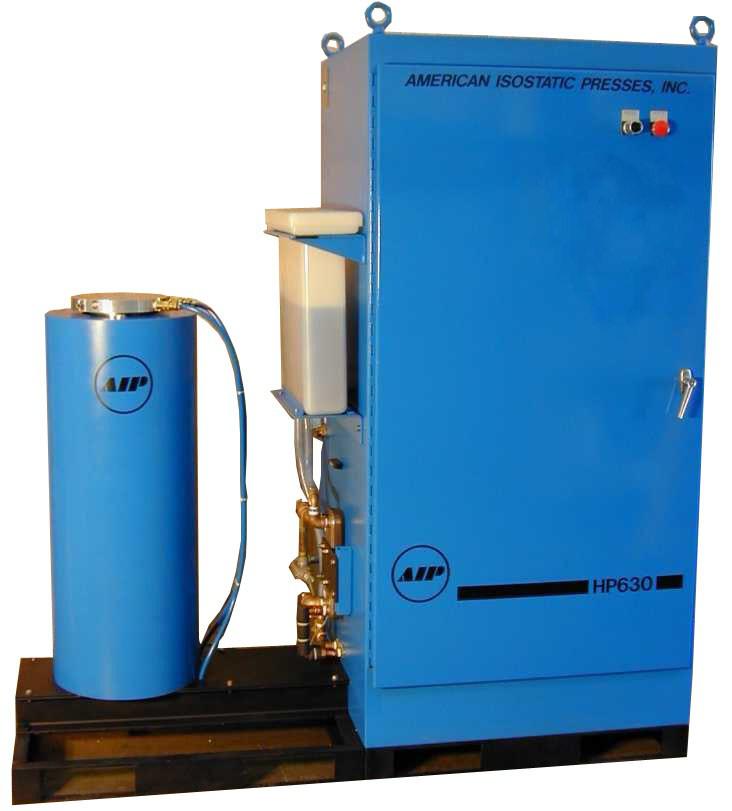
Lodestar 3D supports the evaluation of AIP Hot Isostatic Press systems for laboratory, scale-up and production requirements.

Conclusion

HIP for castings uses high temperature and uniformly applied gas pressure to reduce suitable internal porosity and improve material density.

Through plastic deformation, creep and diffusion bonding, internal pores can shrink and close, creating a more uniform casting structure.

For suitable components, this can support improved fatigue performance, material consistency, machined-surface quality and reduced rejection risk.

However, successful casting densification depends on the alloy, defect type, component dimensions and selected processing conditions.

Talk to a Lodestar 3D HIP expert to evaluate the appropriate AIP system for your casting material, component size and production requirements.

FAQ's

What is HIP in metal casting?

HIP, or Hot Isostatic Pressing, is a post-processing method that applies elevated temperature and uniform gas pressure to reduce suitable internal porosity in metal castings.

HIP can significantly reduce certain sealed internal pores and shrinkage voids. Its effectiveness depends on the type and location of the defect.

Surface-connected porosity may be more difficult to close because processing gas can enter the pore and reduce the pressure difference required for densification.

By reducing internal porosity and improving material consistency, HIP can improve mechanical properties such as fatigue performance and ductility in suitable materials.

Suitable aluminium, titanium, nickel-based, cobalt, stainless-steel, copper and other alloys may be considered for HIP. The correct process must be developed for the specific material.

Lodestar 3D can review the casting material, component dimensions, required temperature, pressure and production volume to help identify an appropriate AIP HIP system.

    Agree to our terms and conditions.
    Your information will be securely sent to and stored in Google Sheets for the purpose of processing your form submission.