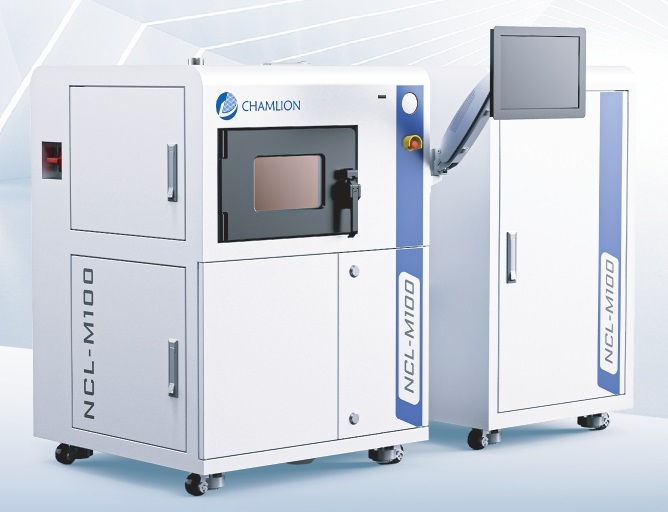
Industrial 3D Printer Price Guide in India: Costs, Installation & ROI
Source: Lodestar3d.com
Buying an industrial 3D printer is a capital investment, not a simple equipment purchase. For manufacturers in India, the real cost includes the machine, materials, software, installation, training, post-processing, maintenance, facility readiness, and production validation.
The industrial 3D printer price in India can vary widely depending on technology, build volume, material capability, automation level, imported components, and service support. A polymer prototyping system may cost a few lakhs, while a metal additive manufacturing system can move into crores depending on configuration.
For manufacturing heads, CTOs, plant owners, R&D teams, and tooling departments, the right question is not only “What is the machine price?” The better question is: “What is the total investment required to produce qualified parts reliably?”
Table of Contents
Why Industrial 3D Printer Prices Vary So Much
Industrial 3D printers are available across many technologies. Each technology has a different cost structure.
The final investment depends on:
Printing technology
Build volume
Material compatibility
Machine accuracy
Automation level
Software features
Post-processing requirements
Imported or local configuration
Safety and facility requirements
Service and maintenance support
A desktop or entry-level printer is not comparable to a production-grade industrial additive manufacturing system. Industrial systems are designed for repeatability, material control, process stability, and functional part development.
Indicative Industrial 3D Printer Price Range in India
The following ranges are planning-level estimates. Actual pricing depends on brand, configuration, exchange rates, taxes, duties, options, and support packages.
Industrial FDM / FFF Printers
Industrial FDM printers are commonly used for functional prototypes, jigs, fixtures, engineering models, and polymer parts.
Indicative price range: ₹3 lakh to ₹80 lakh+
Lower-cost systems may support basic engineering materials, while high-end systems may offer heated chambers, larger build volumes, high-temperature polymers, enclosed build environments, and better reliability.
SLA and DLP Resin Printers
SLA and DLP systems are used where fine detail, smooth surface finish, and accuracy are important.
Applications include dental models, engineering prototypes, casting patterns, design validation, and high-resolution components.
Indicative price range: ₹5 lakh to ₹75 lakh+
The cost depends on build size, light engine, resolution, material ecosystem, production speed, and post-curing requirements.
SLS Polymer 3D Printers
SLS systems are used for strong functional polymer parts without support structures. They are suitable for batch production, prototypes, jigs, fixtures, and end-use polymer components.
Indicative price range: ₹15 lakh to ₹1 crore+
Industrial SLS pricing depends on build volume, powder handling, thermal control, material support, nesting efficiency, and powder recovery systems.
Metal 3D Printers
Metal additive manufacturing systems are among the most expensive industrial 3D printers.
They may include technologies such as Metal Powder Bed Fusion, DMLS, SLM, EBM, bound metal deposition, or Directed Energy Deposition.
Indicative price range: ₹80 lakh to ₹10 crore+
Metal systems also require powder or wire handling, safety systems, inert gas, heat treatment, support removal, machining, inspection, and trained operators.
WAAM and Robotic Metal Additive Systems
Wire Arc Additive Manufacturing systems are used for large near-net-shape metal parts, tooling, repair, aerospace preforms, heavy engineering components, and industrial research.
Indicative price range: varies widely based on robotic cell configuration
A WAAM system may include an industrial robot, power source, positioner, safety enclosure, sensors, software, material handling, and post-processing workflow.
[Internal Link: WAAM Systems]
Ceramic 3D Printers
Ceramic 3D printing systems are used for technical ceramics, investment casting workflows, material research, and advanced industrial applications.
Indicative price range: depends on printer model, wavelength, material workflow, throughput, and post-processing requirements.
Ceramic printing also requires cleaning, debinding, sintering, and finishing.
Machine cost is only one part of the investment. Installation and facility preparation can significantly affect the total budget.
Manufacturers should plan for:
Floor space preparation
Electrical supply
Compressed air
Ventilation
Fume extraction
Temperature and humidity control
Inert gas systems
Fire safety
Material storage
Operator safety equipment
Dust and powder management
Waste handling
Network and software setup
Metal powder systems may require stricter safety infrastructure. WAAM systems may require robotic cell safety, welding extraction, operator barriers, and heavy-part handling equipment. Ceramic systems may require furnaces for debinding and sintering.
Post-processing is often underestimated during purchase planning.
Depending on the technology, manufacturers may need:
Cleaning stations
Curing units
Powder recovery equipment
Depowdering systems
Debinding systems
Sintering furnaces
Heat-treatment furnaces
CNC machining
Surface finishing
Polishing or blasting
Support removal tools
Inspection equipment
For many industrial applications, the printed part is not the final part. It becomes useful only after finishing, machining, inspection, and validation.
This is especially important for metal, ceramic, and production-grade polymer parts.
Material and Consumable Costs
Material cost has a major impact on cost per part.
Common recurring costs include:
Polymer filament
Resin
SLS powder
Metal powder
Metal wire
Ceramic slurry or resin
Support materials
Build plates
Filters
Nozzles
Gas
Cleaning chemicals
Protective equipment
A low machine price may not deliver low operating cost if materials are expensive, waste is high, or the system is locked to limited consumables.
Manufacturers should check material availability, shelf life, storage requirements, recycling options, and supplier support before purchase.
Schedule A Call
+91 990-000-3300
Maintenance, Training, and Service Costs
Industrial 3D printers require trained operators and regular maintenance.
Budget should include:
Operator training
Application training
Preventive maintenance
Spare parts
Software updates
Calibration
Service contracts
Troubleshooting support
Safety training
For manufacturers using additive manufacturing for production, service response time is critical. Downtime affects delivery schedules and ROI.
A supplier with local support can reduce risk compared to a machine-only purchase.
How to Calculate ROI
ROI should be calculated based on real manufacturing use cases, not only machine capacity.
Start with a part or process where additive manufacturing can create measurable value.
Consider:
Current part cost
Current lead time
Tooling cost
Material waste
Machining time
Supplier dependency
Inventory cost
Assembly reduction
Design-change savings
Downtime reduction
Repair savings
Production volume
For example, an industrial 3D printer may deliver ROI by reducing tooling cost, producing jigs and fixtures in-house, manufacturing replacement parts faster, reducing material waste, or accelerating product development.
In metal additive manufacturing, ROI may come from part consolidation, reduced buy-to-fly ratio, faster repair, or lower tooling dependency.
In polymer systems, ROI often comes from rapid prototyping, fixtures, low-volume end-use parts, and faster design iteration.
Cost Per Part Matters More Than Machine Price
A machine that costs more upfront may still be better if it reduces failure rates, improves throughput, supports better materials, or lowers post-processing effort.
Cost per part should include:
Material consumed
Machine time
Operator time
Build preparation
Failed builds
Post-processing
Inspection
Finishing
Maintenance allocation
Energy cost
For production users, machine utilization is also important. A printer used only occasionally may not justify ownership. In such cases, outsourcing or service bureau production may be better until demand is proven.
When Should Manufacturers Buy Instead of Outsource?
Buying makes sense when:
Part demand is recurring
Lead time reduction is critical
Designs change frequently
Confidentiality is important
Internal R&D needs fast iteration
Tooling and fixture demand is high
Production volume supports machine utilization
Technical capability is strategically important
Outsourcing may be better when the requirement is occasional, material needs are uncertain, or the company is still validating additive manufacturing applications.
Conclusion
The industrial 3D printer price in India depends on much more than the machine quotation. A complete investment plan must include technology, materials, installation, post-processing, software, training, maintenance, quality control, and ROI.
For manufacturers, the best approach is to begin with the application and then select the right technology. The right printer should solve a measurable production problem: lower material waste, reduce tooling dependency, shorten lead time, support complex designs, or improve manufacturing flexibility.
Lodestar 3D helps manufacturers evaluate the correct industrial 3D printing solution based on application, material, production volume, post-processing, and long-term support requirements.