

How DLyte Improves Surface Finish for Metal 3D Printed Parts
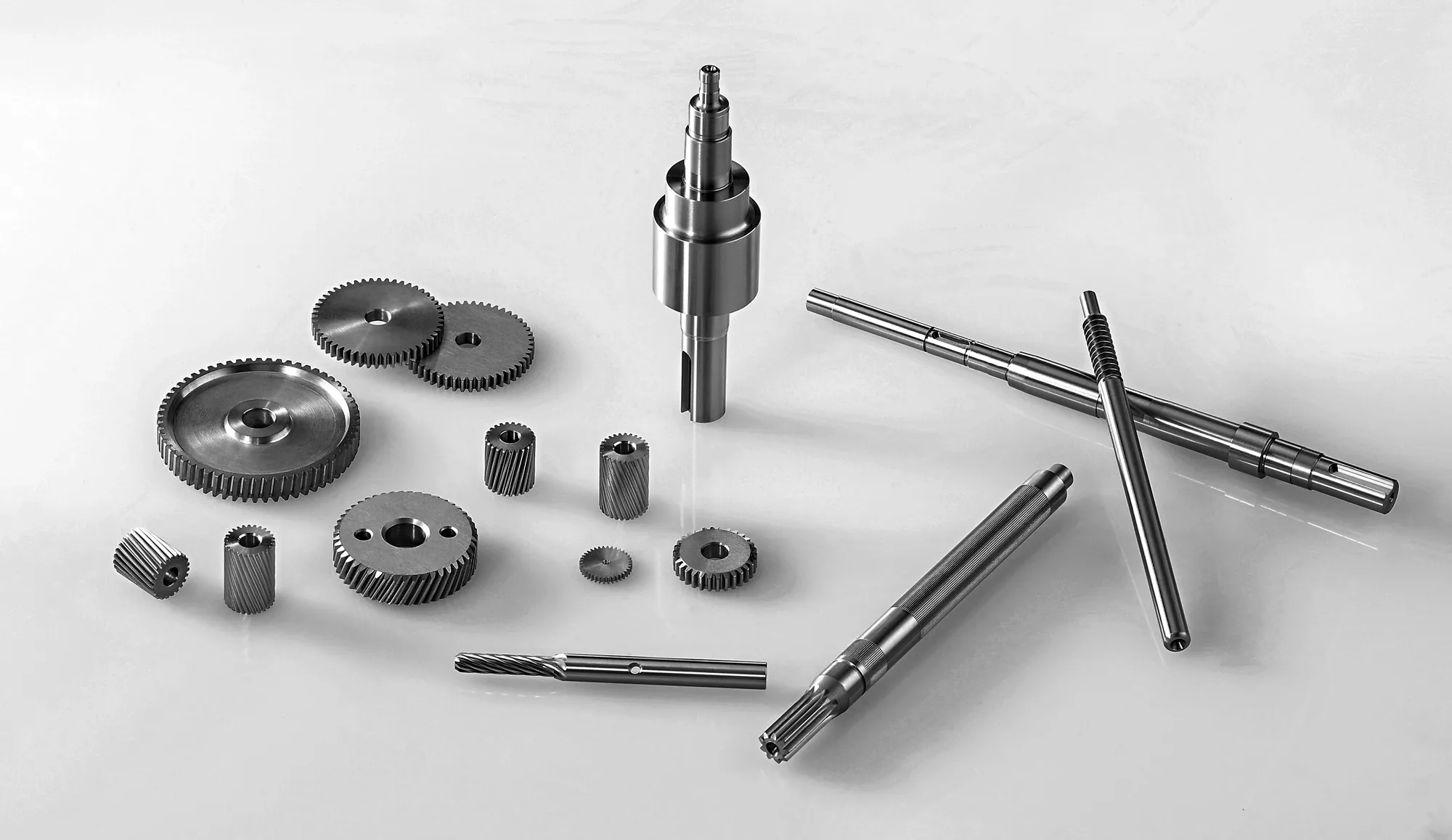
Metal 3D printing allows manufacturers to produce complex components, lightweight structures, internal channels, custom geometries, and low-volume metal parts directly from digital designs. However, most metal 3D printed parts do not come out of the machine ready for final use.
The as-printed surface can be rough, uneven, and difficult to clean. Powder-bed metal parts may show partially fused powder particles, layer marks, stair-stepping, and microscopic peaks. Wire-based and directed-energy metal parts may also require machining and finishing before use.
Table of Contents
This is where DLyte dry electropolishing becomes important.
DLyte improves surface finish for metal 3D printed parts by reducing roughness through a controlled electrochemical process. It helps smooth the surface while preserving part geometry, making it valuable for medical, dental, aerospace, tooling, automotive, and precision engineering applications.
Why Surface Finish Matters in Metal 3D Printing
Surface finish is not only an aesthetic concern. For industrial metal parts, surface quality can affect performance, safety, cleanability, and service life.
Rough metal surfaces can create several problems:
- Higher friction between moving parts
- Difficult cleaning and sterilization
- Poor fluid-flow performance
- Increased risk of corrosion initiation
- Reduced fatigue performance
- Unwanted powder retention
- Poor appearance
- Extra manual finishing time
For applications such as medical implants, dental frameworks, aerospace components, tooling inserts, and fluid-contact parts, surface finishing is often essential.
Metal additive manufacturing can create shapes that are difficult to manufacture conventionally, but those same complex shapes can also be difficult to polish manually. Internal channels, lattice structures, undercuts, and detailed geometries need a finishing method that can reach more than just flat external surfaces.
What Is DLyte Dry Electropolishing?
DLyte dry electropolishing is an automated surface finishing process for metal parts. It uses dry electrolyte media instead of a conventional liquid electropolishing bath.
The process is based on electrically activated particles that carry electrolyte in a controlled form. When the metal part is processed, the media interacts with the surface and removes microscopic roughness peaks through ion transport.
This controlled material removal helps reduce surface roughness while maintaining the original shape of the component.
Unlike manual abrasive polishing, DLyte does not rely mainly on mechanical force. Unlike traditional liquid electropolishing, it does not depend on immersing the part in an open electrolyte bath. This makes it useful for high-value parts that require controlled finishing, repeatability, and geometry preservation.
How DLyte Improves Metal 3D Printed Parts
1. Reduces surface roughness
Metal 3D printed parts often have rough as-built surfaces. This is especially common in powder-based metal additive manufacturing, where unfused or partially fused powder particles can remain attached to the surface.
DLyte reduces roughness by targeting microscopic peaks on the metal surface. As these peaks are gradually removed, the surface becomes smoother and more uniform.
This can improve appearance, cleanability, touch quality, and functional performance.
2. Preserves part geometry
One of the challenges with polishing 3D printed parts is avoiding damage to fine details.
Mechanical polishing can round edges, remove too much material, or change critical dimensions. This is a major concern for precision parts, dental components, medical devices, and aerospace applications.
DLyte is designed to smooth the surface while helping preserve geometry. This makes it suitable for components where edges, contours, thin sections, and functional features must remain accurate.

3. Improves access to complex surfaces
Many 3D printed metal parts are selected for additive manufacturing because they contain complex shapes.
Examples include:
- Internal channels
- Lattice structures
- Curved surfaces
- Undercuts
- Lightweight structures
- Dental frameworks
- Organic geometries
- Small precision features
Manual polishing tools often cannot access these areas properly. DLyte’s dry electropolishing media can reach difficult surfaces more effectively than many traditional hand-finishing methods, depending on part design and process setup.
This is useful for components where internal or hidden surfaces matter for performance.
4. Reduces manual polishing work
Manual polishing is slow, skill-dependent, and difficult to scale. Two operators may produce different results on the same part.
For metal 3D printed parts, manual finishing can be especially challenging because the surface may be rough and the geometry may be complex.
DLyte helps automate a significant part of the polishing workflow. This can reduce operator dependency, lower finishing time, and improve batch-to-batch consistency.
For dental labs, medical manufacturers, and additive manufacturing service bureaus, this can improve productivity and reduce finishing bottlenecks.
5. Improves repeatability
Repeatability is critical in industrial production.
A manufacturer may be able to polish one part manually, but polishing 100 parts with the same finish is more difficult. DLyte supports parameter-controlled finishing, allowing users to define a repeatable process for compatible materials and geometries.
This helps manufacturers achieve more consistent surface results across multiple parts, batches, and production cycles.
Repeatability is especially important for regulated or quality-sensitive sectors such as medical, dental, aerospace, and precision engineering.
6. Supports corrosion resistance and cleanability
Surface roughness can trap contaminants, powder particles, bacteria, fluids, and debris. A smoother surface is generally easier to clean and inspect.
For stainless steel, cobalt-chrome, titanium, and other compatible metals, electropolishing can support a cleaner and more corrosion-resistant surface when properly validated.
This is valuable for:
- Medical instruments
- Dental frameworks
- Food-related equipment
- Laboratory components
- Fluid-contact parts
- Aerospace and industrial components
Improved cleanability can also reduce finishing and maintenance challenges after production.
7. Helps prepare parts for functional use
A metal 3D printed part may require finishing before it can perform correctly in service.
DLyte can help improve parts used in:
- Sliding contact
- Fluid flow
- Dental fitting
- Medical device handling
- Tooling applications
- Precision assemblies
- Decorative or visible metal components
By improving the surface, DLyte helps bridge the gap between as-printed metal parts and production-ready components.
DLyte Workflow for Metal 3D Printed Parts
A typical DLyte finishing workflow may include:
- Printing the metal part
- Removing powder or supports
- Performing heat treatment or stress relief if required
- Machining critical surfaces if needed
- Cleaning the part
- Fixturing the part in the DLyte system
- Running the dry electropolishing process
- Cleaning the finished part
- Inspecting surface roughness and dimensions
- Validating the part for final use
DLyte does not remove the need for all other post-processing steps. Some parts may still need CNC machining, heat treatment, inspection, or pre-finishing. However, DLyte can become a key stage in the surface improvement workflow.
Industrial Applications
DLyte is useful for several metal 3D printing applications.
Medical and dental parts
DLyte can improve surface finish for dental frameworks, crowns, bridges, implant-related parts, surgical tools, and selected medical components made from compatible metals.
Aerospace and defense components
Aerospace and defense parts often require lightweight geometries and consistent surface quality. DLyte can support post-processing for compatible metal additive parts where roughness reduction and geometry preservation are important.
Tooling and mold components
Tooling inserts, molds, dies, and precision surfaces may benefit from smoother finishes, reduced friction, and improved release behavior.
Automotive and motorsport parts
Motorsport and automotive components can benefit from surface improvement where weight reduction, appearance, flow performance, or friction reduction are important.
Industrial engineering parts
DLyte can support finishing of precision metal components, fluid-contact parts, machine elements, prototypes, and small-batch production components.
Conclusion
DLyte improves surface finish for metal 3D printed parts by reducing roughness, preserving geometry, improving cleanability, and automating a traditionally labor-intensive finishing stage.
For manufacturers using metal additive manufacturing, surface finishing is essential for moving from an as-printed part to a functional, production-ready component.
DLyte is especially valuable for dental, medical, aerospace, tooling, automotive, and precision engineering applications where surface quality, repeatability, and geometry preservation matter.
Lodestar 3D helps manufacturers evaluate DLyte surface finishing solutions based on material, geometry, post-processing needs, and final application requirements.
FAQ's
How does DLyte improve surface finish?
DLyte improves surface finish by using dry electropolishing media to remove microscopic roughness peaks from the metal surface through controlled ion transport.
Is DLyte suitable for metal 3D printed parts?
Yes. DLyte is suitable for many compatible metal 3D printed parts, especially where roughness reduction, geometry preservation, and repeatable finishing are required.
Does DLyte change part dimensions?
DLyte removes a controlled microscopic layer from the surface. The process is designed to improve roughness while helping preserve geometry, but critical dimensions should always be inspected after finishing.
Which materials can be processed with DLyte?
DLyte can be used with compatible metals such as stainless steel, cobalt-chrome, titanium alloys, nickel alloys, tool steels, and other conductive materials depending on process validation.
Is DLyte better than manual polishing?
For complex metal 3D printed parts, DLyte can be better because it improves repeatability, reduces labor, and can access surfaces that are difficult to polish manually.