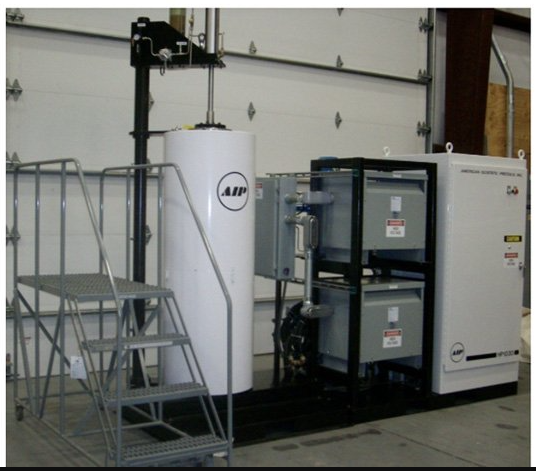
HIP for Powder Metallurgy: How Hot Isostatic Pressing Consolidates Metal Powders
Powder metallurgy makes it possible to manufacture components from metal powders rather than starting with a conventional casting, forging or solid billet.One important method used for powder consolidation is Hot Isostatic Pressing (HIP). In powder metallurgy, HIP applies elevated temperature and uniform gas pressure to consolidate powder particles into a dense solid component.This process is commonly known as PM-HIP, or Powder Metallurgy Hot Isostatic Pressing.HIP can be useful when high material density, consistent properties, specialised alloys or near-net-shape manufacturing are required.
Table of Contents
What Is HIP in Powder Metallurgy?
In a typical PM-HIP process, metal powder is placed inside a sealed container or capsule. Air and unwanted gases are removed before the capsule is closed.
The capsule is then placed inside a Hot Isostatic Press.
During processing:
- The furnace heats the material.
- High-pressure gas surrounds the capsule.
- Pressure acts uniformly from all directions.
- Powder particles deform and bond.
- Internal spaces between the particles gradually disappear.
The result is a consolidated metal component with significantly higher density than the original loose powder.
Unlike melting-based manufacturing, HIP generally consolidates the powder below the melting temperature of the material.
Why Is a Capsule Used in PM-HIP?
Loose metal powder contains many interconnected spaces between particles. If the powder were exposed directly to the process gas, gas could enter these spaces and pressure would act both inside and outside the powder mass.
A sealed capsule creates a pressure boundary.
The powder is placed inside the capsule, which is then evacuated and sealed. When external gas pressure is applied, the pressure compresses the capsule and the powder inside it.
The capsule shape can also be designed to approximate the final geometry of the component.
This is one reason PM-HIP can support near-net-shape manufacturing.
How Does the PM-HIP Process Work?
1. Select and Prepare the Powder
The process begins with a suitable metal powder.
Important powder characteristics include:
- Chemical composition
- Particle size
- Particle distribution
- Cleanliness
- Oxygen level
- Flow behaviour
Consistent powder quality is important because contamination or inconsistent particles can affect the finished component.
2. Design the Capsule
A metal capsule is designed around the required component geometry.
Because powder shrinks during densification, the capsule dimensions must account for the expected reduction in volume.
For complex components, capsule design becomes an important part of the manufacturing process.
3. Fill the Capsule
The selected powder is loaded into the capsule.
Careful filling helps distribute the powder throughout the container and reduces large gaps, particularly in complex geometries.
4. Evacuate and Seal
Air and other gases are removed from the powder-filled capsule.
The capsule is then sealed to create a gas-tight enclosure.
A reliable seal is essential for effective pressure transfer during HIP.
5. Apply Heat and Pressure
The sealed capsule is placed inside the HIP furnace.
The system then applies the required temperature and gas pressure.
Because the pressure is isostatic, it acts uniformly around the entire capsule rather than from only one direction.
6. Powder Consolidation
As pressure and temperature are maintained, the powder particles move closer together.
Several mechanisms support densification:
- Particle rearrangement
- Plastic deformation
- Creep
- Diffusion between particles
- Bond formation between particle surfaces
The spaces between the powder particles progressively decrease until a dense solid structure is produced.
7. Cooling and Depressurisation
After the specified holding period, the HIP system follows a controlled cooling and depressurisation cycle.
The vessel is opened once safe operating conditions are reached.
8. Capsule Removal and Finishing
The external capsule is removed from the consolidated component.
Depending on the required final dimensions, the component may then undergo:
- Machining
- Heat treatment
- Surface finishing
- Inspection
- Mechanical testing
Benefits of HIP for Powder Metallurgy
High Material Density
One of the main advantages of PM-HIP is its ability to produce highly dense components.
Reducing the spaces between powder particles creates a more continuous material structure.
Uniform Properties
Because pressure acts uniformly from all directions, HIP can support more consistent properties throughout the component.
This is particularly useful when directional variation in mechanical behaviour must be minimised.
Near-Net-Shape Manufacturing
The capsule can be designed close to the required final component geometry.
This can reduce the amount of material that must be removed through machining.
Reduced Material Waste
Near-net-shape production can be valuable when working with expensive alloys because less material may be lost as machining chips.
Complex Component Geometry
PM-HIP can support shapes that may be difficult to manufacture through conventional forging or machining.
Specialised Material Processing
Powder metallurgy can enable the production of specialised alloy compositions and material combinations that may be difficult to manufacture through traditional methods.
PM-HIP vs HIP of Sintered Parts
These are two different uses of Hot Isostatic Pressing.
PM-HIP
Loose metal powder is sealed inside a capsule and HIP is used as the primary consolidation process.
HIP of Sintered Parts
The component has already been compacted and sintered using another powder metallurgy process.
HIP is then used as a secondary process to reduce remaining internal porosity and improve density.
The correct approach depends on the starting material and required finished component.
Which Materials Can Be Used for PM-HIP?
PM-HIP may be considered for suitable:
- Tool steels
- Stainless steels
- Nickel-based alloys
- Titanium alloys
- High-speed steels
- Cobalt-based alloys
- Metal matrix materials
- Advanced powder-based materials
The correct temperature, pressure and holding time depend on the specific material and required properties.
When Is PM-HIP a Good Choice?
HIP for powder metallurgy may be useful when:
- High material density is required
- Conventional casting is difficult
- Expensive alloys must be used efficiently
- Near-net-shape production is beneficial
- Complex component geometries are required
- Uniform material properties are important
- Large machining allowances should be reduced
However, capsule manufacturing, powder handling and capsule removal add process steps, so PM-HIP is not automatically the best choice for every component.
Selecting a HIP System for Powder Metallurgy
The correct system should be selected based on:
- Capsule diameter and length
- Required hot-zone dimensions
- Powder material
- Process temperature
- Required pressure
- Batch capacity
- Furnace configuration
- Research or production volume
- Future scale-up requirements
A laboratory HIP system can support material and process development, while larger pilot and production systems provide the capacity required for bigger capsules and regular manufacturing.
Lodestar 3D supports the evaluation of AIP Hot Isostatic Press systems for laboratory research, sample scale-up and production powder metallurgy requirements.
Conclusion
HIP for Powder Metallurgy combines elevated temperature with uniform gas pressure to transform suitable metal powders into dense solid components.
In PM-HIP, the powder is placed inside a sealed capsule, evacuated and processed in a Hot Isostatic Press. The combined effects of pressure, heat and time promote particle deformation, creep and diffusion, progressively removing internal spaces between particles.
The process can provide high density, consistent material properties, near-net-shape capability and efficient use of specialised alloys.
Successful PM-HIP processing depends on powder quality, capsule design, required temperature, pressure and appropriate HIP-system capacity.
Talk to a Lodestar 3D HIP expert to evaluate the appropriate AIP system for your powder metallurgy research or production requirements.
FAQ's
What is PM-HIP?
PM-HIP stands for Powder Metallurgy Hot Isostatic Pressing. It consolidates powder inside a sealed capsule using elevated temperature and uniform gas pressure.
Why is metal powder encapsulated before HIP?
Loose powder is not gas-tight. The capsule prevents process gas from entering the powder and allows external pressure to consolidate it effectively.
Can HIP produce dense powder metallurgy components?
Yes. With suitable powder, capsule design and process parameters, HIP can produce highly dense components with reduced internal porosity.
Does PM-HIP eliminate machining?
Not necessarily. Near-net-shape PM-HIP can reduce machining requirements, but capsule removal and final dimensional finishing may still be required.
What is the difference between PM-HIP and sintering?
Sintering bonds powder particles primarily through heat, while PM-HIP combines heat with high isostatic pressure to promote greater densification.
How can Lodestar 3D help?
Lodestar 3D can evaluate the powder material, capsule dimensions, pressure, temperature, hot-zone requirements and production capacity to help identify an appropriate AIP HIP system.

