

Metal 3D Printing for Aerospace and Defence: Applications, Materials & Machine Selection
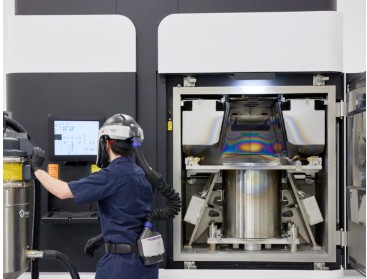
Aerospace and defence manufacturing demand lightweight structures, high-performance alloys, shorter development cycles, reliable spare parts, and stronger supply-chain control. Traditional machining, casting, forging, and fabrication remain essential, but they can be slow or costly when components are complex, low-volume, customized, or difficult to source.
Table of Contents
This is where metal 3D printing for aerospace and defence becomes valuable.
Metal additive manufacturing allows engineers to build components layer by layer from digital models. It supports complex geometries, part consolidation, lightweight designs, rapid prototyping, repair, and near-net-shape production. For aerospace, space, aviation, defence, naval, land systems, and advanced engineering, metal 3D printing can reduce material waste and open new design possibilities.
However, aerospace and defence applications require careful technology selection, material validation, post-processing, inspection, and qualification. The printer alone does not guarantee production readiness. The complete workflow must be engineered.
Why Aerospace and Defence Use Metal 3D Printing
Aerospace and defence parts often have demanding requirements:
- Low weight
- High strength
- Heat resistance
- Corrosion resistance
- Fatigue performance
- Complex internal features
- Tight quality control
- Long service life
- Traceability
- Reliable repeatability
Metal 3D printing is especially useful when traditional methods create high material waste, long lead times, complex assemblies, or supply-chain dependency.
For example, a conventionally manufactured aerospace component may require several machined, welded, or joined parts. With additive manufacturing, some assemblies can be redesigned as fewer parts or even a single integrated component. This can reduce fasteners, joints, assembly time, and potential failure points.
Key Aerospace Applications
1. Lightweight structural components
Aircraft and spacecraft benefit from lightweight components because every kilogram matters. Metal 3D printing supports topology-optimized structures, lattice designs, and organic geometries that remove unnecessary material while maintaining strength.
Applications may include:
- Brackets
- Mounting structures
- Housings
- Ducting supports
- Satellite structures
- UAV components
- Cabin and interior metal parts
- Payload support parts
2. Rocket and propulsion components
Propulsion systems contain complex geometries, internal channels, thermal-management features, and high-performance materials.
Metal 3D printing can support:
- Injectors
- Combustion chamber components
- Nozzle sections
- Turbomachinery parts
- Manifolds
- Heat exchangers
- Fluid-flow components
Additive manufacturing is useful here because it can build complex internal passages that are difficult to machine conventionally.
3. Heat exchangers and thermal systems
Aerospace thermal systems require compact, efficient, and lightweight designs. Metal powder bed fusion can produce internal channels and thin-wall structures that improve heat transfer.
Applications include:
- Compact heat exchangers
- Cooling channels
- Thermal management parts
- Fuel and fluid distribution components
- Electronic cooling structures
4. Tooling and production aids
Aerospace manufacturers also use metal 3D printing for tooling, not only flight hardware.
Applications include:
- Assembly fixtures
- Inspection tools
- Forming tools
- Composite layup tools
- Repair tools
- Welding fixtures
- Drill guides
- Maintenance aids
Tooling applications often have lower qualification barriers than flight-critical parts, making them a practical starting point for aerospace additive manufacturing.
Key Defence Applications
1. Spare parts and sustainment
Defence platforms often remain in service for decades. Over time, spare parts may become difficult to source because suppliers change, tooling is lost, or original production lines are closed.
Metal additive manufacturing can help defence organizations produce selected replacement parts from validated digital data.
Applications may include:
- Aircraft sustainment parts
- Naval system components
- Land vehicle parts
- Weapon-system support components
- Maintenance tooling
- Obsolete part replacement
- Depot-level repair support
2. Rapid prototyping and development
Defence R&D teams need to test new designs quickly. Metal 3D printing reduces the time between design iteration and physical testing.
It can support:
- Prototype weapon components
- UAV structures
- Sensor mounts
- Brackets and housings
- Test fixtures
- Mission-specific equipment
- Research samples
3. Repair and remanufacturing
Directed Energy Deposition and WAAM can add metal to worn or damaged components. After deposition, the part can be machined, inspected, and validated.
This is useful for high-value components where replacement is expensive or unavailable.
4. Localized and distributed manufacturing
In defence, the ability to manufacture closer to the point of need can improve readiness. Additive manufacturing can support digital inventory, reduced warehousing, and faster response for selected parts.
However, this requires strict control over design authority, material qualification, cybersecurity, inspection, and approval procedures.

Common Materials for Aerospace and Defence Metal 3D Printing
Material selection depends on strength, temperature, corrosion, weight, fatigue, and service environment.
Titanium alloys
Titanium alloys such as Ti-6Al-4V are widely used in aerospace because they offer high strength-to-weight ratio and corrosion resistance.
Best for:
- Aerospace brackets
- Structural components
- Medical-defence applications
- Lightweight components
- High-value parts
Nickel-based superalloys
Nickel alloys such as Inconel 718 and Inconel 625 are used where heat resistance, oxidation resistance, and strength at elevated temperature are required.
Best for:
- Turbine-related parts
- Engine components
- Hot-section prototypes
- Exhaust components
- High-temperature tooling
Aluminium alloys
Aluminium alloys are used where lightweight structures and thermal performance are important.
Best for:
- UAV components
- Aerospace housings
- Lightweight brackets
- Heat exchangers
- Satellite structures
Stainless steels
Stainless steels are used for corrosion-resistant parts, tooling, fixtures, and selected functional components.
Best for:
- Defence equipment
- Tooling
- Fluid-contact components
- Structural brackets
- Maintenance parts
Maraging steels and tool steels
These materials are useful where high strength, wear resistance, or tooling performance is needed.
Best for:
- Molds
- Dies
- Tooling inserts
- Defence tooling
- High-strength components
Copper alloys
Copper alloys are useful for thermal conductivity and propulsion applications.
Best for:
- Combustion chamber liners
- Heat exchangers
- Thermal-management components
- Electrical and conductive parts
Metal 3D Printing Technologies for Aerospace and Defence
1. Metal Powder Bed Fusion
Metal Powder Bed Fusion uses a laser or electron beam to melt metal powder layer by layer. It is suitable for complex, high-resolution metal parts.
Best for:
- Small to medium precision parts
- Aerospace brackets
- Heat exchangers
- Medical and defence components
- Internal channels
- High-detail metal geometries
Advantages:
- High geometric freedom
- Fine detail
- Strong material options
- Good for complex internal features
Limitations:
- Build size limitations
- Powder handling requirements
- Support removal
- Heat treatment and machining required
- Strict safety and quality controls
2. Electron Beam Melting
Electron Beam Melting, or EBM, uses an electron beam in a vacuum environment to melt metal powder. It is suitable for selected high-performance materials and applications.
Best for:
- Titanium components
- Aerospace parts
- Medical-grade metal parts
- High-temperature process requirements
- Applications needing vacuum processing
EBM can be useful where material behaviour, thermal control, and vacuum processing are important selection factors.
[Internal Link: EBM 3D Printers]
3. Directed Energy Deposition
Directed Energy Deposition uses focused thermal energy to melt material as it is deposited. The feedstock may be powder or wire.
Best for:
- Repair
- Feature addition
- Larger components
- Near-net-shape parts
- High-value metal parts
- Defence sustainment
DED is useful when the goal is to add material to an existing part or produce a large metal preform.
4. Wire Arc Additive Manufacturing
Wire Arc Additive Manufacturing, or WAAM, uses metal wire and an arc-based heat source to build large near-net-shape metal parts.
Best for:
- Large aerospace preforms
- Defence and naval components
- Tooling
- Repair and remanufacturing
- Heavy engineering parts
- Low-volume large metal components
WAAM usually requires machining after deposition, but it can reduce material waste and support larger components than many enclosed
Machine Selection Guide
Choosing the right machine depends on application, material, build size, tolerance, throughput, and qualification needs.
Requirement | Recommended Technology |
Fine details and complex internal channels | Metal Powder Bed Fusion |
Titanium aerospace parts and vacuum processing | EBM |
Large near-net-shape metal components | WAAM |
Repair and feature addition | DED or WAAM |
High-temperature engine-related components | Nickel alloy PBF or DED |
Lightweight brackets and housings | PBF or EBM |
Tooling and fixtures | PBF, DED, or WAAM |
Research and material development | Lab-scale PBF, EBM, or WAAM system |
Before selecting a machine, aerospace and defence manufacturers should evaluate:
- Target part size
- Material requirement
- Surface finish requirement
- Tolerance requirement
- Build rate
- Qualification pathway
- Inspection method
- Post-processing capability
- Operator training
- Powder or wire handling
- Facility readiness
- Service and application support
Post-Processing Requirements
Metal 3D printed aerospace and defence parts usually need post-processing before use.
Common steps include:
- Powder removal
- Support removal
- Stress relief
- Heat treatment
- Hot isostatic pressing
- CNC machining
- Surface finishing
- Electropolishing
- Shot peening
- Coating
- Non-destructive testing
- Dimensional inspection
- Mechanical testing
Post-processing must be planned before machine purchase. In many aerospace and defence applications, the final part quality depends as much on post-processing and inspection as on printing.
Qualification and Quality Control
Aerospace and defence applications require strict qualification. Manufacturers must control material, machine, parameters, operators, build environment, post-processing, inspection, and documentation.
Important quality factors include:
- Material certificates
- Powder or wire traceability
- Machine calibration
- Process parameter control
- Build documentation
- In-process monitoring
- Mechanical testing
- Fatigue testing
- Surface roughness measurement
- Non-destructive evaluation
- Dimensional inspection
- Repeatability validation
Critical components should never be moved directly from printing to service without validation.
When Metal 3D Printing Is the Right Choice
Metal 3D printing is suitable when the part has one or more of these conditions:
- Complex geometry
- High material waste in machining
- Low-volume production
- Long lead time
- Expensive tooling
- Assembly consolidation opportunity
- Need for lightweighting
- Internal channels
- Obsolete spare part requirement
- Repair or feature addition requirement
- High-value material
It may not be ideal for simple high-volume parts, very tight as-printed tolerances, or components that can be manufactured more economically by conventional methods.
Conclusion
Metal 3D printing for aerospace and defence provides major advantages in lightweighting, complex geometry, part consolidation, rapid development, repair, and spare-part production. It is especially valuable for high-performance components where conventional manufacturing creates high waste, long lead times, or design limitations.
The right technology depends on the application. Metal Powder Bed Fusion suits complex precision parts, EBM supports selected high-performance materials, DED is strong for repair and feature addition, and WAAM is ideal for large near-net-shape metal components.
For aerospace and defence manufacturers, success depends on choosing the right material, machine, post-processing route, inspection method, and qualification strategy.
Lodestar 3D helps manufacturers evaluate metal additive manufacturing solutions based on application, material, production volume, machine selection, and long-term industrial requirements.
FAQ's
How is metal 3D printing used in aerospace?
Metal 3D printing is used for lightweight brackets, rocket engine components, heat exchangers, ducting, satellite parts, tooling, prototypes, and selected flight hardware after qualification.
How is metal 3D printing used in defence?
Defence applications include spare parts, sustainment, repair, tooling, rapid prototyping, vehicle components, naval parts, UAV structures, and mission-specific equipment.
Which material is best for aerospace metal 3D printing?
Titanium alloys, nickel-based superalloys, aluminium alloys, stainless steels, maraging steels, and copper alloys are commonly evaluated. The best material depends on strength, temperature, weight, corrosion, and qualification needs.
Which metal 3D printing technology is best for aerospace?
Metal Powder Bed Fusion is suitable for complex precision parts. EBM is useful for selected high-performance titanium applications. WAAM and DED are better for large parts, repair, and near-net-shape components.
Do aerospace and defence 3D printed parts require post-processing?
Yes. Most metal 3D printed parts require heat treatment, support removal, machining, surface finishing, inspection, and testing before use.
Can metal 3D printing replace machining?
Not completely. Metal 3D printing often works best with machining. Additive manufacturing builds the near-net-shape part, while CNC machining finishes precision features and critical surfaces.