What Is DLyte Dry Electropolishing? Benefits, Process & Industrial Applications
Source by dlyte.com
Surface finishing is one of the most important stages in metal additive manufacturing and precision component production. A printed, machined, cast, or sintered metal part may have the correct shape, but the surface may still require improvement before it can be used in medical, dental, aerospace, automotive, tooling, or industrial applications.
DLyte is a dry electropolishing technology developed for automated metal surface finishing. It is designed to reduce roughness, improve surface quality, preserve geometry, and deliver repeatable finishing results across complex metal parts.
For manufacturers working with 3D printed metal components, dental parts, medical devices, precision tooling, and engineering components, DLyte offers a modern alternative to manual polishing, abrasive finishing, and conventional liquid electropolishing.
What Is DLyte Dry Electropolishing?
DLyte dry electropolishing is an electrochemical finishing process for metal parts. Unlike traditional polishing methods that rely heavily on abrasive contact or liquid electrolytes, DLyte uses electrically activated solid particles that carry electrolyte in a controlled way.
These particles interact with the metal surface and remove microscopic roughness peaks through ion transport. The process smooths the surface while helping preserve the original part geometry.
DLyte’s DryLyte technology was introduced as a dry electropolishing process for metal parts and is used in industries that require precise, repeatable, and high-quality finishing.
The process can be used on different metal alloys depending on the application, including stainless steel, cobalt-chrome, titanium, nickel alloys, and other compatible metals.
Why Metal Parts Need Electropolishing
Metal parts produced by additive manufacturing, casting, sintering, milling, or machining often need additional finishing.
Common surface issues include:
Powder-particle roughness
Layer marks
Tool marks
Burrs
Micro-peaks
Surface oxidation
Uneven texture
Areas difficult to polish manually
In 3D printed metal parts, roughness can affect fluid flow, cleanability, friction, fatigue behavior, appearance, and corrosion performance.
Manual polishing can be slow, inconsistent, and difficult for complex geometries. Conventional abrasive methods may also round edges excessively or fail to reach internal features.
The DLyte process uses dry electrolyte media made from polymer particles capable of holding electrolyte and conducting electrical activity at the surface of the part. Instead of immersing the part in a large liquid electrolyte bath, the part is processed with controlled solid media.
The working principle can be explained in five steps.
Step 1: Part preparation
The metal part is cleaned and prepared for finishing. Any major support structures, heavy burrs, or machining allowances may need to be removed before electropolishing.
For additive manufacturing parts, the part may first go through depowdering, stress relief, support removal, heat treatment, or basic machining depending on the process.
Step 2: Fixturing and electrical connection
The part is fixed inside the machine and connected to the electrical system. Proper fixturing ensures stable contact, process repeatability, and access to the surfaces that need finishing.
For complex components, correct orientation is important so the media can reach critical surfaces.
Step 3: Contact with dry electrolyte media
The metal part comes into contact with the dry electrolyte particles. These solid media particles act locally on the surface and focus the electropolishing action on microscopic peaks.
DLyte’s technology replaces conventional liquid acids with solid polymeric particles that retain electrolyte and remove oxides produced during electropolishing.
Step 4: Controlled material removal
When the electrical process begins, the surface peaks are dissolved more actively than lower areas. This gradually reduces roughness and produces a smoother surface.
Because the action is controlled and localized, DLyte can improve surface finish while helping maintain the component’s geometry. DLyte states that its dry electropolishing technology can improve surfaces without changing the part geometry.
Step 5: Cleaning and inspection
After finishing, the part is removed, cleaned, and inspected. Quality checks may include visual inspection, roughness measurement, dimensional verification, corrosion testing, or application-specific validation.
For regulated industries such as medical, dental, aerospace, and precision engineering, documentation and repeatability are important.
DLyte reduces surface roughness by removing microscopic peaks from the metal surface. This can produce smoother, more uniform parts compared to manual finishing.
For additive manufacturing, this is especially useful because metal 3D printed parts often have rough surfaces due to powder particles and layer-by-layer production.
2. Better geometry preservation
One challenge with abrasive polishing is that it can round edges or alter critical details.
DLyte’s controlled electrochemical process helps improve surface quality while preserving geometry, making it suitable for precision components, dental frameworks, medical devices, and complex metal parts.
3. Access to complex areas
Mechanical polishing tools may not reach internal channels, undercuts, lattice structures, and complex surfaces.
Dry electropolishing media can access difficult geometries more effectively than many manual finishing methods, depending on part design and process setup.
DLyte describes its polishing action as capable of reaching internal cavities that cannot be accessed mechanically, especially in dental applications.
4. Repeatable automated finishing
Manual polishing depends heavily on operator skill. Results can vary from person to person.
DLyte supports automated, parameter-controlled finishing. This improves repeatability across batches and reduces dependence on manual labor.
For production environments, repeatability is often more important than one-time surface quality.
5. Reduced polishing labor
Metal finishing can be one of the most labor-intensive stages in manufacturing.
DLyte can help automate grinding and polishing workflows, reducing manual polishing time and improving process consistency. DLyte notes that its technology has helped automate metal-part polishing processes that traditionally carried high labor burden, including dental manufacturing workflows.
6. Cleaner process compared with some traditional methods
Traditional polishing can create dust, and conventional liquid electropolishing can involve liquid chemical handling.
DLyte’s dry electropolishing approach is positioned as a cleaner and more controlled finishing alternative for compatible metal parts.
7. Improved cleanability and functional performance
Smoother metal surfaces are easier to clean and inspect. This is important for parts used in medical, dental, food-related, laboratory, fluid-flow, and precision engineering applications.
Surface finishing can also influence friction, corrosion behavior, fatigue performance, and fluid-flow characteristics when the process is properly validated.
Industrial Applications of DLyte Dry Electropolishing
Medical Devices
Medical parts often require clean, smooth, and controlled surfaces. DLyte can be used for compatible medical alloys such as stainless steel, titanium, cobalt-chrome, and nitinol.
Applications may include:
Surgical instruments
Orthopedic components
Dental-medical parts
Implant-related components
Precision healthcare devices
Medical applications require strict validation, documentation, and biocompatibility evaluation.
Dental Manufacturing
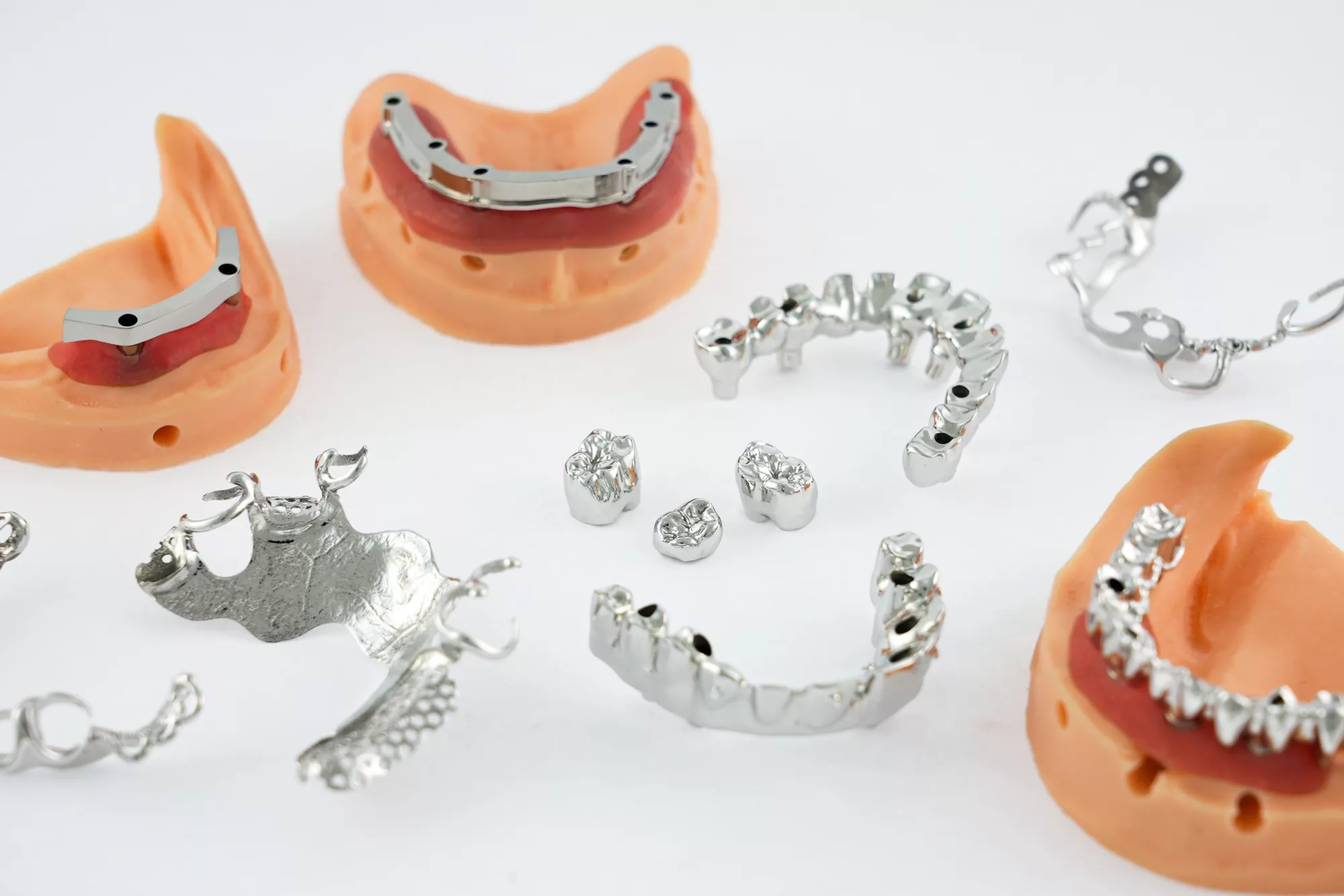
Dental labs and production centers use metal parts such as cobalt-chrome frameworks, removable partial dentures, crowns, bridges, and implant-related structures.
DLyte is useful where complex geometry, repeatability, and reduced manual polishing are important.
In dental manufacturing, dry electropolishing can help improve surface quality while reducing the labor required for manual polishing.
Schedule A Call
+91 990-000-3300
Additive Manufacturing
Metal additive manufacturing often produces parts with rough as-built surfaces. DLyte can support post-processing of 3D printed metal parts by improving surface finish while helping preserve geometry.
Applications include:
Metal powder bed fusion parts
Dental metal prints
Medical components
Aerospace prototypes
Tooling inserts
Engineering components
Research parts
Aerospace and Defense
Aerospace and defense parts often require high-quality surfaces, traceability, and controlled finishing.
DLyte can support finishing of compatible metal components where geometry preservation, surface quality, and repeatability are important.
Applications may include brackets, small precision components, turbine-related parts, fluid-path components, and additive manufacturing prototypes, depending on material and qualification needs.
Tooling and Mold Manufacturing
Tooling applications often need smoother surfaces to reduce friction, improve release behavior, and support longer tool life.
DLyte can be used for selected tooling and mold components, including parts with complex surfaces that are difficult to polish manually.
Automotive and Industrial Engineering
Automotive and industrial parts may require surface improvement for functional or aesthetic reasons.
Applications may include:
Precision metal components
Motorsport parts
Fluid-contact parts
Gears or mechanical components where suitable
Prototype metal parts
Small batch production components
Automated finishing can help reduce rework and improve consistency across batches.
Materials Suitable for DLyte
DLyte can be applied to several compatible metal materials, depending on machine, media, and process validation.
Common material categories include:
Stainless steel
Cobalt-chrome
Titanium alloys
Nickel alloys
Nitinol
Tool steels
Other compatible conductive metals
Final suitability depends on the alloy, geometry, target roughness, edge requirements, and industrial application.
DLyte vs Traditional Polishing
Factor
DLyte Dry Electropolishing
Traditional Manual Polishing
Process Type
Electrochemical finishing with dry media
Abrasive hand or mechanical polishing
Repeatability
High when parameters are controlled
Depends on operator skill
Geometry Preservation
Strong for suitable parts
Risk of rounding or over-polishing
Complex Areas
Can reach difficult areas depending on design
Limited access
Labor Requirement
Lower manual labor
Higher manual labor
Best For
Precision metal parts, AM parts, dental, medical, tooling
Simple accessible surfaces
DLyte does not replace every finishing method. Some parts may still require machining, blasting, grinding, or pre-finishing before dry electropolishing. However, for suitable metal components, it can improve consistency and reduce finishing burden.
Conclusion
DLyte dry electropolishing is a modern surface finishing solution for metal parts that need improved roughness, cleaner surfaces, better repeatability, and reduced manual polishing effort.
It is especially useful for 3D printed metal components, dental frameworks, medical devices, aerospace parts, tooling, and precision industrial components where surface quality directly affects performance and usability.
For manufacturers using metal additive manufacturing or precision metal production, DLyte can help move parts from as-printed or as-machined condition toward production-ready surface quality.
Lodestar 3D helps Indian manufacturers evaluate DLyte surface finishing solutions based on material, geometry, production volume, and final application requirements.
FAQ's
What is DLyte dry electropolishing?
DLyte dry electropolishing is an automated electrochemical surface finishing process for metal parts. It uses electrically activated dry electrolyte particles to reduce roughness and improve surface quality.
Is DLyte suitable for 3D printed metal parts?
Yes. DLyte can be suitable for compatible metal 3D printed parts where surface roughness reduction, geometry preservation, and repeatable finishing are required.
Which materials can be finished with DLyte?
DLyte can be used with compatible metals such as stainless steel, cobalt-chrome, titanium, nickel alloys, nitinol, and selected tool steels, depending on the specific application and process validation.
Does DLyte remove material?
Yes. DLyte removes a controlled microscopic layer from the surface, especially from roughness peaks. The process is designed to improve surface finish while helping preserve geometry.
Is DLyte better than manual polishing?
DLyte is often better for repeatability, labor reduction, and complex geometries. Manual polishing may still be useful for simple parts, local finishing, or pre-finishing operations.
What industries use DLyte?
DLyte is used in medical, dental, additive manufacturing, aerospace, tooling, automotive, and industrial engineering applications.