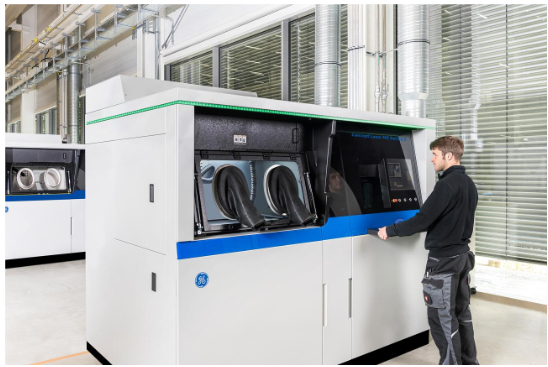
Industrial 3D Printer Buying Guide: 10 Questions to Ask Before You Invest

Industrial 3D printer buying guide for manufacturers selecting additive manufacturing solutions

Investing in an industrial 3D printer is a major manufacturing decision. Unlike purchasing a standard production machine, selecting an additive manufacturing system requires evaluating technology, materials, applications, workflow integration, production requirements, and long-term business goals.

Companies across aerospace, automotive, medical, defense, engineering, and industrial manufacturing are adopting 3D printing to produce prototypes, functional components, tooling, and end-use parts. However, the success of an additive manufacturing investment depends on choosing the right system for the right application.

A common mistake manufacturers make is selecting a printer based only on specifications such as build volume, speed, or price. A successful implementation requires a complete understanding of the manufacturing challenge the technology needs to solve.

Before investing in an industrial 3D printer, decision-makers should ask critical questions about their requirements, production strategy, and expected return on investment.

This buying guide covers 10 important questions manufacturers should consider before selecting an industrial additive manufacturing solution.

Table of Contents

1. What Manufacturing Problem Do We Want to Solve?

The first question is not about the printer. It is about the manufacturing objective.

Companies should define why they need additive manufacturing.

Common goals include:

  • Faster prototyping
  • Reduced tooling costs
  • Lightweight component production
  • Complex geometry manufacturing
  • Low-volume production
  • Customized parts
  • Supply chain improvement
  • Faster replacement part production

For example:

An aerospace company may require lightweight titanium components, while an automotive manufacturer may need rapid prototypes and production fixtures.

A medical company may require highly accurate customized components, while an industrial manufacturer may need durable production aids.

The application determines the most suitable technology.

2. Which 3D Printing Technology Is Right for Our Application?

Industrial 3D printing includes multiple technologies, each designed for different requirements.

The major categories include:

Metal Additive Manufacturing

Used for high-performance metal components.

Technologies include:

  • Metal Powder Bed Fusion
  • SLM (Selective Laser Melting)
  • DMLS (Direct Metal Laser Sintering)
  • EBM (Electron Beam Melting)
  • WAAM (Wire Arc Additive Manufacturing)
  • Directed Energy Deposition

Applications:

  • Aerospace components
  • Medical implants
  • Automotive parts
  • Industrial tooling
  • Defense components

Polymer Additive Manufacturing

Used for prototypes, functional parts, and manufacturing aids.

Technologies include:

  • SLA
  • SLS
  • FDM
  • MJF

Applications:

  • Engineering prototypes
  • Fixtures
  • Housings
  • Functional components

Large-Scale Additive Manufacturing

Technologies such as WAAM are suitable for:

  • Large metal structures
  • Heavy engineering parts
  • Aerospace components
  • Marine applications

Selecting the wrong technology can result in poor performance, unnecessary costs, and limited production capability.

3. What Materials Do We Need to Process?

Material compatibility is one of the most important factors when choosing an industrial 3D printer.

Manufacturers should evaluate:

  • Current material requirements
  • Future material needs
  • Mechanical properties
  • Environmental conditions
  • Certification requirements

Common industrial materials include:

Metals

  • Titanium alloys
  • Stainless steel
  • Aluminium alloys
  • Inconel
  • Nickel alloys
  • Tool steel
  • Cobalt chrome

Polymers

  • Nylon
  • ABS
  • Polycarbonate
  • TPU
  • Engineering resins
  • Composite materials

The printer should support materials that match the final application requirements.

4. Do We Need Prototyping or Production Capability?

Not every industrial 3D printer is designed for the same purpose.

Manufacturers should determine whether the system will be used for:

Prototyping

Requirements may include:

  • Fast design iterations
  • Visual validation
  • Functional testing
  • Low production volume

Production Manufacturing

Requirements may include:

  • Repeatability
  • Process control
  • Material consistency
  • Quality documentation
  • Automation

A system suitable for prototypes may not provide the reliability required for continuous production.

5. What Part Size and Build Volume Do We Require?

Build volume directly affects what components can be manufactured.

Manufacturers should evaluate:

  • Maximum component dimensions
  • Number of parts per build
  • Future production requirements
  • Batch manufacturing needs

For example:

Small precision components may require powder bed fusion systems.

Large structural components may require WAAM or robotic additive manufacturing systems.

Choosing a printer based only on current needs may limit future growth.

Schedule A Call

+91 990-000-3300

6. What Level of Accuracy and Surface Finish Is Required?

Different applications require different levels of precision.

Manufacturers should consider:

  • Dimensional tolerance
  • Surface roughness
  • Feature size
  • Final application requirements

For example:

Medical and aerospace components may require strict dimensional accuracy.

Prototype models may prioritize speed and cost.

Post-processing requirements should also be considered, including:

  • CNC machining
  • Polishing
  • Heat treatment
  • Surface finishing

The final part quality depends on the complete workflow, not only the printing process.

7. What Is the Complete Cost of Ownership?

The purchase price of an industrial 3D printer is only one part of the investment.

Manufacturers should evaluate:

Equipment Costs

Including:

  • Printer
  • Software
  • Installation
  • Accessories

Operating Costs

Including:

  • Materials
  • Maintenance
  • Consumables
  • Energy
  • Labour
  • Calibration

Additional Costs

Including:

  • Post-processing equipment
  • Training
  • Quality inspection systems

A lower-cost machine may not always provide the best long-term value.

The correct evaluation should focus on:

  • Cost per part
  • Production efficiency
  • Reduced tooling
  • Faster development cycles

8. What Software and Digital Workflow Does the System Support?

Industrial additive manufacturing requires a strong digital workflow.

Important software capabilities include:

  • CAD integration
  • Build preparation
  • Simulation
  • Process monitoring
  • Data management
  • Quality tracking

Industry 4.0 manufacturing depends on connecting:

  • Design data
  • Production systems
  • Quality processes
  • Manufacturing analytics

A printer should integrate smoothly with existing digital manufacturing workflows.

9. What Support and Technical Expertise Does the Supplier Provide?

An industrial 3D printer requires more than hardware.

A reliable technology partner should provide:

  • Application evaluation
  • Installation support
  • Operator training
  • Process optimization
  • Maintenance assistance
  • Material guidance

Manufacturers should evaluate supplier expertise in their specific industry.

Technical support is especially important during:

  • Initial implementation
  • Process development
  • Production scaling

10. How Will We Measure ROI From the Investment?

Before purchasing an industrial 3D printer, manufacturers should define success metrics.

Possible ROI factors include:

Reduced Development Time

Faster prototyping and testing.

Lower Tooling Investment

Reduced dependence on molds and fixtures.

Material Efficiency

Lower waste compared with traditional manufacturing.

Production Flexibility

Ability to manufacture customized or low-volume parts.

Supply Chain Improvement

Reduced dependency on external suppliers.

A successful additive manufacturing strategy should create measurable business value.

Additional Factors to Consider Before Buying an Industrial 3D Printer

Production Environment

Consider:

  • Available space
  • Safety requirements
  • Infrastructure
  • Power requirements
  • Ventilation

Operator Skills

Evaluate:

  • Training requirements
  • Technical expertise
  • Workflow complexity

Future Expansion

Consider whether the system can support:

  • Additional materials
  • Higher production volume
  • Automation
  • New applications

Industrial 3D Printer Selection Checklist

Before investing, manufacturers should confirm:

✓ Application requirements are clearly defined
✓ Correct technology is selected
✓ Required materials are supported
✓ Build volume matches future needs
✓ Accuracy requirements are achievable
✓ Post-processing requirements are understood
✓ Software workflow is compatible
✓ Supplier support is available
✓ Total cost of ownership is calculated
✓ ROI expectations are measurable

Conclusion

Selecting an industrial 3D printer requires careful evaluation of technology, materials, applications, workflow, and long-term manufacturing objectives.

The right additive manufacturing solution can help companies reduce development time, lower tooling costs, manufacture complex components, and improve production flexibility.

Before investing, manufacturers should focus on the complete manufacturing ecosystem rather than only the printer specifications.

Lodestar 3D helps companies evaluate industrial additive manufacturing solutions, including metal and polymer 3D printers, materials, software, and production workflows based on specific engineering requirements.

FAQ's

1. What should I consider before buying an industrial 3D printer?

Manufacturers should evaluate application requirements, technology type, materials, production volume, accuracy, workflow integration, cost, and supplier support.

The best technology depends on the application. Metal powder systems are suitable for precision metal parts, while WAAM is suitable for large metal components and polymer systems are suitable for prototypes and functional parts.

The cost depends on technology, build size, materials, automation level, software, and production requirements.

Yes. Many industrial systems can produce end-use components when the correct technology, material, and quality processes are implemented.

It depends on production requirements. Companies with frequent production needs may benefit from owning a system, while companies with occasional requirements may prefer outsourcing.

    Agree to our terms and conditions.
    Your information will be securely sent to and stored in Google Sheets for the purpose of processing your form submission.