SLA vs SLS: Which 3D Printing Technology Is Better for Functional Prototypes?
Functional prototyping is an essential stage in modern product development. Before moving into final manufacturing, engineers need to test how a component performs under real-world conditions, including mechanical loads, assembly requirements, environmental exposure, and user interaction.
Traditional prototyping methods such as CNC machining and injection molding can deliver accurate parts, but they often involve longer lead times, tooling requirements, and higher costs for design iterations.
Industrial polymer 3D printing provides a faster and more flexible alternative. Among the most widely used technologies for functional prototypes are:
- SLA (Stereolithography)
- SLS (Selective Laser Sintering)
Both technologies can produce high-quality prototypes directly from digital CAD files, but they have different strengths.
SLA is known for exceptional detail, accuracy, and surface finish, while SLS is recognized for producing durable functional parts with strong mechanical properties.
The right choice between SLA vs SLS depends on the purpose of the prototype, required material properties, design complexity, production quantity, and testing requirements.
This article compares SLA and SLS 3D printing technologies to help manufacturers choose the right solution for functional prototyping.
Table of Contents
Understanding SLA 3D Printing
What Is SLA 3D Printing?
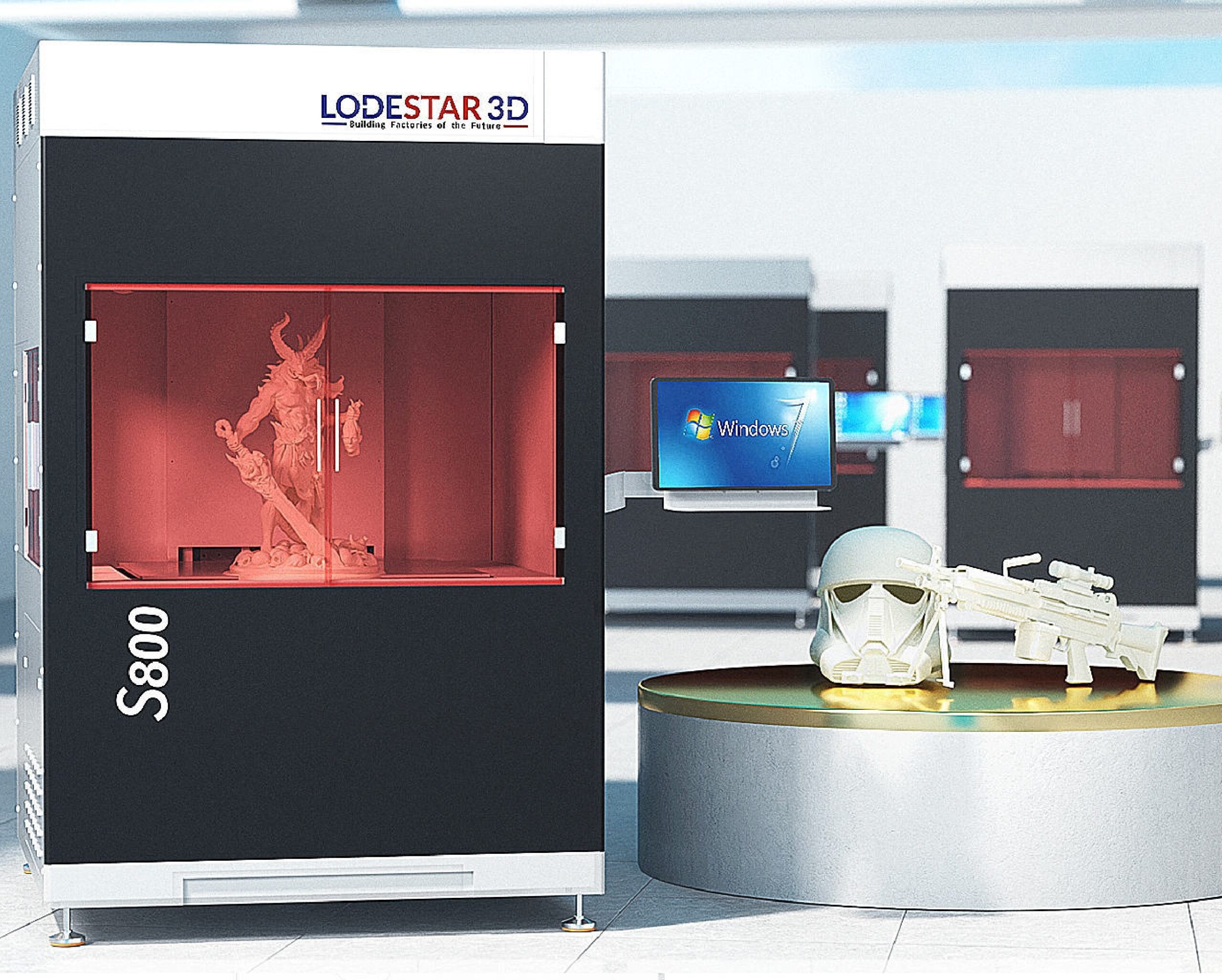
SLA (Stereolithography) is a resin-based additive manufacturing process that uses a laser or light source to cure liquid photopolymer resin layer by layer.
The process works by selectively solidifying resin according to a digital CAD model until the complete part is produced.
The typical SLA workflow includes:
- CAD model preparation
- Support generation
- Resin printing
- Washing
- Support removal
- UV post-curing
- Final finishing
SLA is one of the most accurate polymer 3D printing technologies and is widely used for applications requiring detailed surfaces and precise dimensions.
Advantages of SLA for Functional Prototypes
1. Superior Surface Finish
One of the biggest advantages of SLA is its smooth surface quality.
Compared with many other polymer printing technologies, SLA parts have:
- Reduced layer visibility
- Smooth curved surfaces
- Fine details
- Sharp edges
- High-quality appearance
This makes SLA suitable for prototypes where visual appearance and design validation are important.
Applications include:
- Consumer product prototypes
- Medical device models
- Product design validation
- Transparent components
- Presentation prototypes
2. High Dimensional Accuracy
SLA is capable of producing highly detailed parts with tight dimensional control.
It is suitable for testing:
- Assembly fit
- Small mechanical features
- Complex geometries
- Fine design details
Engineers often use SLA prototypes to evaluate:
- Component alignment
- Product ergonomics
- Form and appearance
3. Wide Range of Engineering Resins
Modern industrial SLA systems support various resin materials.
Common resin types include:
- Tough resin
- Durable resin
- Flexible resin
- High-temperature resin
- Clear resin
- Castable resin
- Engineering composite resin
These materials allow manufacturers to select properties based on application requirements.
Limitations of SLA
Although SLA offers excellent accuracy and surface finish, it has some limitations.
Material Durability
Standard resins may not match the mechanical properties of production thermoplastics.
Some SLA materials can be:
- More brittle
- Sensitive to UV exposure
- Less impact-resistant
Engineering resins can improve performance, but material selection is critical.
Post-Processing Requirements
SLA parts require additional processing steps, including:
- Resin washing
- UV curing
- Support removal
- Surface finishing
These steps affect overall production time.
Understanding SLS 3D Printing
What Is SLS 3D Printing?
SLS (Selective Laser Sintering) is a powder-based polymer additive manufacturing technology.
It uses a laser to fuse polymer powder particles layer by layer to create a solid component.
Common SLS materials include:
- Nylon PA12
- Nylon PA11
- Glass-filled nylon
- Flexible thermoplastic materials
Unlike SLA, SLS does not require traditional support structures because surrounding powder supports the part during printing.
Advantages of SLS for Functional Prototypes
1. Strong Mechanical Performance
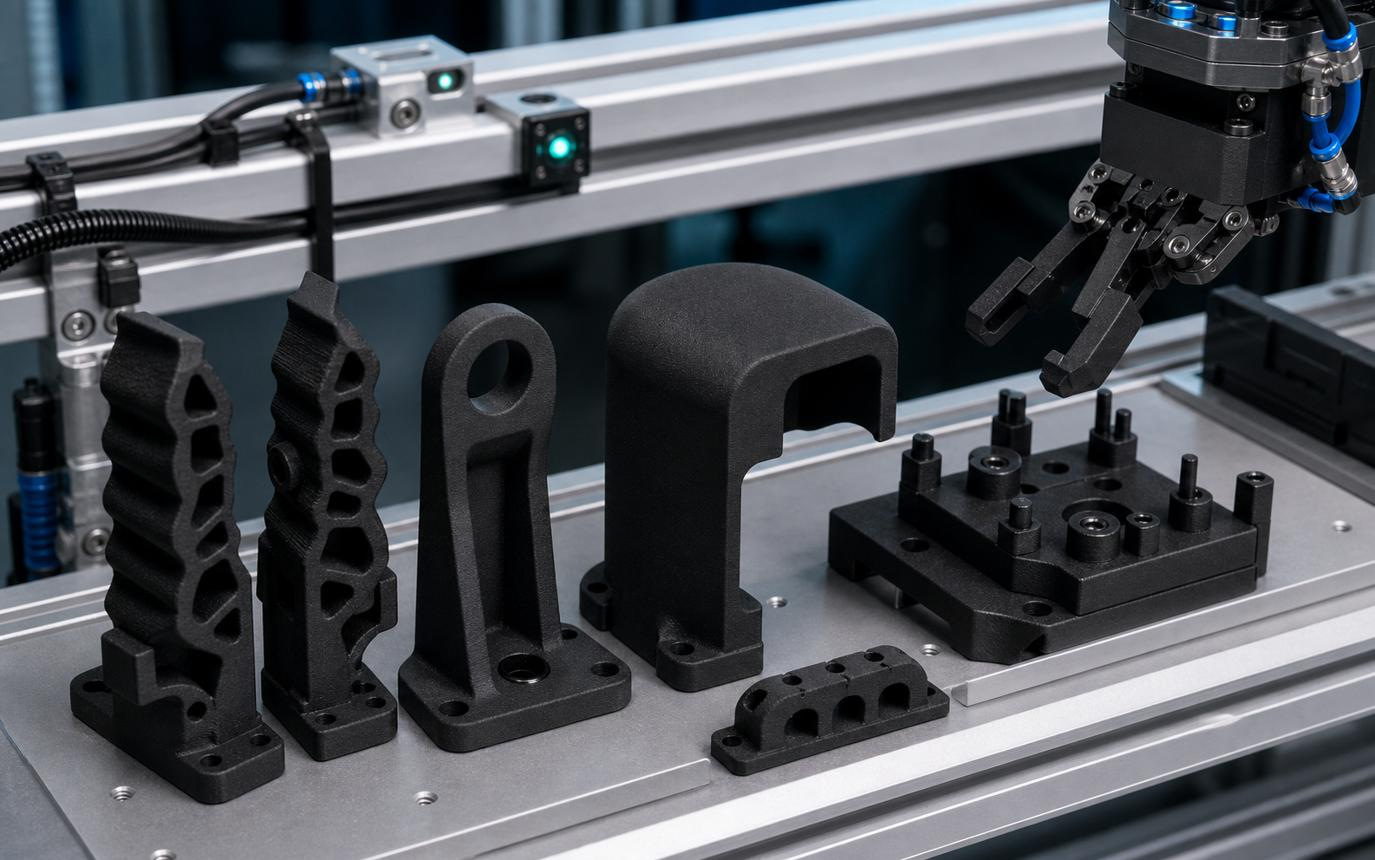
SLS is widely used for functional prototypes because it produces durable thermoplastic parts.
Benefits include:
- High impact resistance
- Better mechanical strength
- Good chemical resistance
- Production-like material properties
This makes SLS suitable for testing parts under real operating conditions.
Applications include:
- Automotive components
- Industrial housings
- Mechanical assemblies
- Functional brackets
- Engineering prototypes
2. No Support Structures
A major advantage of SLS is that unused powder supports the part during printing.
This allows engineers to create:
- Complex geometries
- Internal features
- Moving assemblies
- Nested components
- Hollow structures
This design freedom reduces post-processing requirements compared with support-based technologies.
3. Better for Functional Testing
SLS parts are often closer to production thermoplastic components.
They can be used for:
- Mechanical testing
- Snap-fit testing
- Assembly validation
- Environmental testing
- Prototype performance evaluation
Limitations of SLS
Surface Finish
SLS parts typically have a slightly textured or grainy surface due to the powder-based process.
Additional finishing may be required for:
- Smooth appearance
- Customer-facing parts
- Painted surfaces
Higher Equipment Investment
Industrial SLS systems generally require higher investment compared with many resin systems due to:
- Powder handling requirements
- Thermal management systems
- Industrial workflow needs
SLA vs SLS: Key Differences
Feature | SLA | SLS |
Technology | Resin photopolymerization | Powder fusion |
Material | Liquid resin | Polymer powder |
Surface Finish | Excellent | Good |
Mechanical Strength | Material dependent | Generally stronger |
Accuracy | Very high | High |
Support Structures | Required | Not required |
Complex Geometry | Excellent | Excellent |
Functional Testing | Moderate to high | Excellent |
Production-like Parts | Limited depending on resin | Strong advantage |
Post-Processing | Washing and curing | Powder removal and finishing |
SLA vs SLS: Which Is Better for Functional Prototypes?
The answer depends on what you need to test.
Choose SLA When You Need:
High Visual Quality
SLA is the better option when the prototype needs to replicate the appearance of the final product.
Examples:
- Consumer products
- Medical models
- Product design reviews
- Marketing samples
Fine Details
SLA is ideal for:
- Small features
- Complex surfaces
- Detailed models
- Precision components
Smooth Surface Validation
If the prototype needs to evaluate:
- Product aesthetics
- Surface design
- User interaction
SLA provides an advantage.
Choose SLS When You Need:
Mechanical Testing
SLS is preferred when prototypes need to withstand:
- Mechanical loads
- Repeated use
- Functional movement
- Assembly testing
Durable Engineering Parts
Applications include:
- Automotive prototypes
- Industrial components
- Robotics parts
- Functional housings
Complex Assemblies
Because SLS does not require support structures, it is suitable for:
- Moving parts
- Hinges
- Internal channels
- Integrated assemblies
Functional Prototype Applications Comparison
Application | Better Technology |
Product appearance model | SLA |
Consumer product prototype | SLA |
Mechanical testing | SLS |
Automotive functional parts | SLS |
Medical visual models | SLA |
Engineering assemblies | SLS |
Transparent prototypes | SLA |
Snap-fit components | SLS |
Detailed design validation | SLA |
Production-like polymer testing | SLS |
SLA vs SLS for Different Industries
Automotive Industry
Automotive companies use polymer prototypes for:
- Interior components
- Dashboard designs
- Assembly testing
- Functional brackets
- Airflow testing
SLS is often preferred for functional parts, while SLA is used for design validation.
Aerospace Industry
Aerospace manufacturers require:
- Lightweight prototypes
- Functional testing
- Complex geometries
SLS is useful for durable engineering parts, while SLA supports detailed design evaluation.
Medical Industry
Medical applications require:
- Accuracy
- Detail
- Patient-specific designs
SLA is commonly used for:
- Anatomical models
- Surgical planning models
- Device prototypes
Industrial Manufacturing
Manufacturers use:
- Jigs
- Fixtures
- Functional components
- Assembly aids
SLS is often preferred because of its mechanical properties.
Cost Comparison: SLA vs SLS
The total cost depends on:
- Machine investment
- Material cost
- Part size
- Production quantity
- Post-processing requirements
SLA Cost Advantages
SLA may be more economical for:
- Detailed prototypes
- Visual models
- Small parts
- Short development cycles
SLS Cost Advantages
SLS provides value for:
- Multiple functional parts
- Batch production
- Complex assemblies
- Engineering testing
The lowest machine cost does not always mean the lowest prototype cost. Manufacturers should evaluate total workflow cost.
How to Select the Right Technology
Before selecting SLA or SLS, evaluate:
Prototype Objective
Ask:
- Is appearance the priority?
- Is mechanical testing required?
- Does the part need production-like behavior?
Material Requirements
Consider:
- Strength
- Flexibility
- Heat resistance
- Chemical exposure
- Durability
Production Requirements
Evaluate:
- Number of prototypes
- Batch size
- Repeatability
- Finishing requirements
Post-Processing Needs
Consider:
- Surface finishing
- Painting
- Machining
- Assembly requirements
Conclusion
Both SLA and SLS are powerful technologies for industrial prototyping, but they serve different engineering needs.
SLA is the preferred choice when manufacturers require excellent surface finish, fine details, and accurate visual prototypes. SLS is better suited for functional prototypes that require strength, durability, and production-like material performance.
The best choice depends on the purpose of the prototype, material requirements, testing conditions, and final application.
Lodestar 3D helps manufacturers select the right polymer additive manufacturing technology, including SLA, SLS, materials, software, and complete prototyping workflows for faster product development.
FAQ's
SLS is generally better for functional prototypes requiring mechanical strength and durability, while SLA is better for detailed prototypes requiring smooth surfaces and high accuracy.
SLS typically produces stronger thermoplastic parts because materials such as nylon provide better impact resistance and durability.
SLA generally provides a smoother surface finish and finer details compared with SLS.
Yes, engineering SLA resins can support functional testing, but material selection is important because properties vary between resin types.
SLS is often preferred for engineering and functional prototypes, while SLA is selected for high-detail visual and design validation prototypes.