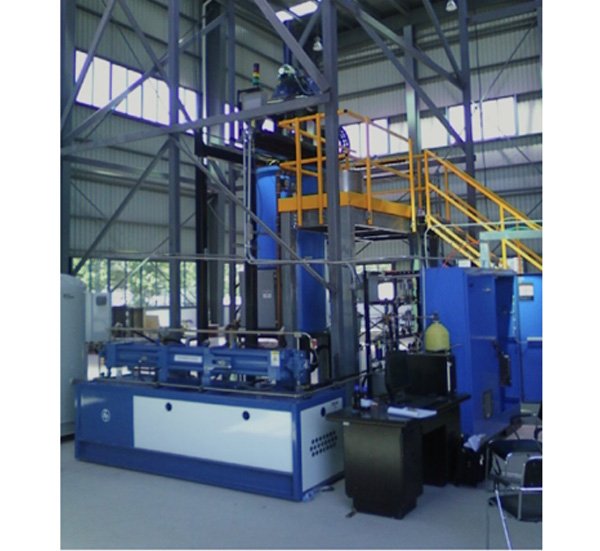
How to Scale a HIP Process from Research to Production
Source by lodestar3d.com
Developing a successful Hot Isostatic Pressing (HIP) process usually begins with small laboratory samples. Researchers establish the required pressure, temperature, holding time and material response before considering larger components or production batches.
However, a HIP cycle that works successfully on a laboratory sample cannot always be transferred directly to production.
As component size and batch capacity increase, factors such as temperature uniformity, heating and cooling time, hot-zone dimensions, loading arrangement and cycle repeatability become increasingly important.
A structured scale-up process helps move HIP technology from initial research to reliable industrial production.
Table of Contents
Why Does HIP Process Scale-Up Matter?
Laboratory development focuses primarily on proving that a material responds correctly to a particular HIP cycle.
Production requires much more.
The process must also deliver:
Repeatable results
Consistent temperature distribution
Suitable batch capacity
Predictable cycle times
Reliable component quality
Efficient equipment utilisation
Practical operating costs
Moving directly from a small research sample to a large production system without intermediate validation may introduce unnecessary technical and commercial risk.
For many projects, the most practical path is:
Laboratory Research → Scale-Up or Pilot Validation → Production
Stage 1: Develop the HIP Process in the Laboratory
The first stage is establishing the basic process conditions.
A laboratory HIP allows engineers and researchers to evaluate how the material responds to different combinations of temperature, pressure and holding time.
Important parameters include:
Material Type
Different metals, ceramics and powder systems respond differently to heat and pressure.
Processing Temperature
The required temperature should support deformation, creep or diffusion without negatively affecting the material.
Pressure
Pressure must be high enough to achieve the required densification or defect reduction.
Holding Time
The holding period must allow sufficient time for the required material changes to occur.
Process Gas
Argon is commonly used, although the gas environment should be selected according to the material and furnace configuration.
The goal at this stage is not maximum throughput. It is to establish a repeatable processing window.
The AIP6-30H Laboratory Hot Isostatic Press can support research and HIP process-development requirements with a maximum pressure capability of 30,000 psi / 207 MPa.
The AIP10-30H, for example, provides a 150 mm diameter × 300 mm long hot zone and is positioned between laboratory research and full production.
It allows larger samples to be evaluated before moving to substantially larger production equipment.
Stage 4: Validate the HIP Cycle at Scale
A process should not be considered production-ready simply because the same temperature and pressure can be achieved in a larger machine.
Scale-up validation should examine whether the entire component experiences the required processing conditions.
Important questions include:
Is Temperature Uniform Across the Load?
Larger components and batches can affect heat distribution.
Does the Required Pressure Reach the Entire Cycle Consistently?
Pressure profiles and timing should remain within the required process window.
Does Component Size Change Heating Time?
Large components may require longer heating and holding periods.
Does Cooling Affect the Final Properties?
Cooling rate can influence the resulting microstructure of some materials.
Are Results Repeatable?
Multiple cycles should provide comparable material and component properties before the process is transferred to regular production.
Schedule A Call
+91 990-000-3300
Stage 5: Develop the Production Loading Strategy
Laboratory HIP cycles may process one or two samples at a time.
Production systems may process multiple parts in a single batch.
The loading arrangement therefore becomes an important part of process design.
Evaluate:
Number of components per cycle
Component spacing
Fixture requirements
Total batch weight
Hot-zone utilisation
Loading and unloading time
Gas circulation
Temperature uniformity
Simply filling every available area in the furnace may not provide the best production result.
The objective should be to balance throughput with reliable processing conditions.
Stage 6: Select the Appropriate Production HIP
Once the process has been validated at larger scale, the production system can be selected.
The decision should consider more than maximum pressure.
Hot-Zone Diameter
The diameter must accommodate the component or intended batch arrangement.
Hot-Zone Length
Long components or stacked production loads may require additional usable length.
Furnace Temperature
The furnace must support the validated process temperature.
Pressure Capability
The system should provide the required processing pressure without unnecessary oversizing.
Production Volume
Expected annual or weekly demand should determine the required batch capacity.
Future Growth
Select equipment with enough flexibility to support realistic future production requirements.
Lodestar 3D’s AIP HIP range includes systems covering different stages of development.
Development Stage
Example System
Typical Role
Laboratory
AIP6-30H
Research and process development
Scale-Up
AIP10-30H
Larger samples and pilot validation
Production
AIP18-30H
Smaller production requirements
Production
AIP24-30H
Higher production capacity
Large Production
AIP52-15H
Large production-sized processing
Stage 7: Evaluate Cycle Time and Throughput
Production economics depend heavily on the number of components processed per cycle and the total cycle duration.
A HIP cycle includes more than just the holding period.
Total production time may include:
Loading
Vessel closure
Pressurisation
Heating
Holding
Cooling
Depressurisation
Unloading
Reducing one stage without considering the effect on material quality may create inconsistent results.
For this reason, throughput calculations should use the complete cycle rather than the holding time alone.
Stage 8: Establish Production Quality Control
A production HIP process requires clear documentation and monitoring.
Important production records may include:
Cycle identification
Batch information
Material grade
Pressure profile
Temperature profile
Holding duration
Operator information
Inspection results
These records help establish process repeatability and make it easier to investigate variations between production batches.
Common HIP Scale-Up Mistakes
Several issues can make the transition from research to production more difficult.
Selecting a Machine Based Only on Pressure
Hot-zone size, furnace temperature and batch requirements are equally important.
Moving Directly to Full Production
Pilot validation can identify problems before larger investments are made.
Ignoring Future Component Sizes
A machine that fits today’s sample may become restrictive as the project develops.
Assuming Laboratory Cycle Times Will Remain the Same
Larger components and batches can change heating and cooling behaviour.
Maximising Batch Size Too Early
Production efficiency should not come at the expense of temperature uniformity or repeatability.
How Lodestar 3D Supports HIP Scale-Up
Lodestar 3D can help research institutions and manufacturers evaluate HIP equipment at different stages of development.
The assessment can include:
Material type
Laboratory results
Required pressure
Furnace temperature
Component dimensions
Hot-zone requirements
Pilot-scale needs
Expected production batches
Future capacity requirements
This helps organisations evaluate an AIP HIP system based on both current process requirements and long-term production plans.
Conclusion
Scaling a HIP process from research to production requires more than moving the same cycle into a larger machine.
A successful transition begins with laboratory process development, followed by material validation, larger-component testing, pilot-scale verification, production loading studies and appropriate equipment selection.
The most effective approach is to increase scale progressively while confirming that pressure, temperature, cycle time and final material properties remain consistent.
By following a structured research → scale-up → production pathway, organisations can reduce technical risk and select HIP equipment that supports both current requirements and future manufacturing capacity.
Talk to a Lodestar 3D HIP expert to evaluate the appropriate AIP laboratory, scale-up or production system for your project.
FAQ's
Why should a HIP process be validated before production?
Validation confirms that the required material properties can be achieved consistently when component and batch sizes increase.
Is a pilot HIP system always required?
Not always. However, pilot or scale-up equipment can reduce risk when there is a significant difference between laboratory samples and intended production components.
Do HIP cycle parameters change during scale-up?
They can. Larger components may require adjustments to heating, holding or cooling times even when the target pressure and temperature remain similar.
How do I choose the right production HIP size?
Consider the largest component, batch arrangement, required hot-zone diameter and length, process temperature, pressure and expected production volume.
Can a laboratory HIP process be transferred directly to production?
The laboratory process provides the starting point, but production-scale validation is recommended because larger loads can change thermal behaviour, cycle duration and process uniformity.
How can Lodestar 3D help with HIP process scale-up?
Lodestar 3D can review research requirements, component dimensions, process conditions and future production capacity to help identify an appropriate AIP HIP system.