

WaxJet 400 vs WaxJet 510 vs WaxJet 530: Which Jewelry 3D Printer Is Right for You?
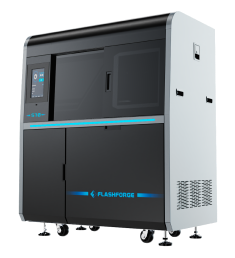
Jewelry manufacturers need accurate wax patterns, faster casting workflows, lower manual wax work, and better repeatability across custom and batch designs. Wax 3D printing helps achieve this by producing castable wax patterns directly from CAD files.
Table of Contents
The WaxJet series is designed for jewelry casting workflows where fine detail, clean wax pattern production, and production efficiency matter. However, choosing between WaxJet 400, WaxJet 510, and WaxJet 530 depends on your production volume, design complexity, required resolution, budget, and long-term manufacturing goals.
This guide compares the three models to help jewelry manufacturers, casting houses, CAD/CAM studios, and wax pattern service providers select the right system.
Quick Comparison: WaxJet 400 vs WaxJet 510 vs WaxJet 530
Factor | WaxJet 400 | WaxJet 510 | WaxJet 530 |
Best For | Batch wax model production and established casting workflows | High-detail jewelry patterns and small-to-medium production | High-volume jewelry wax pattern production |
Technology | MultiJet Printing wax 3D printing | MultiJet Printing wax 3D printing | MultiJet Printing wax 3D printing |
Build Volume | 289 × 218 × 150 mm | 289 × 208 × 100 mm | 289 × 208 × 150 mm |
Resolution | 1200 × 1200 × 1600 DPI | 2900 × 2900 × 1700 DPI | 2900 × 2900 × 1700 DPI |
Layer Thickness | 16 microns | 15 microns | 15 microns |
Dimensional Accuracy | ±0.04 mm / 20 mm | ±0.04 mm / 20 mm | ±0.04 mm / 20 mm |
Production Fit | Moderate to batch-oriented | Precision-focused, balanced production | Faster, higher-throughput production |
Recommended For | Workshops needing reliable wax printing with larger build height | Manufacturers needing fine details and compact production | Large casting houses and high-output jewelry manufacturers |
What Is the WaxJet 400?
The WaxJet 400 is a large-size wax 3D printer for casting wax pattern production. It is suitable for jewelry manufacturers and precision casting users who need smooth wax models, reliable output, and batch production capability.
Its build volume of 289 × 218 × 150 mm gives it a practical production space for multiple jewelry patterns. With 1200 × 1200 × 1600 DPI resolution and 16-micron layer thickness, it is suitable for many jewelry casting applications, especially where production volume and build capacity matter more than the highest available detail.
WaxJet 400 can be a practical option for manufacturers who want digital wax pattern production and do not necessarily need the ultra-high resolution of the newer WaxJet 510 or WaxJet 530.
WaxJet 400 is suitable for:
- Jewelry wax patterns
- Precision casting workflows
- Batch wax model production
- Rings, bangles, pendants, and ornaments
- Workshops moving from manual wax work to digital printing
- Manufacturers needing larger build height
What Is the WaxJet 510?
The WaxJet 510 is a high-precision wax 3D printer designed for detailed jewelry casting patterns. It is positioned as a strong middle option between older/lower-resolution systems and high-throughput production models.
It offers 2900 × 2900 × 1700 DPI resolution, 15-micron layer thickness, and ±0.04 mm / 20 mm dimensional accuracy. This makes it suitable for intricate jewelry designs where fine features and surface detail are important.
WaxJet 510 has a build volume of 289 × 208 × 100 mm, making it practical for small-to-medium batch production, custom jewelry, CAD/CAM studios, and manufacturers who need high-detail wax patterns without moving to the highest-output system.
WaxJet 510 is suitable for:
- High-detail jewelry wax patterns
- K-gold jewelry casting
- Micro-pavé designs
- Filigree patterns
- Rings, pendants, earrings, and bracelets
- Custom jewelry production
- Small-to-medium batch manufacturing
- CAD/CAM jewelry studios

What Is the WaxJet 530?
The WaxJet 530 is the high-output option in the WaxJet range. It is designed for professional jewelry manufacturers, casting houses, and 3D printing service providers that need faster wax model production while maintaining high precision.
Like the WaxJet 510, it supports 2900 × 2900 × 1700 DPI resolution and 15-micron layer thickness. The main advantage is throughput. With a larger 289 × 208 × 150 mm build volume and a high-output printhead configuration, the WaxJet 530 is better suited for larger batch production and continuous manufacturing environments.
It is the best fit when production demand is high and cost per wax pattern must be optimized through higher machine utilization.
WaxJet 530 is suitable for:
- High-volume jewelry casting houses
- Export jewelry manufacturers
- Wax pattern service bureaus
- Large batch production
- Repeat jewelry SKUs
- High daily wax pattern output
- Production environments needing faster turnaround
- Businesses scaling from small-batch to industrial wax printing
Main Difference Between WaxJet 400, 510, and 530
All three models are wax 3D printers for casting workflows, but their strengths are different.
The WaxJet 400 is best for users who need reliable wax pattern production with a larger build height and are comfortable with moderate resolution compared with the newer models.
The WaxJet 510 is best for manufacturers who need high-resolution wax patterns, fine jewelry details, and balanced small-to-medium production.
The WaxJet 530 is best for businesses that need high precision plus higher throughput for larger production volumes.
In simple terms:
- Choose WaxJet 400 for established batch wax printing needs.
- Choose WaxJet 510 for fine details and balanced production.
- Choose WaxJet 530 for high-output jewelry manufacturing.
Resolution and Detail Comparison
Resolution matters in jewelry because designs often include small features such as stone seats, prongs, engravings, filigree lines, micro-pavé settings, and fine decorative surfaces.
WaxJet 400 provides 1200 × 1200 × 1600 DPI resolution with 16-micron layers. This can support many casting workflows, but the WaxJet 510 and WaxJet 530 offer higher resolution at 2900 × 2900 × 1700 DPI with 15-micron layers.
For basic jewelry patterns, the WaxJet 400 may be sufficient. For fine jewelry, micro-pavé, detailed filigree, and premium custom designs, the WaxJet 510 or WaxJet 530 may be more suitable.
Build Volume and Batch Production
Build volume determines how many wax patterns can be printed in one job and what size of model can be produced.
WaxJet 400 and WaxJet 530 offer 150 mm build height, while WaxJet 510 offers 100 mm build height. For most rings, pendants, earrings, and small jewelry components, the WaxJet 510 build volume may be sufficient.
However, if your workflow includes larger ornaments, taller designs, or higher batch nesting requirements, WaxJet 400 or WaxJet 530 may offer more flexibility.
Production Speed and Throughput
Throughput is important when a manufacturer prints wax models every day.
WaxJet 510 is suitable for small-to-medium production. It works well for workshops that need high-detail wax patterns but do not need maximum output.
WaxJet 530 is better when speed and volume are priorities. It is designed for high-output production environments where multiple designs must be printed regularly.
WaxJet 400 can support batch production, but manufacturers looking for both high resolution and high throughput should compare it carefully with WaxJet 530.
Material Workflow
All three models are designed around wax pattern production for casting. They use build wax and support wax workflows to create castable models and support complex geometries.
WaxJet 400 uses an earlier wax material workflow, while WaxJet 510 and WaxJet 530 use upgraded red build wax and white support wax systems. These materials are designed for high-precision casting wax production and easier support removal.
Before buying any model, confirm:
- Build wax availability
- Support wax availability
- Wax cartridge cost
- Shelf life
- Support removal process
- Material consumption per pattern
- Local supply support
Consumable availability is critical for production continuity.
Which Model Is Best for Small Jewelry Workshops?
Small jewelry workshops usually need a balance of quality, cost, compact workflow, and manageable production capacity.
The WaxJet 510 is often the best fit for small and medium workshops because it offers high resolution, compact production capacity, and strong suitability for custom jewelry and small batches.
Choose WaxJet 510 if your business handles:
- Custom rings
- Bridal jewelry
- Pendants
- Earrings
- CAD-based client designs
- Regular but moderate wax pattern demand
- Fine details and premium designs
Which Model Is Best for Budget-Conscious Buyers?
Budget-conscious buyers may consider the WaxJet 400, especially if the requirement is reliable wax pattern production without needing the highest resolution.
However, the buying decision should not be based only on machine price. If your jewelry designs require high-detail accuracy, the WaxJet 510 may provide better long-term value. If production volume is high, the WaxJet 530 may reduce cost per pattern through higher output.
Buying Checklist
Before selecting WaxJet 400, WaxJet 510, or WaxJet 530, evaluate:
- Monthly wax pattern volume
- Typical jewelry model size
- Required design detail
- Need for micro-pavé or filigree printing
- Batch production requirement
- Available installation space
- Consumable availability
- Operator training needs
- Service and maintenance support
- Sample print quality
- Casting workflow compatibility
- Cost per wax pattern
- ROI based on real production volume
Always request sample prints using your own CAD files before finalizing the model.
Conclusion
WaxJet 400, WaxJet 510, and WaxJet 530 all support jewelry wax pattern production, but each model serves a different production need.
The WaxJet 400 is suitable for reliable batch wax printing and users who need larger build height with moderate resolution. The WaxJet 510 is the balanced choice for high-detail jewelry patterns, custom designs, and small-to-medium production. The WaxJet 530 is the best fit for high-output manufacturers and casting houses that need faster production and larger batch capacity.
For most jewelry manufacturers, the right choice depends on production volume, design complexity, available budget, required detail level, and long-term growth plans.
Lodestar 3D helps jewelry manufacturers evaluate WaxJet systems based on CAD workflow, casting requirements, wax pattern volume, sample print quality, and ROI.
FAQ's
What is the main difference between WaxJet 400, WaxJet 510, and WaxJet 530?
WaxJet 400 is suitable for established wax pattern production, WaxJet 510 is ideal for high-detail small-to-medium production, and WaxJet 530 is designed for high-output jewelry manufacturing.
Which WaxJet model is best for fine jewelry detail?
WaxJet 510 and WaxJet 530 are better suited for fine jewelry detail because they offer 2900 × 2900 × 1700 DPI resolution and 15-micron layer thickness.
Which WaxJet model is best for high-volume production?
WaxJet 530 is the best option for high-volume jewelry wax pattern production because it is designed for faster throughput and larger production requirements.
Is WaxJet 510 suitable for small jewelry manufacturers?
Yes. WaxJet 510 is suitable for small and medium jewelry manufacturers, CAD/CAM studios, and custom jewelry workshops that need high-detail wax patterns.
Is WaxJet 400 still useful for jewelry casting?
Yes. WaxJet 400 can still be useful for batch wax pattern production where ultra-high resolution is not the main requirement.
Which WaxJet model should a casting house choose?
A casting house with high daily production demand should consider WaxJet 530. A smaller casting house with moderate production needs may choose WaxJet 510.