

WaxJet 510: Features, Applications & Buying Guide
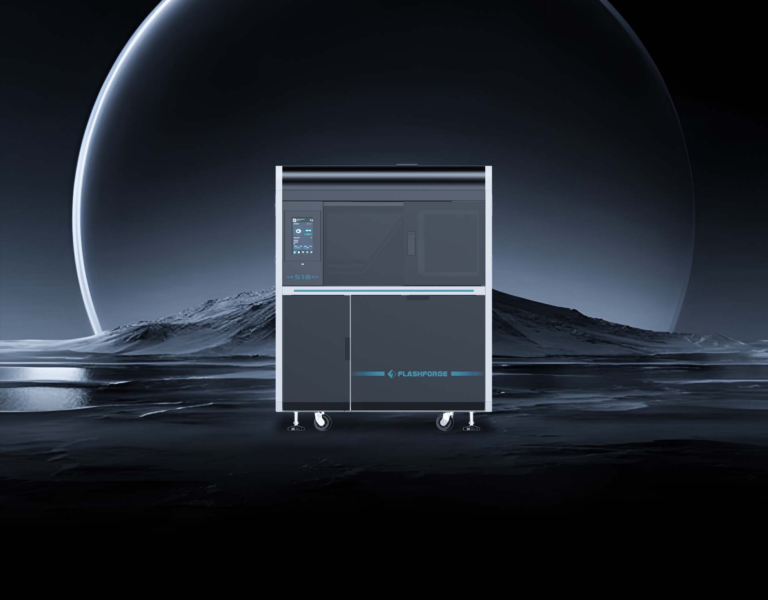
Jewelry manufacturing is moving rapidly toward digital production. Customers want detailed designs, faster approvals, customized ornaments, and consistent casting quality. At the same time, manufacturers need to reduce manual wax work, improve repeatability, and handle small-to-medium production batches without depending completely on traditional mold-making.
Table of Contents
The WaxJet 510 is designed for this exact requirement. It is a high-precision wax 3D printer used to produce castable wax patterns directly from digital jewelry designs. For jewelry manufacturers, CAD/CAM studios, casting houses, and wax pattern service providers, the WaxJet 510 offers a practical way to move from manual wax modeling to a more controlled digital casting workflow.
Lodestar 3D offers the WaxJet 510 as part of its jewelry 3D printing portfolio for Indian manufacturers looking for reliable wax pattern production, high-detail output, and strong application support.
What Is the WaxJet 510?
The WaxJet 510 is a MultiJet Printing wax 3D printer developed for jewelry casting and precision wax pattern production. Instead of carving wax manually or creating wax patterns through injection tooling, the machine prints wax models layer by layer from a CAD file.
The printed wax patterns can be used in the investment casting or lost-wax casting workflow. This makes the system suitable for jewelry manufacturers who need accurate wax models for rings, bangles, pendants, chains, earrings, filigree designs, micro-pavé jewelry, and K-gold ornaments.
The key advantage of the WaxJet 510 is that it produces wax patterns specifically intended for casting workflows. This helps manufacturers reduce manual effort and improve consistency between digital design and final cast component.
Why Jewelry Manufacturers Use Wax 3D Printing
Traditional jewelry production often depends on hand-carved wax, rubber molds, and wax injection. These methods are useful for repeat production, but they can become limiting when designs are customized, highly detailed, or frequently changing.
Wax 3D printing solves several practical problems:
- Faster design-to-pattern workflow
- Reduced manual wax carving
- Better repeatability across designs
- Easier production of intricate geometry
- Suitable for custom and small-batch orders
- Reduced need for molds in one-off designs
- Better control over CAD-based manufacturing
- Faster prototyping and customer approval
For modern jewelry businesses, wax 3D printing supports greater design freedom and faster production planning.
Key Features of WaxJet 510
1. High-resolution wax pattern printing
The WaxJet 510 is built for high-detail jewelry production. It supports XHD printing with very fine layer thickness, helping produce smooth wax models with sharp design details.
This is useful for:
- Fine prongs
- Stone-setting seats
- Filigree patterns
- Engraved textures
- Decorative surfaces
- Thin jewelry structures
- Micro-pavé design elements
High-resolution wax printing helps reduce the need for heavy manual correction before casting.
2. Accurate dimensional control
Jewelry manufacturing requires dimensional accuracy. Ring sizes, stone settings, wall thickness, prong positions, and design proportions must remain consistent between CAD design and wax pattern.
The WaxJet 510 supports precise wax model production, making it suitable for manufacturers who need repeatable casting patterns for both custom and batch production.
Accurate wax patterns can help reduce rework during casting, stone setting, and finishing.
3. Build volume suitable for jewelry batches
The WaxJet 510 offers a build volume suitable for multiple jewelry patterns in a single print job. This allows manufacturers to print several rings, pendants, earrings, or small components together, depending on design size and layout.
For small and medium jewelry production units, this build size supports practical daily production without requiring a larger floor-standing system.
4. Wax and support material workflow
The WaxJet 510 uses a build wax for the actual jewelry pattern and a support wax for holding delicate areas during printing. Support material is important when printing complex designs with overhangs, fine features, and intricate shapes.
A reliable support workflow helps protect fragile details and reduce damage during post-processing.
5. WaxJetPrint software workflow
The WaxJet 510 uses dedicated software for file preparation, model arrangement, slicing, and print management. Jewelry CAD files can be prepared for printing, nested efficiently, and processed for wax pattern production.
This digital workflow helps manufacturers manage multiple designs and print jobs with better control.
6. Suitable for continuous production
Jewelry manufacturers often need to print wax patterns overnight or across long production windows. The WaxJet 510 is designed for continuous operation, supporting unattended printing where the workflow is properly set up.
This can improve productivity and help teams clear wax pattern backlogs faster.

WaxJet 510 Technical Overview
Feature | Detail |
Technology | MultiJet Printing wax 3D printing |
Application | Jewelry casting wax pattern production |
Build Volume | 289 × 208 × 100 mm |
Print Resolution | 2900 × 2900 × 1700 DPI |
Layer Thickness | 15 microns |
Dimensional Accuracy | ±0.04 mm / 20 mm |
Print Heads | 1 |
Materials | Build wax and support wax |
Software | WaxJetPrint |
File Formats | STL and SLC |
Connectivity | Ethernet and USB |
Power Requirement | AC 220–240V, 50Hz |
Working Environment | Controlled temperature and humidity recommended |
Applications of WaxJet 510
K-gold jewelry casting
The WaxJet 510 is well suited for K-gold jewelry production where detailed wax patterns are required for casting. It can support rings, pendants, bangles, earrings, chains, and decorative ornaments.
Rings and stone-setting designs
Ring manufacturing often requires accurate prongs, stone seats, shanks, and surface details. WaxJet 510 helps produce detailed wax models directly from CAD designs.
Micro-pavé jewelry
Micro-pavé work requires precision in small stone settings and decorative surfaces. High-resolution wax printing helps maintain fine details before casting.
Filigree and intricate ornaments
Filigree designs are difficult to reproduce manually with consistency. Wax 3D printing allows complex lightweight patterns to be created digitally and printed accurately.
Custom jewelry production
For personalized jewelry, bridal rings, name pendants, limited-edition designs, and customer-specific ornaments, WaxJet 510 helps reduce the time from CAD design to casting pattern.
Rapid prototyping
Jewelry designers can print wax models to check design proportions, size, detail, and casting readiness before moving into production.
Small-to-medium batch production
Casting houses and jewelry manufacturers can print multiple wax patterns in one job, making the system suitable for repeat SKUs and short production runs.
WaxJet 510 vs Manual Wax Modeling
Manual wax modeling depends heavily on artisan skill. It is suitable for unique work but can be slow and difficult to repeat exactly.
WaxJet 510 provides a digital workflow where the same CAD design can be printed repeatedly with consistent geometry.
Factor | Manual Wax Modeling | WaxJet 510 |
Speed | Slower for complex designs | Faster CAD-to-wax workflow |
Repeatability | Depends on artisan skill | Consistent from digital file |
Customization | Possible but time-consuming | Easier for custom designs |
Complex Geometry | Difficult manually | Strong for detailed designs |
Batch Production | Labor-intensive | Multiple patterns per print job |
WaxJet 510 vs Resin 3D Printing
Resin 3D printers are often used for jewelry prototyping because they are available at lower entry costs. However, resin patterns are different from wax patterns.
WaxJet 510 produces wax models intended for casting workflows. Resin printers produce castable resin or wax-filled resin patterns that require carefully validated burnout cycles.
Choose WaxJet 510 if:
- You need true wax patterns
- Casting quality is important
- You produce jewelry patterns regularly
- You want a workflow closer to traditional lost-wax casting
- You need high-detail wax models for small-batch production
Choose resin printing if:
- Budget is limited
- You mainly need visual prototypes
- Casting volume is low
- You are still testing digital jewelry production
- You can validate resin burnout carefully
What to Check Before Buying WaxJet 510
Before investing in the WaxJet 510, jewelry manufacturers should evaluate their complete workflow.
1. Monthly production requirement
Estimate how many wax patterns you need every month. This will help determine whether WaxJet 510 capacity matches your production needs.
2. Design complexity
If you produce micro-pavé, filigree, thin prongs, detailed ornaments, or complex geometry, request sample prints using your actual CAD files.
3. Casting workflow
Check whether the printed wax patterns fit your current investment, burnout, and casting process.
4. Consumable availability
Build wax and support wax availability is important for uninterrupted production. Confirm local supply, lead time, and material cost.
5. Operator training
The machine requires trained operators for file preparation, print setup, material handling, support removal, and routine maintenance.
6. Installation requirements
Confirm machine space, electrical supply, operating environment, ventilation, and post-print handling area before installation.
7. Service and support
For production use, reliable service support matters as much as machine performance. Ask about installation, warranty, preventive maintenance, software support, and spare parts.
ROI Considerations for Jewelry Manufacturers
The WaxJet 510 can support return on investment when it improves production speed, reduces manual wax work, lowers pattern rejection, and enables more custom orders.
ROI should be calculated using:
- Monthly wax pattern volume
- Current manual wax labor cost
- Outsourced wax printing cost
- Time saved per design
- Reduction in rework
- Improvement in casting consistency
- Faster customer approvals
- Higher custom-order capacity
- Material and maintenance cost
- Machine utilization rate
For jewelry businesses with regular wax pattern demand, in-house wax 3D printing can improve control over production timelines and design confidentiality.
Conclusion
The WaxJet 510 is a practical wax 3D printer for jewelry manufacturers that need high-resolution castable wax patterns, faster design-to-casting workflows, and better production consistency.
It is especially useful for K-gold jewelry, micro-pavé designs, filigree ornaments, rings, pendants, bangles, earrings, custom jewelry, and small-to-medium batch production.
For manufacturers planning to reduce manual wax modeling, improve CAD-to-casting accuracy, and bring wax pattern production in-house, WaxJet 510 offers a strong digital manufacturing solution.
Lodestar 3D helps Indian jewelry manufacturers evaluate WaxJet 510 based on production volume, design requirements, casting workflow, installation needs, and long-term support.
FAQ's
What is the WaxJet 510 used for?
The WaxJet 510 is used to produce castable wax patterns for jewelry investment casting. It is suitable for rings, pendants, bangles, earrings, chains, filigree designs, stone-setting jewelry, and K-gold ornaments.
Is WaxJet 510 suitable for jewelry manufacturers?
Yes. WaxJet 510 is suitable for jewelry manufacturers, casting houses, CAD/CAM studios, wax pattern service providers, and small-to-medium production units.
What is the build volume of WaxJet 510?
The WaxJet 510 has a build volume of 289 × 208 × 100 mm, which is suitable for printing multiple jewelry wax patterns in a single job.
What file formats does WaxJet 510 support?
WaxJet 510 supports STL and SLC file formats through its print preparation workflow.
Is WaxJet 510 better than resin printing for jewelry casting?
WaxJet 510 is better suited for manufacturers who need true wax patterns and a casting-focused workflow. Resin printing may be suitable for lower-cost prototyping and limited casting trials.
What should I check before buying WaxJet 510?
Check production volume, sample print quality, design complexity, material availability, installation requirements, operator training, service support, and total cost of ownership.