

Laboratory vs Pilot vs Production HIP Systems
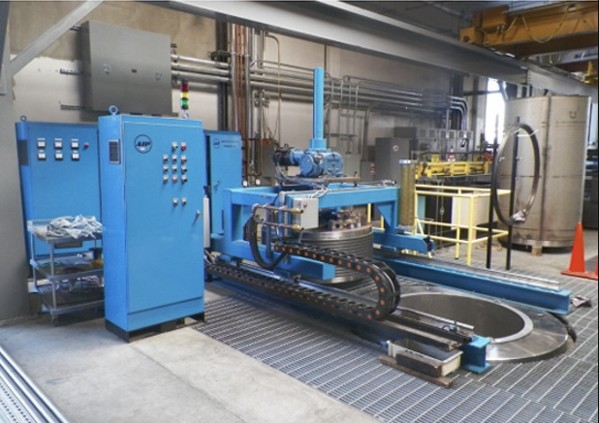
Hot Isostatic Pressing systems are available in different sizes and configurations, ranging from compact research equipment to large industrial production machines. Although every HIP system applies heat and uniform gas pressure, the right system depends on the user’s development stage, component size, required throughput and long-term production goals.
Table of Contents
A laboratory may need a compact machine for developing process parameters, while a manufacturer may require a large hot zone for processing multiple components in every cycle. Between these two stages, pilot or scale-up systems help organisations validate processes before investing in full production capacity.
Understanding the difference between laboratory, pilot and production HIP systems is therefore essential before selecting equipment.
Quick Comparison
Factor | Laboratory HIP | Pilot or Scale-Up HIP | Production HIP |
Primary Purpose | Research and process development | Sample scale-up and process validation | Regular industrial processing |
Typical Load | Small samples | Larger samples or limited batches | Full production batches |
Hot-Zone Size | Compact | Medium | Medium to very large |
Throughput | Low | Moderate | High |
Flexibility | High | High | Application-focused |
Investment Level | Lower | Medium | Higher |
Best For | Universities and R&D laboratories | Pilot plants and development centres | Manufacturing facilities |
The terms “laboratory,” “pilot” and “production” describe the intended use of the equipment rather than one universal set of dimensions.
What Is a Laboratory HIP System?
A laboratory HIP system is designed primarily for research, material evaluation and process development.
It allows researchers to test different combinations of pressure, temperature, furnace configuration and holding time using relatively small samples. Because research requirements may change frequently, laboratory systems generally prioritise flexibility and straightforward operation.
The AIP6-30H, for example, is positioned by American Isostatic Presses for small research applications. It operates at up to 30,000 psi / 207 MPa and is available with multiple furnace options. AIP also identifies fast cycles, SinterHIP capability and optional glove-box operation among its available configurations.
Laboratory HIP systems are suitable for:
- Materials research
- Alloy and ceramic development
- Metal additive manufacturing studies
- Powder-consolidation trials
- HIP cycle development
- University and institutional laboratories
- Early-stage feasibility testing
Their compact hot zones make them practical for small samples, but they may become restrictive when larger test pieces or repeatable batches are required.
What Is a Pilot or Scale-Up HIP System?
A pilot HIP system bridges the gap between laboratory research and full production.
Once a process has been demonstrated on small samples, the next step is often to determine whether it can be repeated on larger components or limited batches. A scale-up system provides additional processing space without requiring the capacity and investment of a large production machine.
AIP positions the AIP10-30H for users who need more than a research system but are not yet ready for production. It has a 150 mm diameter × 300 mm long hot zone and a pressure capability of 30,000 psi / 207 MPa.
Pilot or scale-up HIP systems can support:
- Larger development samples
- Small validation batches
- Process repeatability studies
- Pre-production trials
- Customer sample testing
- Production-cycle estimation
- Research-to-manufacturing transfer
This stage helps organisations identify scale-up challenges before purchasing production equipment. These challenges may include temperature uniformity, loading arrangements, cycle duration, gas usage and batch consistency.

What Is a Production HIP System?
A production HIP system is designed for regular industrial operation and greater processing capacity.
Production equipment generally provides a larger hot zone, higher batch capacity and configurations intended for repeated processing cycles. The system must be selected around actual component dimensions, required throughput, furnace temperature and plant conditions.
AIP describes the AIP18-30H as a small-scale production system. Its current product information lists a 300 mm-diameter hot zone with 400, 700 and 900 mm length options. Larger systems include the AIP24-30H with a 400 mm × 1,500 mm hot zone and the AIP52-15H with an 1,100 mm × 2,500 mm hot zone operating at 103 MPa.
Production HIP systems are suitable for:
- Repeated industrial processing
- Larger components
- Multiple-part batches
- Higher annual production volumes
- Qualified manufacturing processes
- In-house HIP operations
- Long-term capacity expansion
AIP also manufactures customised production systems with different furnace types, working-zone dimensions and pressure capabilities.
Key Differences to Consider
Hot-Zone Dimensions
The hot zone determines the maximum component or batch size that can be processed. Buyers should evaluate both diameter and usable length rather than relying only on the general equipment category.
Required Throughput
A research laboratory may run occasional development cycles, while a production facility may need several repeatable batches. Higher throughput can justify a larger system but may also increase installation, utility and operating requirements.
Process Flexibility
Laboratory systems often need to accommodate changing materials and experimental cycles. Production systems are commonly configured around a narrower group of validated processes.
Pressure and Temperature
A larger machine does not automatically mean a higher pressure rating. The required pressure and furnace temperature must be determined by the material and process.
AIP’s HIP range includes typical operating pressures between 15,000 and 30,000 psi, while furnace temperatures can reach approximately 2,000°C, depending on the selected system.
Installation Requirements
Production systems may require more floor space, greater ceiling height, specialised foundations, utility connections and material-handling arrangements. AIP notes that some production systems may be installed above ground or in a pit depending on available roof height.
Future Expansion
Selecting only for immediate requirements may create capacity limitations later. Organisations should consider expected component sizes, batch volumes and process-development plans for the next several years.
Which HIP System Should You Choose?
Choose a laboratory HIP system when your main objective is research, testing or initial process development.
Choose a pilot or scale-up system when the process has been proven on small samples and must now be validated on larger components or limited batches.
Choose a production HIP system when the process is established and regular industrial throughput is required.
In some cases, an organisation may begin with a laboratory system and later add production equipment. In others, a pilot machine may provide enough flexibility for both development and limited commercial processing.
HIP System Selection Support from Lodestar 3D
Lodestar 3D helps Indian research institutions and manufacturers evaluate AIP HIP systems across laboratory, scale-up and production requirements.
The selection process should consider:
- Material and alloy
- Component dimensions
- Required hot-zone size
- Pressure and temperature
- Furnace configuration
- Batch quantity
- Expected cycle frequency
- Installation conditions
- Future production plans
A clear requirement assessment helps avoid both undersized equipment and unnecessary production capacity.
Conclusion
Laboratory, pilot and production HIP systems serve different stages of materials development and manufacturing.
Laboratory systems provide flexibility for research. Pilot systems support sample scale-up and process validation. Production systems offer the larger hot zones and throughput required for regular industrial processing.
The right choice depends on more than machine size. Component dimensions, process conditions, batch capacity, installation requirements and future growth must all be considered.
Talk to a Lodestar 3D HIP expert to evaluate the most suitable AIP system for your research, scale-up or production requirements.
FAQ's
What is the main difference between laboratory and production HIP systems?
Laboratory systems are designed for small samples, research and cycle development. Production systems provide larger hot zones and greater capacity for regular industrial processing.
Is a pilot HIP system necessary before production?
Not always, but it can help validate larger components, batch loading and process repeatability before investing in full production capacity.
Does a production HIP always operate at higher pressure?
No. System size and pressure capability are separate considerations. A larger production machine may operate at the same or lower pressure than a compact laboratory system