

HIP for Metal 3D Printed Parts
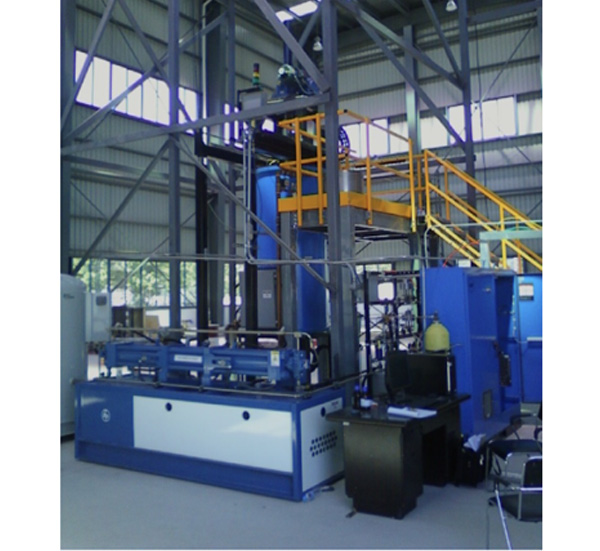
Metal additive manufacturing enables engineers to create lightweight structures, internal channels and complex geometries that may be difficult to produce using conventional methods. However, depending on the material and printing parameters, a finished metal part may contain internal pores, lack-of-fusion defects or variations in its microstructure.
Hot Isostatic Pressing, commonly known as HIP, is used as a post-processing method to improve the internal quality of suitable metal 3D printed parts. It combines elevated temperature with uniform inert-gas pressure to reduce internal defects and improve material density. HIP is widely used where metal AM components require reliable mechanical performance, particularly in demanding aerospace and medical applications.
Table of Contents
Why Can Metal 3D Printed Parts Contain Porosity?
Most metal additive manufacturing processes build components layer by layer by selectively melting or binding metal powder.
Porosity may form because of:
- Incomplete melting between layers
- Lack of fusion between scan tracks
- Trapped gas within the powder or melt pool
- Incorrect printing parameters
- Excessive printing speed
- Contamination
- Irregular powder distribution
These defects may not always be visible on the component’s surface. However, internal pores can act as stress-concentration points and may reduce fatigue performance or create inconsistent mechanical properties.
Research on laser powder bed fusion Inconel 718 has shown that increased printing speed or hatch distance can raise porosity, while subsequent HIP treatment can reduce porosity and improve fatigue strength. The same research also notes that trapped argon porosity may not always be completely removed.
How Does HIP Treat a Metal 3D Printed Part?
During HIP, the printed component is placed inside a furnace contained within a high-pressure vessel.
The general process includes:
- Loading the printed parts into the HIP hot zone
- Closing and securing the pressure vessel
- Introducing an inert gas, usually argon
- Increasing the temperature and gas pressure
- Holding the parts at the specified conditions
- Cooling and depressurising the system
- Removing and inspecting the treated components
Pressure acts uniformly from every direction, while heat makes the metal more responsive to deformation and diffusion.
The combination of pressure, temperature and time causes suitable internal pores to shrink and close through plastic deformation, creep and diffusion bonding. AIP states that HIP can achieve full theoretical density in suitable applications while improving ductility and fatigue resistance.
Benefits of HIP for Metal AM Parts
Reduced Internal Porosity
The main purpose of HIP post-processing is to reduce sealed internal pores and voids within the printed material.
This can improve the internal soundness of the component and reduce variations caused by the printing process. Bodycote identifies removal of micro-porosity as a key post-manufacturing treatment for metal 3D printed parts.
Improved Material Density
Closing internal voids increases the effective density of the printed component. Suitable materials may approach their maximum theoretical density after a correctly developed HIP cycle.
Better Fatigue Performance
Pores can become initiation points for fatigue cracks under repeated loading. Reducing these defects can improve fatigue behaviour and make the component more suitable for demanding service conditions.
Improved Ductility and Fracture Toughness
HIP can improve ductility, creep performance and fracture toughness by reducing internal defects and improving microstructural consistency.
More Consistent Mechanical Properties
Metal 3D printing may produce directional or variable properties because of its layer-by-layer build process. HIP can improve isotropic consistency and reduce variation between components when the correct cycle is used.
Support for Critical Components
HIP is especially valuable when metal AM parts are intended for high-performance applications where internal quality, fatigue life and reliability are important.

Which Metal 3D Printed Materials Can Be HIP Treated?
HIP may be evaluated for suitable:
- Titanium alloys
- Nickel-based superalloys
- Stainless steels
- Cobalt-chromium alloys
- Aluminium alloys
- Copper alloys
- Tool steels
The correct cycle depends on the alloy, printing method, component geometry and required mechanical properties. HIP pressure, temperature and holding time should therefore be developed for the specific material rather than applied as a universal process.
Can HIP Remove Every Defect?
No. HIP is most effective for internal pores that are sealed from the outside atmosphere.
Surface-connected pores may allow pressurised gas to enter the defect, reducing the pressure difference required to close it. HIP may also be unable to correct:
- Large cracks
- Severe lack-of-fusion defects
- Contamination
- Incorrect material chemistry
- Dimensional errors
- Poor surface finish
- Excessively rough internal channels
HIP should therefore be treated as part of a controlled additive manufacturing workflow, not as a substitute for correct printing parameters and quality control.
Where Does HIP Fit in the AM Workflow?
A typical metal AM production route may include:
- Metal 3D printing
- Stress relief
- Build-plate removal
- Hot Isostatic Pressing
- Final heat treatment
- Machining and surface finishing
- Inspection and testing
The exact sequence depends on the alloy and qualification requirements. Some advanced HIP systems can combine densification and heat-treatment functions within one processing cycle.
Selecting a HIP System for Metal Additive Manufacturing
The correct HIP system should be selected according to:
- Maximum component dimensions
- Required hot-zone diameter and length
- Alloy and process temperature
- Required gas pressure
- Batch size
- Research or production volume
- Cooling and control requirements
- Future scale-up plans
Lodestar 3D supports the evaluation of AIP Hot Isostatic Press systems for laboratory development, sample scale-up and production processing.
A laboratory may use the AIP6-30H for material and process research, while larger AIP systems can support scale-up and production requirements.
Conclusion
HIP is an important post-processing technology for suitable metal 3D printed parts. By combining high temperature with uniform gas pressure, the process can reduce internal porosity, improve density and enhance fatigue strength, ductility and mechanical consistency.
However, successful HIP treatment depends on the alloy, printing quality, defect type, component geometry and selected cycle parameters.
Talk to a Lodestar 3D HIP expert to evaluate the appropriate AIP system for your metal additive manufacturing process.
FAQ's
Why is HIP used after metal 3D printing?
HIP is used to reduce internal porosity, improve density and enhance the mechanical consistency of suitable metal 3D printed components.
Does HIP improve the surface finish of a printed part?
HIP primarily improves the internal material structure. Machining, polishing or another surface-finishing process may still be required.
Can HIP remove all defects in a metal AM part?
No. HIP is most effective for sealed internal pores. It may not repair surface-connected defects, major cracks, contamination or dimensional inaccuracies.
Does HIP replace heat treatment?
Not always. Some components require both HIP and a separate heat-treatment cycle. Certain advanced systems can combine densification and heat treatment in one process.
How can Lodestar 3D help?
Lodestar 3D can review the material, component dimensions, pressure, temperature and production capacity to help identify a suitable AIP HIP system.