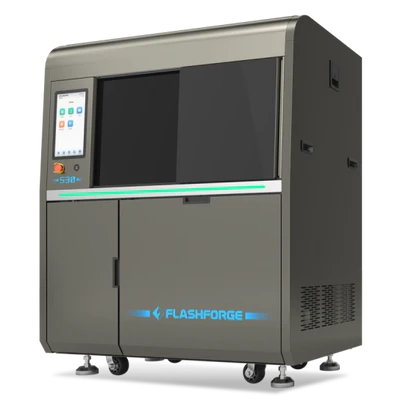
WaxJet 51C vs Resin 3D Printing for Jewelry Casting
Source by enterprise.flashforge.com
Jewelry manufacturers today need faster design development, accurate wax patterns, clean casting results, and better control over custom orders. 3D printing has become an important part of modern jewelry production because it allows CAD designs to move quickly from digital model to physical casting pattern.
Table of Contents
Two common options are WaxJet 51C wax 3D printing and resin 3D printing. Both can be used to create jewelry patterns, but they are not the same. They differ in material behavior, casting workflow, burnout quality, support removal, operating cost, and production suitability.
For jewelry workshops, CAD/CAM studios, casting houses, and small manufacturers, choosing the right technology depends on the type of jewelry produced, casting quality expectations, monthly production volume, budget, and workflow maturity.
What Is WaxJet 51C?
The WaxJet 51C is a compact desktop wax 3D printer designed for jewelry pattern production. It uses MultiJet Printing technology to deposit wax material layer by layer, creating detailed wax models that can be used in the lost-wax casting process.
Unlike general resin printers, WaxJet 51C produces wax patterns. This makes it highly relevant for jewelry manufacturers because the traditional casting process is already built around wax burnout.
The system is suitable for rings, pendants, earrings, bracelets, custom ornaments, filigree designs, stone-setting patterns, and small-batch jewelry production.
WaxJet 51C is especially useful for workshops that want digital wax production without installing a large industrial wax printer.
What Is Resin 3D Printing for Jewelry?
Resin 3D printing uses light-curable photopolymer resin to build parts layer by layer. In jewelry casting, special castable resins are used to create patterns that can be invested and burned out before metal casting.
Resin printers are popular because they are available in many sizes and price ranges. They are often used by jewelry designers for prototypes, design validation, sample models, and entry-level casting workflows.
However, resin patterns do not behave exactly like wax. Resin burnout requires careful control of temperature, time, ventilation, investment material, and post-curing. If the burnout cycle is not optimized, casting defects can occur.
The biggest difference between WaxJet 51C and resin printing is the pattern material.
WaxJet 51C creates wax patterns. Resin printers create resin patterns, even when the material is marketed as castable resin or wax-filled resin.
This difference affects the casting workflow.
Wax melts and flows out during burnout in a way that is familiar to traditional lost-wax casting. Resin decomposes during burnout and may require a more controlled burnout cycle to avoid residue, ash, expansion issues, or surface defects.
For experienced casting houses, both technologies can work. But for manufacturers who want a workflow closer to traditional wax casting, WaxJet 51C may be a better fit.
Jewelry designs often include fine details such as:
Thin prongs
Stone seats
Micro-pavé settings
Engraved textures
Filigree patterns
Curved surfaces
Lightweight hollow designs
Fine decorative elements
WaxJet 51C is designed for high-resolution wax pattern production. It can support fine detail and smooth surfaces for casting-focused jewelry workflows.
Resin 3D printers can also produce high-detail parts, especially with premium dental or jewelry printers. However, the final casting result depends not only on print resolution but also on resin type, post-curing, burnout, investment compatibility, and casting control.
A resin print may look sharp before casting but still create issues if the burnout process is not properly validated.
Burnout and Casting Quality
Burnout is one of the most important stages in jewelry casting.
In the lost-wax process, the printed pattern is invested in plaster or investment material. The pattern is then removed through heating, leaving a cavity for molten metal.
WaxJet 51C supports a more traditional wax burnout workflow because the printed model is wax-based. This can help reduce learning curve for workshops already using wax injection or hand-carved wax patterns.
Resin printing requires more process control. Castable resin must be printed, washed, post-cured, invested, and burned out according to the correct schedule. If the resin is under-cured, over-thick, poorly cleaned, or burned too quickly, it may leave residue or cause casting defects.
Common resin casting risks may include:
Ash residue
Surface pitting
Mold stress
Incomplete burnout
Porosity
Cracking of investment
Inconsistent results across materials
Good castable resins can perform well, but they usually need proper validation.
Schedule A Call
+91 990-000-3300
Support Removal
Support removal is another important difference.
WaxJet 51C uses support wax to hold delicate features during printing. This helps protect thin prongs, filigree geometry, and detailed jewelry models. The support-removal workflow is designed around wax pattern production.
In resin printing, supports are usually made from the same resin as the model. They must be clipped, trimmed, and sanded manually. This can damage delicate jewelry details if not handled carefully.
For simple models, resin support removal may be manageable. For complex jewelry, wax support workflows may reduce the risk of damaging fine features.
Cost Comparison
Resin 3D printing usually has a lower entry cost. A jewelry designer or small studio can start with a lower investment compared to a dedicated wax printer.
However, machine price is only one part of the decision.
Resin workflow costs may include:
Castable resin
Washing alcohol or cleaning liquids
Post-curing equipment
Failed prints
Failed castings
Support removal labor
Burnout testing
Investment compatibility trials
WaxJet 51C usually requires a higher initial investment, but it may reduce casting workflow risk for manufacturers who need reliable wax patterns.
WaxJet 51C costs may include:
Machine investment
Build wax
Support wax
Operator training
Maintenance
Service support
Pattern production planning
For occasional jewelry prototyping, resin may be more economical. For regular wax pattern production and casting-focused workflows, WaxJet 51C can become more valuable.
Production Suitability
WaxJet 51C is suitable for:
Jewelry manufacturers
Casting houses
Wax pattern service providers
CAD/CAM jewelry studios
Custom jewelry brands
Small-to-medium batch production
Workshops needing true wax patterns
Businesses moving from manual wax work to digital production
Resin printing is suitable for:
Entry-level jewelry design
Concept models
Design validation
Low-budget prototyping
Small custom projects
Trial casting workflows
Designers testing digital jewelry production
If the priority is low machine cost and design visualization, resin printing may be suitable. If the priority is casting-ready wax patterns and production workflow reliability, WaxJet 51C may be the better choice.
WaxJet 51C vs Resin 3D Printing: Comparison Table
Factor
WaxJet 51C
Resin 3D Printing
Pattern Material
Wax
Castable resin
Best For
Jewelry casting wax patterns
Prototypes and castable resin patterns
Burnout Behavior
Closer to traditional wax casting
Requires validated burnout process
Entry Cost
Higher
Lower
Casting Workflow
More casting-focused
More process-sensitive
Support Removal
Wax support workflow
Manual resin support removal
Detail Quality
High-detail jewelry patterns
High detail possible with suitable resin
Production Suitability
Small-batch and regular wax pattern production
Prototyping and lower-volume workflows
Learning Curve
Easier for wax casting users
Depends on resin, curing, and burnout
Main Risk
Consumable and service planning
Burnout failure and resin handling
Which Option Should You Choose?
Choose WaxJet 51C if:
You need true wax patterns
Casting quality is a priority
You produce jewelry patterns regularly
You work with detailed designs
You want a workflow closer to traditional lost-wax casting
You want to reduce manual wax carving
You need better repeatability for custom and small-batch production
Choose resin 3D printing if:
Your budget is limited
You mainly need design prototypes
Your casting volume is low
You are still testing digital jewelry workflows
You are ready to validate resin burnout carefully
You can manage washing, curing, and support removal
Common Mistakes to Avoid
Choosing based only on machine price
A low-cost printer may not deliver low-cost casting if patterns fail during burnout or require too much manual correction.
Assuming all castable resins behave like wax
Castable resin and wax have different thermal behavior. Resin casting needs proper burnout validation.
Ignoring post-processing
Washing, curing, support removal, and burnout affect resin casting results. Wax printing also needs careful handling and support removal.
Not testing real jewelry designs
Always test your own CAD files before buying. Sample prints should include your actual design complexity, not only demo models.
Conclusion
Both WaxJet 51C and resin 3D printing can support jewelry casting, but they serve different business needs.
Resin 3D printing is useful for designers, startups, and workshops that need affordable prototyping or low-volume casting trials. WaxJet 51C is better suited for jewelry manufacturers that need true wax patterns, casting-focused workflow, high detail, and repeatable small-batch production.
For businesses where casting quality, design detail, and production reliability are important, WaxJet 51C can provide a stronger long-term solution.
Lodestar 3D helps jewelry manufacturers evaluate WaxJet 51C based on design requirements, casting workflow, production volume, and ROI.
FAQ's
Is WaxJet 51C better than resin printing for jewelry casting?
WaxJet 51C may be better for casting-focused jewelry manufacturers because it produces wax patterns. Resin printing may be better for lower-cost prototyping and early design validation.
Can resin 3D prints be used for jewelry casting?
Yes. Castable resin prints can be used for jewelry casting, but the workflow requires correct washing, curing, investment, and burnout settings.
Does WaxJet 51C print real wax?
Yes. WaxJet 51C is designed to print wax patterns for jewelry casting workflows.
Which is cheaper: WaxJet 51C or resin printing?
Resin printing usually has a lower entry cost. WaxJet 51C typically requires higher investment but can be more suitable for regular wax pattern production.
Which technology gives better casting results?
Casting results depend on material, printer quality, post-processing, burnout, and casting control. WaxJet 51C offers a workflow closer to traditional wax casting, while resin requires careful validation.