What Can You Make With a Metal 3D Printer? 10 Industrial Applications

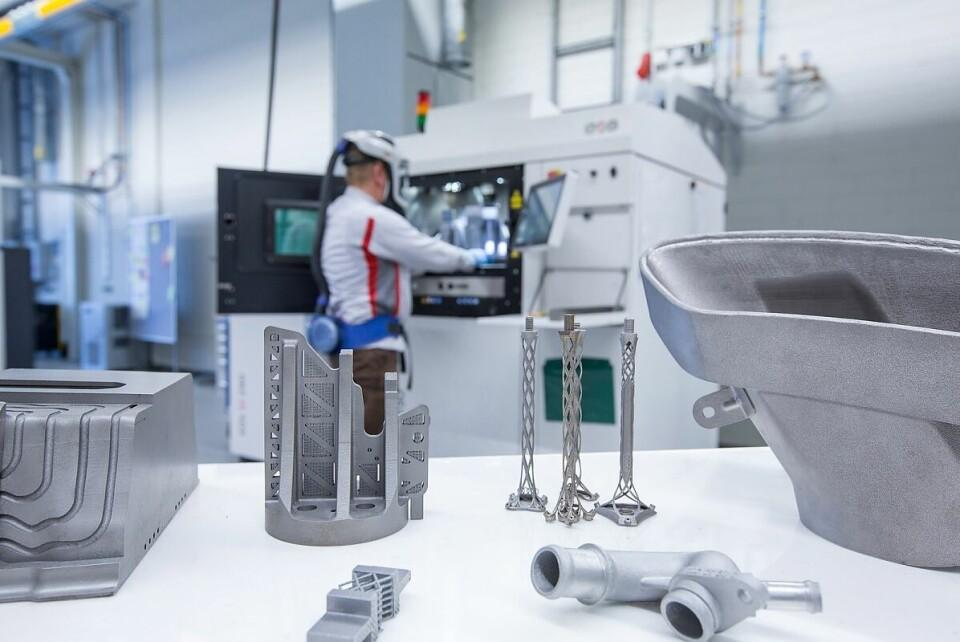
Industrial metal 3D printed components used in aerospace automotive medical and defense applications

Metal 3D printing has changed the way manufacturers approach component design, production, and product development. Unlike traditional subtractive manufacturing methods that remove material from a solid block, metal additive manufacturing builds parts layer by layer directly from a digital design.

This approach enables manufacturers to produce components that were previously difficult, expensive, or impossible to manufacture using conventional processes.

From lightweight aerospace structures to patient-specific medical implants, metal 3D printers are now being used across industries where performance, customization, complexity, and material efficiency are critical.

The question many manufacturers ask is:

Table of Contents

What can you make with a metal 3D printer?

The answer depends on the technology, material, and application requirements. Modern metal additive manufacturing systems can produce prototypes, functional end-use parts, tooling, repair components, and production-ready metal components.

This article explores 10 major industrial applications of metal 3D printing and explains how companies are using this technology to improve manufacturing efficiency.

1. Aerospace Components

The aerospace industry is one of the biggest adopters of metal additive manufacturing because aircraft manufacturers constantly seek lighter, stronger, and more efficient components.

Traditional aerospace manufacturing often involves machining complex parts from expensive metal blocks, creating significant material waste.

Metal 3D printing enables engineers to design lightweight structures while maintaining mechanical performance.

Common aerospace applications include:

  • Structural brackets
  • Engine components
  • Lightweight supports
  • Aircraft cabin parts
  • Heat exchangers
  • Fuel system components
  • Titanium aerospace parts

Benefits for Aerospace Manufacturing:

  • Reduced component weight
  • Lower material waste
  • Complex lightweight geometries
  • Part consolidation
  • Faster prototyping
  • Improved design flexibility

Technologies such as Laser Powder Bed Fusion (LPBF), Electron Beam Melting (EBM), and Wire Arc Additive Manufacturing (WAAM) are used depending on component size and material requirements.

2. Automotive Components

Automotive manufacturers use metal 3D printing for rapid development, performance optimization, tooling, and specialized production parts.

The technology allows engineers to test multiple design iterations without expensive tooling changes.

Applications include:

  • Engine components
  • Lightweight brackets
  • Performance parts
  • Exhaust components
  • Suspension components
  • Manufacturing fixtures
  • Prototype parts

For motorsport and high-performance vehicles, metal additive manufacturing helps create optimized components where weight reduction and performance are important.

Benefits:

  • Faster product development
  • Lightweight designs
  • Reduced tooling costs
  • Custom component production
  • Improved engineering validation

As electric vehicles continue to develop, metal 3D printing supports lightweight component design and thermal management solutions.

3. Medical Implants and Healthcare Components

Medical manufacturing is one of the most important applications of metal 3D printing because it enables customized and complex medical devices.

Traditional manufacturing methods can be limited when producing patient-specific designs or porous structures.

Metal additive manufacturing allows manufacturers to create:

  • Orthopedic implants
  • Bone replacement components
  • Surgical instruments
  • Dental frameworks
  • Patient-specific implants
  • Medical research models

Titanium alloys are commonly used because they provide:

  • High strength-to-weight ratio
  • Corrosion resistance
  • Biocompatibility

Benefits:

  • Patient-specific designs
  • Complex porous structures
  • Improved implant integration
  • Reduced manufacturing limitations

Medical applications require strict validation, material certification, and quality control.

4. Defense and Military Components

Defense organizations require reliable manufacturing solutions for complex, low-volume, and mission-critical components.

Metal 3D printing provides flexibility for producing parts closer to where they are needed, reducing dependency on long supply chains.

Applications include:

  • Replacement components
  • Vehicle parts
  • Aerospace defense components
  • Specialized tools
  • Prototypes
  • Repair components

Benefits:

  • Faster replacement part production
  • Reduced inventory requirements
  • Digital part storage
  • Customized manufacturing
  • Supply chain flexibility

WAAM systems are particularly valuable for large defense components because they can produce large metal structures efficiently.

5. Industrial Tooling and Manufacturing Aids

Metal 3D printing is increasingly used for creating tools, fixtures, and production aids.

Traditional tooling methods can require long development times and expensive machining.

Applications include:

  • Injection mold inserts
  • Jigs and fixtures
  • Assembly tools
  • Manufacturing aids
  • Inspection fixtures
  • Forming tools

A major advantage is the ability to create conformal cooling channels inside tooling components.

These channels can follow the shape of the mold, improving heat transfer and reducing cycle times.

Benefits:

  • Faster tooling development
  • Improved production efficiency
  • Reduced machining requirements
  • Better tool performance

6. Energy Industry Components

The energy sector uses metal additive manufacturing for components that require high strength, heat resistance, and corrosion performance.

Applications include:

  • Turbine components
  • Heat exchangers
  • Pump components
  • Valves
  • Industrial equipment parts
  • Oil and gas components

Materials such as:

  • Inconel
  • Stainless steel
  • Titanium alloys

are commonly used because they perform well in demanding environments.

Benefits:

  • Complex thermal designs
  • Reduced material waste
  • Improved component performance
  • Faster repair solutions

7. Marine and Shipbuilding Components

Large metal components used in marine applications can benefit from additive manufacturing, especially when replacement parts have long lead times.

Applications include:

  • Marine brackets
  • Propulsion components
  • Structural parts
  • Repair components
  • Custom equipment parts

WAAM technology is particularly suitable for marine applications because it can produce very large metal structures using wire feedstock.

Benefits:

  • Large component production
  • Reduced supply chain delays
  • Lower inventory requirements
  • On-demand manufacturing

8. Robotics and Automation Components

Robotics manufacturers use metal 3D printing to create lightweight and optimized mechanical components.

Applications include:

  • Robot arms
  • End-effectors
  • Lightweight brackets
  • Grippers
  • Custom automation parts

Reducing component weight can improve:

  • Robot speed
  • Energy efficiency
  • Payload performance
  • Motion accuracy

Metal additive manufacturing allows engineers to create designs that combine multiple components into one optimized structure.

9. Research and Development Prototypes

R&D teams use metal 3D printers to accelerate product development and test advanced designs.

Applications include:

  • Functional prototypes
  • New alloy testing
  • Engineering validation parts
  • Experimental components
  • Research projects

Compared with traditional manufacturing, additive manufacturing allows faster iteration because engineers can move directly from digital design to physical part production.

Benefits:

  • Reduced development time
  • Faster testing
  • Lower tooling dependency
  • More design experimentation

10. Customized and Low-Volume Production Parts

One of the biggest advantages of metal 3D printing is producing customized or low-volume parts economically.

Traditional manufacturing often requires expensive tooling, making small production runs costly.

Metal additive manufacturing is ideal for:

  • Custom industrial components
  • Spare parts
  • Specialized equipment parts
  • Limited production runs
  • Legacy replacement components

Digital manufacturing allows companies to store designs digitally and produce parts when required.

This supports modern Industry 4.0 strategies.


Common Materials Used in Metal 3D Printing

Metal 3D printers can process various engineering materials depending on the technology.

Common materials include:

Titanium Alloys

Applications:

  • Aerospace
  • Medical implants
  • Lightweight structures

Advantages:

  • High strength-to-weight ratio
  • Corrosion resistance

Stainless Steel

Applications:

  • Industrial parts
  • Tooling
  • Engineering components

Advantages:

  • Durability
  • Corrosion resistance

Inconel and Nickel Alloys

Applications:

  • Aerospace engines
  • Energy systems

Advantages:

  • High temperature performance
  • Chemical resistance

Aluminium Alloys

Applications:

  • Automotive
  • Aerospace structures

Advantages:

  • Lightweight properties

Tool Steel

Applications:

  • Dies
  • Molds
  • Manufacturing tools

Advantages:

  • Wear resistance
  • Hardness

Metal 3D Printing Technologies Used for Industrial Applications

Different applications require different metal additive manufacturing technologies.

Laser Powder Bed Fusion (LPBF)

Best for:

  • Precision components
  • Complex geometries
  • Aerospace and medical parts

Electron Beam Melting (EBM)

Best for:

  • Titanium components
  • Aerospace and medical applications

Wire Arc Additive Manufacturing (WAAM)

Best for:

  • Large metal parts
  • Heavy engineering
  • Defense and marine applications

Directed Energy Deposition (DED)

Best for:

  • Repair
  • Large structures
  • Material addition

How to Select the Right Metal 3D Printing Solution

Before investing in a metal 3D printer, manufacturers should evaluate:

Application Requirements

  • Part size
  • Mechanical performance
  • Operating environment
  • Required certification

Material Requirements

  • Strength
  • Temperature resistance
  • Corrosion resistance
  • Weight requirements

Production Requirements

  • Quantity
  • Build speed
  • Automation level
  • Post-processing needs

Total Cost

Consider:

  • Machine investment
  • Material cost
  • Software
  • Maintenance
  • Labour
  • Inspection
  • Finishing

The right solution depends on the complete manufacturing workflow, not only the printer specifications.


Schedule A Call

+91 990-000-3300

Conclusion

Metal 3D printing enables manufacturers to produce complex, lightweight, customized, and high-performance components across multiple industries.

From aerospace structures and medical implants to automotive parts, defense components, tooling, and large industrial systems, metal additive manufacturing provides new possibilities that traditional methods cannot always achieve efficiently.

The best results come from selecting the right technology, material, and manufacturing strategy based on the application requirements.

Lodestar 3D helps industries adopt metal additive manufacturing solutions by providing advanced metal 3D printers, materials, software, and technical expertise for modern digital manufacturing workflows.

FAQ's

Metal 3D printers can produce aerospace components, automotive parts, medical implants, tooling, defense components, industrial equipment parts, prototypes, and customized production components.

Major industries using metal additive manufacturing include aerospace, automotive, medical, defense, energy, marine, tooling, robotics, and industrial manufacturing.

Yes. Metal 3D printers can produce functional end-use components when the correct material, process parameters, post-processing, and quality controls are applied.

Common materials include titanium, stainless steel, aluminium alloys, Inconel, nickel alloys, cobalt chrome, and tool steels.

The strength of a metal 3D printed part depends on material, printing technology, process parameters, heat treatment, and design. Properly optimized parts can achieve mechanical properties suitable for demanding industrial applications.

    Agree to our terms and conditions.
    Your information will be securely sent to and stored in Google Sheets for the purpose of processing your form submission.