

Ceramic 3D Printing: Applications, Benefits, Materials, and Future Trends
Ceramic 3D printing is becoming an important part of modern additive manufacturing. It allows manufacturers, researchers, and engineers to create ceramic components directly from digital designs, layer by layer. This approach gives industries more design freedom, faster development cycles, and better flexibility compared to many traditional ceramic manufacturing methods.
Conventional ceramic production often depends on moulds, casting, forming, machining, or other time-consuming processes. These methods are still valuable, but they can become expensive or restrictive when parts have complex geometries, fine features, small-batch requirements, or frequent design changes. Ceramic 3D printing helps overcome these limitations by making it easier to produce advanced ceramic parts with complex shapes and application-specific designs.
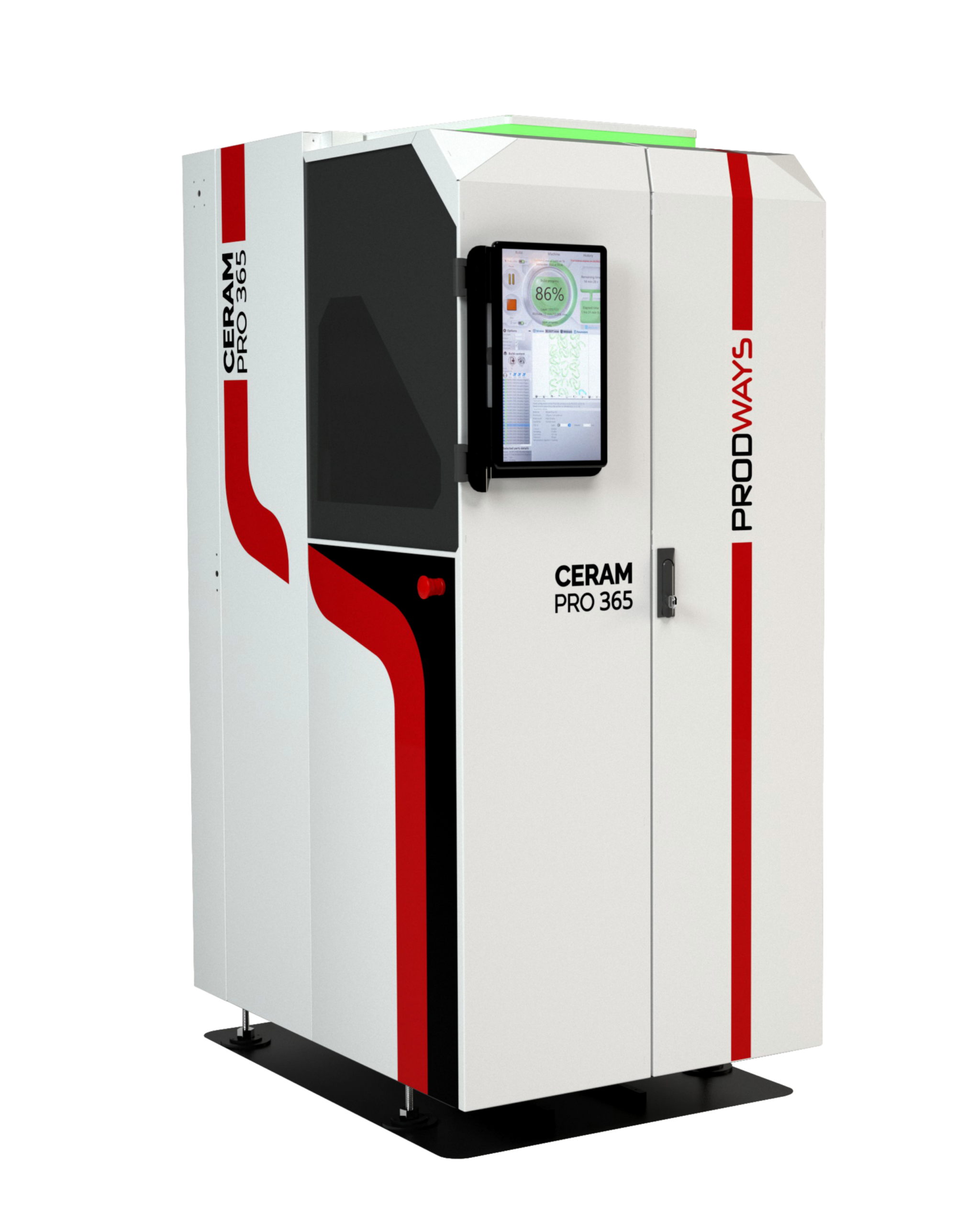
Lodestar3D offers ceramic 3D printing solutions such as Ceram PRO 365, Ceram PRO 385 / 385+, and Ceram PRO 405 / 405+. These ceramic 3D printers are suitable for technical ceramics, investment casting-related applications, R&D, education, aerospace and defence, energy, industrial applications, jewellery, and advanced material development.
Table of Contents
What Is Ceramic 3D Printing?
Ceramic 3D printing is an additive manufacturing process used to produce ceramic parts from a digital 3D model. Instead of cutting material away from a solid block or depending completely on mould-based production, ceramic 3D printing builds the part step by step.
In ceramic DLP printing, a ceramic-filled resin or slurry is exposed to light in a controlled pattern. The light cures each layer according to the digital design. Once printing is completed, the part usually goes through cleaning, debinding, sintering, finishing, and inspection.
The printed part is not ready for final use immediately after printing. Ceramic 3D printing is a complete workflow. The final properties of the part depend on the design, material, printing process, debinding cycle, sintering process, and post-processing method.
Why Ceramic 3D Printing Is Important
Ceramics are widely used in demanding applications because they can offer high heat resistance, hardness, wear resistance, chemical stability, electrical insulation, and dimensional stability. These properties make ceramics useful in industries where plastics or metals may not perform well.
However, ceramics can be difficult to manufacture using traditional methods. They are often hard and brittle, which makes machining challenging. Tooling can also be expensive, especially for low-volume or custom parts.
Ceramic additive manufacturing gives engineers a more flexible way to produce ceramic parts. It is especially useful for prototypes, small batches, research samples, complex geometries, customized parts, and advanced industrial applications.
Key Applications of Ceramic 3D Printing
Technical Ceramics
Technical ceramics are used where performance matters. These parts may need to resist heat, wear, chemicals, electrical current, or mechanical stress. Ceramic 3D printing supports the development of technical ceramic components with complex shapes and functional designs.
Examples may include insulating parts, heat-resistant components, wear-resistant parts, industrial ceramic structures, and application-specific ceramic prototypes.
Investment Casting
Ceramic 3D printing is useful in investment casting workflows. It can support the production of ceramic patterns, cores, and casting-related components with detailed geometries.
This is especially helpful when the casting design is complex or when faster development is required. Industries such as aerospace, automotive, jewellery, and precision engineering can benefit from ceramic 3D printing for casting-related applications.
Aerospace and Defence
Aerospace and defence applications often need materials that can handle high temperatures, demanding environments, and complex design requirements. Ceramic 3D printing can support R&D and development of lightweight, heat-resistant, and complex ceramic components.
Potential applications may include thermal protection parts, insulation elements, complex ceramic structures, and advanced research samples. For final use in aerospace or defence, testing and validation are always required.
Energy and Industrial Applications
The energy and industrial sectors use ceramic materials for thermal management, insulation, filtration, wear resistance, and chemical resistance. Ceramic 3D printing can help develop parts with internal channels, customized structures, and complex flow paths.
This makes it useful for industrial components, energy-related parts, high-temperature applications, and specialized engineering requirements.
Research and Development
R&D is one of the strongest use cases for ceramic 3D printing. Universities, laboratories, and industrial research teams can use ceramic 3D printers to test new materials, study ceramic processing, validate designs, and develop new applications.
Ceram PRO 385 / 385+ and Ceram PRO 405 / 405+ are especially useful for users who need open-material workflows, parameter flexibility, and application-specific development.
Education and Training
Ceramic 3D printing is also valuable for engineering institutes and technical education centres. It helps students and researchers understand additive manufacturing, ceramic materials, DLP printing, design for manufacturing, post-processing, and industrial applications.
Jewellery and Precision Casting
For jewellery and precision casting, ceramic 3D printing can support detailed designs and fine features. Designers can create intricate forms that may be difficult or time-consuming to produce through traditional workflows.

Benefits of Ceramic 3D Printing
Greater Design Freedom
Ceramic 3D printing allows engineers to create complex geometries, thin walls, internal channels, lattice structures, and customized shapes. This gives designers more flexibility than traditional mould-based methods.
Reduced Tooling Dependency
Traditional ceramic manufacturing may require moulds, dies, or dedicated tooling. Ceramic 3D printing reduces the need for tooling, especially for prototyping, small batches, and custom parts.
Faster Product Development
Because ceramic 3D printing works from digital files, design changes can be made faster. This helps teams move from concept to prototype and from prototype to testing in less time.
Suitable for Small-Batch Production
Ceramic 3D printing is useful when production volumes are low or parts need customization. It allows manufacturers to produce application-specific parts without investing heavily in tooling.
High Resolution and Fine Detail
DLP ceramic 3D printing can produce fine features and detailed surfaces. This makes it suitable for technical ceramics, investment casting, jewellery, R&D samples, and precision ceramic parts.
Supports Material Development
Ceramic 3D printers with open-material capabilities help researchers test new ceramic slurries, validate material behaviour, and develop application-specific ceramic solutions.
Ceramic 3D Printing Materials
Material selection is critical in ceramic additive manufacturing. Different ceramic materials offer different properties and are suitable for different applications.
Silica
Silica-based ceramic materials are commonly used in casting-related workflows. They can be suitable where thermal behaviour and dimensional performance are important.
Alumina
Alumina is one of the most widely used technical ceramics. It is known for hardness, wear resistance, electrical insulation, and thermal stability. Alumina ceramic 3D printing is useful for technical parts and industrial applications.
Zirconia
Zirconia is known for strength, toughness, and wear resistance. It is often used in dental, medical, and technical ceramic applications where mechanical performance is important.
Advanced Ceramic Composites
Advanced ceramic composites and new material formulations are expected to expand the future of ceramic 3D printing. These materials may support more demanding industrial and research applications.
Lodestar3D Ceramic 3D Printer Range
Lodestar3D offers ceramic 3D printing solutions for technical ceramics, investment casting-related work, R&D, and industrial applications.
Ceram PRO 365
Ceram PRO 365 is designed for high-resolution ceramic 3D printing using 365 nm UV-LED DLP technology. It is suitable for technical ceramics, investment casting-related applications, R&D, and silica or alumina workflows where validated.
Ceram PRO 385 / 385+
Ceram PRO 385 / 385+ operates at 385 nm and supports ceramic DLP printing workflows. The Ceram PRO 385 uses one DLP head, while the 385+ version uses two DLP heads for higher throughput. This range is useful for open-material workflows and material development.
Ceram PRO 405 / 405+
Ceram PRO 405 / 405+ operates at 405 nm and supports ceramic 3D printing for application-specific workflows. The 405+ version uses two DLP heads, making it suitable for users who need faster throughput and production flexibility.
Future Trends in Ceramic 3D Printing
More Use of Technical Ceramics
As industries demand stronger and more heat-resistant materials, technical ceramic 3D printing will continue to grow. Aerospace, defence, energy, electronics, and industrial manufacturing are likely to explore more ceramic applications.
Growth of Open-Material Workflows
Open-material ceramic 3D printers will become more important for research and industrial users. They allow teams to test new materials, adjust parameters, and validate ceramic formulations.
Faster Printing Systems
Dual-head systems and improved DLP platforms will help increase productivity. This will make ceramic 3D printing more practical for small-batch and industrial part production.
Better Post-Processing Control
Debinding and sintering are critical in ceramic 3D printing. Future improvements in post-processing will help improve repeatability, reduce defects, and support higher-quality ceramic parts.
Expansion into Functional Parts
Ceramic 3D printing will continue moving from prototypes toward functional parts. This will require strong material validation, quality control, and application-specific testing.
Conclusion
Ceramic 3D printing gives manufacturers and researchers a flexible way to create complex ceramic parts with less tooling dependency and faster development. With solutions such as Ceram PRO 365, Ceram PRO 385 / 385+, and Ceram PRO 405 / 405+, Lodestar3D supports advanced ceramic additive manufacturing for technical ceramics, casting, R&D, and industrial applications.
FAQ's
Ceramic 3D printing is an additive manufacturing process that builds ceramic parts layer by layer from a digital design. It is useful for complex geometries, prototypes, R&D, technical ceramics, and casting workflows.
The main applications include technical ceramics, investment casting, aerospace and defence, energy, industrial components, research, education, jewellery, and precision casting.
Common ceramic 3D printing materials include silica, alumina, zirconia, and other validated ceramic slurry systems. The correct material depends on the application and post-processing requirements.
The main benefits include design freedom, reduced tooling needs, faster prototyping, small-batch production, high-resolution printing, and support for advanced material development.
Lodestar3D offers Ceram PRO 365, Ceram PRO 385 / 385+, and Ceram PRO 405 / 405+ for ceramic additive manufacturing applications.
Yes, ceramic 3D printing can be suitable for prototypes, R&D, small-batch production, and selected functional parts. Final production use depends on material validation, part design, sintering, and quality requirements.