How 3D Printing Is Reducing Lead Times in Aerospace and Automotive Manufacturing

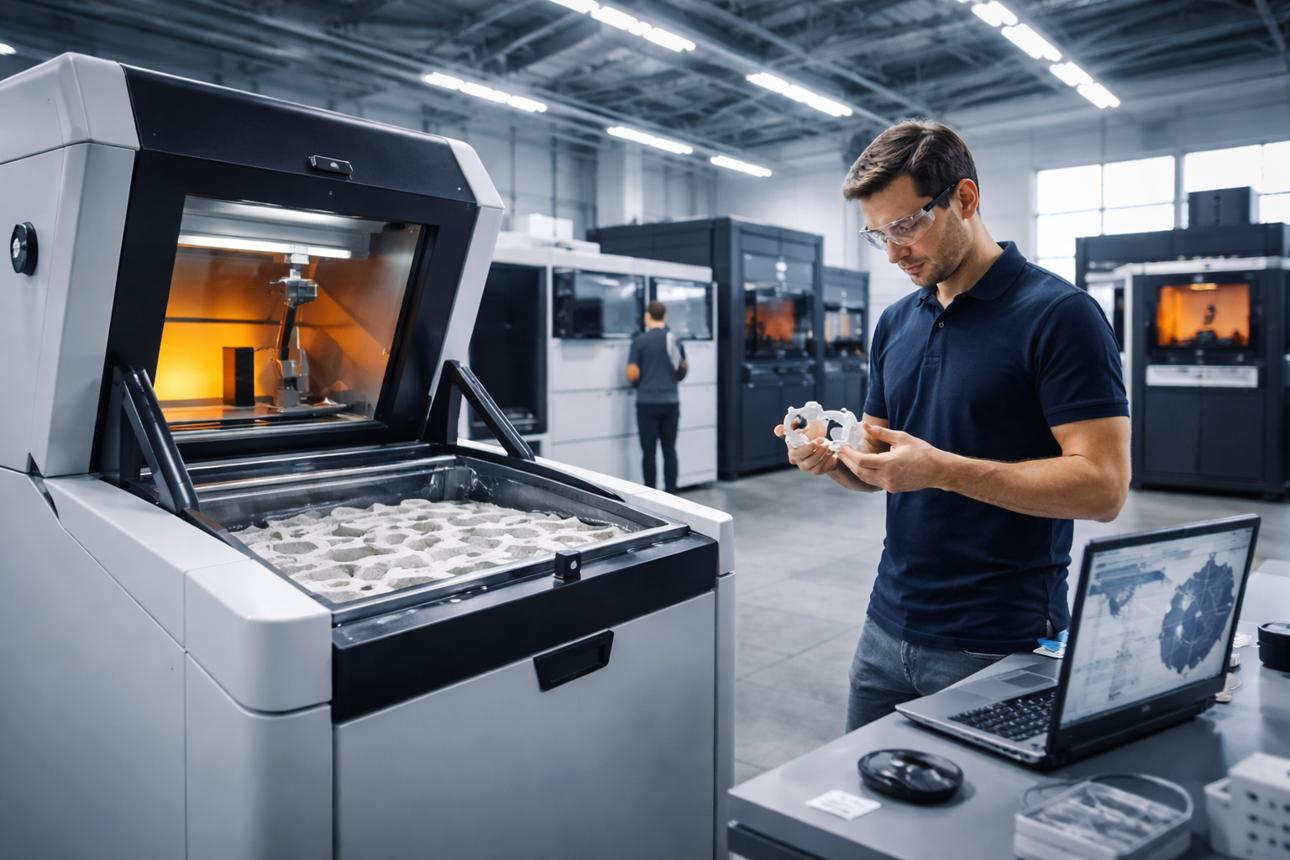
Industrial 3D printing reducing lead times in aerospace and automotive manufacturing

Aerospace and automotive manufacturers operate in industries where product development speed, supply chain reliability, and production efficiency directly impact competitiveness. However, traditional manufacturing processes often involve long design cycles, expensive tooling, multiple suppliers, and extended production timelines.

Manufacturers may spend weeks or months waiting for:

  • Custom tooling
  • Machined prototypes
  • Specialized components
  • Production fixtures
  • Replacement parts
  • Supplier deliveries

Industrial 3D printing is changing this approach by enabling companies to move faster from digital design to physical components. Through additive manufacturing, companies can produce prototypes, tooling, functional parts, and production components directly from CAD data without depending heavily on traditional manufacturing constraints.

In aerospace and automotive industries, 3D printing reducing lead times is becoming a major advantage by accelerating product development, improving supply chain flexibility, and enabling faster manufacturing decisions.

Table of Contents

Why Lead Times Are a Major Challenge in Aerospace and Automotive Manufacturing

Traditional manufacturing involves several sequential steps:

  1. Product design
  2. Engineering validation
  3. Tool development
  4. Material sourcing
  5. Production setup
  6. Manufacturing
  7. Inspection
  8. Final delivery

Each stage can introduce delays.

For example, producing a complex metal component may require:

  • Creating molds or dies
  • Waiting for supplier production slots
  • Shipping components between facilities
  • Performing multiple machining operations

For aerospace and automotive companies, these delays can slow:

  • New vehicle development
  • Aircraft upgrades
  • Engineering testing
  • Production launches
  • Replacement part availability

Additive manufacturing helps reduce these delays by simplifying the path between design and production.

How 3D Printing Shortens Product Development Cycles

1. Faster Prototyping and Design Validation

One of the biggest advantages of 3D printing is rapid prototyping.

In traditional manufacturing, creating a prototype may require:

  • Tool design
  • Tool manufacturing
  • Machining
  • Assembly
  • Testing

This process can take weeks or months.

With 3D printing, engineers can convert a digital CAD model into a physical prototype much faster.

The workflow becomes:

  1. Create CAD model
  2. Prepare digital file
  3. Print the component
  4. Test and evaluate
  5. Modify the design
  6. Print the next iteration

This allows engineering teams to test multiple design variations quickly.

Benefits:

  • Faster design validation
  • Reduced development cycles
  • Lower prototype costs
  • Improved engineering decision-making

For aerospace and automotive companies, faster iteration means products can move from concept to production more efficiently.

2. Eliminating Long Tooling Development Cycles

Tooling is often one of the biggest contributors to manufacturing lead time.

Traditional tooling may require:

  • CNC machining
  • Casting
  • Specialized fabrication
  • Multiple revisions

3D printing allows manufacturers to produce:

  • Jigs
  • Fixtures
  • Assembly tools
  • Inspection aids
  • Manufacturing supports

directly from digital designs.

This reduces dependency on external tooling suppliers and enables faster production preparation.

3. Faster Production of Complex Components

Some aerospace and automotive components have complex geometries that are difficult to manufacture using conventional methods.

Examples include:

  • Lightweight brackets
  • Internal cooling channels
  • Optimized structures
  • Complex housings
  • Consolidated assemblies

Metal additive manufacturing allows these components to be produced directly without multiple manufacturing steps.

Technologies such as:

  • Metal Powder Bed Fusion
  • Electron Beam Melting (EBM)
  • Wire Arc Additive Manufacturing (WAAM)
  • Directed Energy Deposition (DED)

enable manufacturers to produce complex metal parts with reduced process steps.

4. Reducing Supply Chain Dependency

Aerospace and automotive companies often depend on global supply chains for specialized components.

Challenges include:

  • Supplier delays
  • Transportation time
  • Limited availability of replacement parts
  • Inventory management costs

Digital manufacturing changes this model.

Instead of storing large inventories of physical components, companies can maintain:

  • Digital part files
  • Manufacturing specifications
  • Production parameters

Parts can then be produced closer to where they are needed.

This approach supports:

  • On-demand manufacturing
  • Reduced inventory requirements
  • Faster spare part production
  • Improved supply chain flexibility

5. Faster Production of Aerospace Components

The aerospace industry benefits significantly from additive manufacturing because aircraft components often require:

  • Lightweight structures
  • High-performance materials
  • Complex designs
  • Low-volume production

Traditional manufacturing may require large material blocks and extensive machining.

Metal 3D printing allows engineers to create near-net-shape components with reduced material waste.

Applications include:

  • Titanium brackets
  • Aircraft structural components
  • Engine parts
  • Cabin components
  • Lightweight assemblies

Lead Time Advantages:

  • Reduced tooling requirements
  • Faster prototype production
  • Shorter engineering validation cycles
  • Faster replacement component manufacturing

6. Faster Automotive Development and Manufacturing

Automotive manufacturers use 3D printing throughout the product lifecycle.

Applications include:

Vehicle Prototyping

Engineers can quickly test:

  • Interior designs
  • Exterior components
  • Functional prototypes
  • Assembly concepts

Manufacturing Tools

Automotive factories use 3D printed:

  • Fixtures
  • Assembly guides
  • Inspection tools
  • Robotic end-effectors

Performance Components

For motorsport and advanced vehicles, metal 3D printing enables lightweight and optimized parts.

Benefits include:

  • Faster development
  • Reduced tooling costs
  • Improved customization
  • Faster testing cycles

7. Part Consolidation Reduces Manufacturing Steps

Traditional components may require multiple separate parts joined together through:

  • Welding
  • Fastening
  • Assembly

3D printing enables part consolidation by producing a single integrated component.

For example, a component previously made from five separate parts may be redesigned as one printed structure.

Benefits:

  • Fewer manufacturing steps
  • Reduced assembly time
  • Lower inspection requirements
  • Improved reliability

This is especially valuable in aerospace applications where reducing component count can improve performance and reduce maintenance complexity.

8. Faster Repair and Replacement Parts

For industries such as aerospace, defense, and automotive, waiting for replacement parts can create significant downtime.

Additive manufacturing enables faster production of certain replacement components.

Applications include:

  • Repair components
  • Legacy parts
  • Low-volume replacements
  • Custom production parts

Instead of waiting for traditional manufacturing schedules, companies can manufacture parts from approved digital designs.

Metal 3D Printing Technologies Supporting Faster Manufacturing

Metal Powder Bed Fusion

Best suited for:

  • High-precision components
  • Aerospace parts
  • Medical applications
  • Complex geometries

Advantages:

  • Excellent accuracy
  • Fine details
  • Lightweight designs

Electron Beam Melting (EBM)

Best suited for:

  • Titanium components
  • Aerospace applications
  • Medical implants

Advantages:

  • Reduced thermal stress
  • High-performance materials

Wire Arc Additive Manufacturing (WAAM)

Best suited for:

  • Large metal components
  • Heavy engineering
  • Aerospace structures

Advantages:

  • High deposition rate
  • Large build capability
  • Lower material waste

Traditional Manufacturing vs 3D Printing Lead Times

Manufacturing Stage

Traditional Manufacturing

3D Printing Approach

Design Changes

Requires tooling changes

Digital file modification

Prototypes

Weeks to months

Days to weeks

Tool Development

Often required

Reduced or eliminated

Complex Geometry

Multiple processes

Direct production

Low-volume Parts

Expensive setup

Economical production

Replacement Parts

Supplier dependency

Digital production

Factors to Consider Before Implementing 3D Printing

While 3D printing reduces lead times, successful implementation requires proper planning.

Manufacturers should evaluate:

Application Suitability

Not every component is suitable for additive manufacturing.

Consider:

  • Geometry
  • Material requirements
  • Production volume
  • Performance requirements

Material Selection

Choose materials based on:

  • Strength
  • Temperature resistance
  • Weight
  • Corrosion resistance

Post-Processing Requirements

Many printed components require:

  • CNC machining
  • Heat treatment
  • Surface finishing
  • Inspection

Quality Validation

Critical industries require:

  • Process control
  • Material certification
  • Testing
  • Documentation
Schedule A Call

+91 990-000-3300

The Role of Additive Manufacturing in Industry 4.0

3D printing is a key technology within Industry 4.0 manufacturing.

It supports:

  • Digital production workflows
  • Data-driven manufacturing
  • Distributed production
  • Faster innovation cycles
  • Reduced inventory dependence

By connecting design, simulation, production, and quality monitoring, additive manufacturing creates a more flexible manufacturing environment.

Conclusion

3D printing is transforming aerospace and automotive manufacturing by reducing the time required to move from concept to production. By eliminating lengthy tooling processes, accelerating prototyping, enabling complex part production, and improving supply chain flexibility, additive manufacturing helps companies respond faster to market and engineering demands.

For aerospace and automotive manufacturers, the greatest value comes from integrating 3D printing strategically with existing manufacturing processes.

Lodestar 3D helps companies adopt industrial additive manufacturing solutions, including metal 3D printers, polymer systems, materials, software, and post-processing technologies to build faster and more flexible manufacturing workflows.

FAQ's

3D printing reduces lead times by eliminating or reducing tooling requirements, accelerating prototyping, simplifying complex part production, and enabling direct manufacturing from digital designs.

3D printing complements traditional manufacturing rather than completely replacing it. It is especially valuable for prototypes, complex parts, low-volume production, tooling, and customized components.

Aerospace companies use 3D printing for rapid prototyping, lightweight components, replacement parts, tooling, and complex structures that reduce manufacturing steps.

Automotive manufacturers use 3D printing for faster prototype creation, tooling production, design testing, and customized components, helping reduce vehicle development cycles.

The best technology depends on the application. Polymer 3D printing is effective for rapid prototypes and tooling, while metal technologies such as LPBF, EBM, and WAAM are suitable for functional metal components.

    Agree to our terms and conditions.
    Your information will be securely sent to and stored in Google Sheets for the purpose of processing your form submission.