Call Us 24/7
+91 9900003300Send Us Mail
support@lodestar3d.com
Electron beam-based metal additive manufacturing in a controlled vacuum environment.
Evaluate suitable metal materials based on application, component requirements and system compatibility.
Plan build orientation, parameters, post-processing and validation for the intended workflow.
Our metal additive manufacturing experts can help map your application, material, component geometry and production requirements to the appropriate EBM system.
Experiment with materials, process parameters, geometries and new additive manufacturing applications.
Explore EBM for implants and complex medical components where validated materials and processes are required.
Support advanced component development for demanding defence and engineering applications.
Experiment with materials, process parameters, geometries and new additive manufacturing applications.
Evaluate EBM for lightweight components, engineering development and complex metal designs.
Develop complex metal parts and production-oriented components for suitable applications.
Lightweight and complex metal component development.
Medical and orthopaedic component development with validated workflows.
Advanced metal component development for demanding applications.
Material, geometry and process experimentation.
Lightweight designs and engineering development.
Advanced component development for demanding environments.
Complex metal parts and production-oriented workflows.
Functional prototypes and application-specific metal components.
| Advantage | What It Means for Industrial Buyers |
|---|---|
| Complex metal geometries | Develop geometries that can be difficult or expensive to manufacture using conventional methods. |
| Lightweight structures | Explore designs that reduce weight while maintaining application-specific requirements. |
| Advanced metal materials | Evaluate suitable metal materials for demanding aerospace, medical and industrial applications. |
| Layer-by-layer production | Build complex components directly from digital 3D models. |
| Design flexibility | Reduce dependence on traditional tooling for suitable development and production applications.Material can be deposited on selected regions for qualified repair, design modifications, refurbishment, or remanufacturing of existing components. |
| Application-driven manufacturing | Develop EBM workflows around component, material and production requirements. |

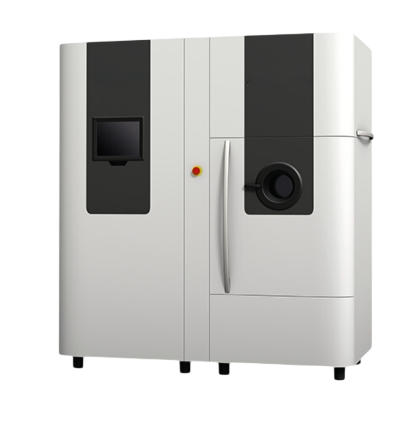
A compact EBM solution suited for research and medical applications.
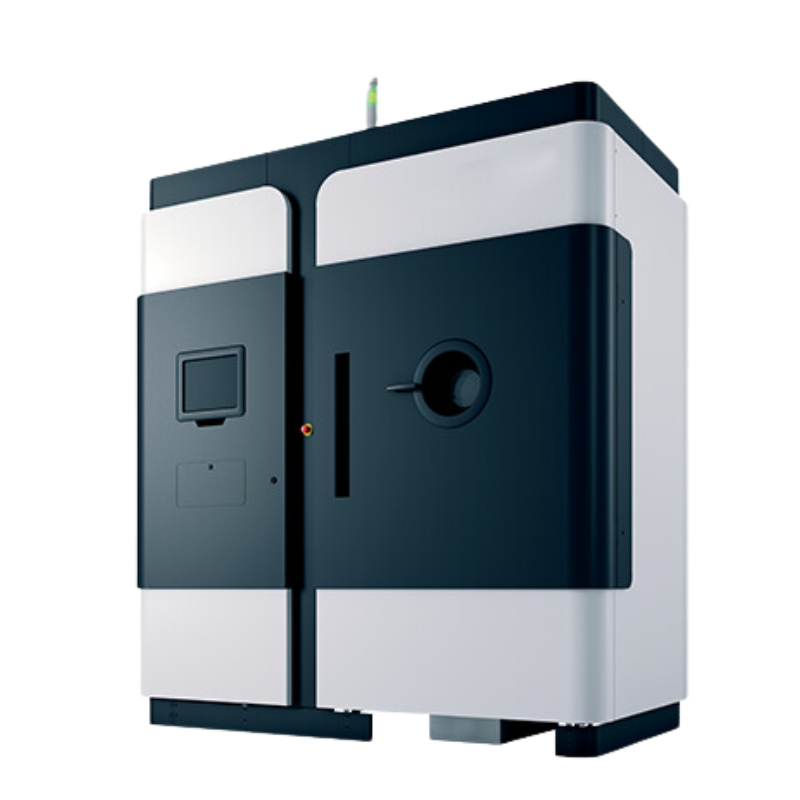
A larger EBM system designed for industrial applications and larger component requirements.

An advanced EBM system for applications involving high-performance materials and demanding requirements.
| EBM Printer | Best Fit | Key Positioning |
|---|---|---|
| EBM Q10plus | Medical, research and development | Compact EBM solution for research and medical applications. |
| EBM Spectra L | Industrial applications | Large-build EBM system for industrial component manufacturing. |
| EBM Spectra H | Advanced materials and demanding applications | Advanced EBM platform for high-performance material applications. |
Specification note: Exact build volume, beam power, layer thickness, scan speed, supported materials and other technical specifications should be added only after verification from approved Lodestar/OEM documentation.
| Material / Process Area | Common Use | Important Buyer Considerationss |
|---|---|---|
| Titanium Alloys | Aerospace, medical and lightweight components | Review material compatibility, mechanical requirements and application specifications. |
| Ti6Al4V | Medical implants and lightweight components | Evaluate material qualification, geometry, process parameters and post-processing. |
| Metal Powder | Layer-by-layer EBM manufacturing | Powder characteristics, handling, reuse and process compatibility should be evaluated. |
| Post-Processing | Final component preparation | Machining, heat treatment, support removal or surface finishing may be required. |
Create the CAD model while considering EBM design requirements and application constraints.
Orient the component, define supports and prepare the build according to material and system.
The electron beam selectively melts metal powder layer by layer inside a controlled vacuum environment.
Remove and handle the built component and surrounding powder according to the required workflow.
Near-net-shape structural parts, frames, rings, brackets, tooling and large-component development.
Large structures, mission-specific components, low-volume production and alloy development.
Propellers, marine structures, replacement parts and repair-oriented workflows.
| Technology | Best For | Key Differences |
|---|---|---|
| EBM | Aerospace, medical, advanced metal components | Uses an electron beam in a controlled vacuum environment to melt metal powder layer by layer. |
| Laser Powder Bed Fusion | Detailed metal components and production applications | Uses a laser as the energy source to selectively fuse metal powder. |
| WAAM | Large metal components | Uses wire feedstock with an energy source to deposit metal. |
| Metal Binder Jetting | Suitable batch metal workflows | Uses a binder to form parts before debinding and sintering. |
For aerospace, medical, defence, research and industrial users, Lodestar 3D can help route the discussion toward the appropriate EBM system and configuration before a quote is prepared.
Electron Beam Melting (EBM) is a metal additive manufacturing technology that uses an electron beam to selectively melt metal powder layer by layer inside a controlled vacuum environment.
Lodestar 3D offers EBM Q10plus, EBM Spectra L and EBM Spectra H for different application and manufacturing requirements.
EBM can be evaluated for aerospace, medical, defence, research, industrial manufacturing and other advanced metal applications.
Q10plus is positioned as a compact solution for medical and research applications, Spectra L for larger industrial applications, and Spectra H for advanced applications involving high-performance materials.
Material compatibility depends on the specific EBM system, material qualification and application requirements. Titanium alloys and Ti6Al4V are relevant material categories, but exact supported materials should be confirmed with Lodestar 3D.
EBM can be evaluated for aerospace applications involving complex metal geometries, lightweight structures and advanced material requirements, subject to application-specific qualification.
EBM can be considered for medical and orthopaedic applications where suitable materials, process parameters, validation and regulatory requirements are established.
Printer selection should consider application, component size, material, geometry, production volume, required properties, post-processing and the overall manufacturing workflow.
Powered by GSheetConnector