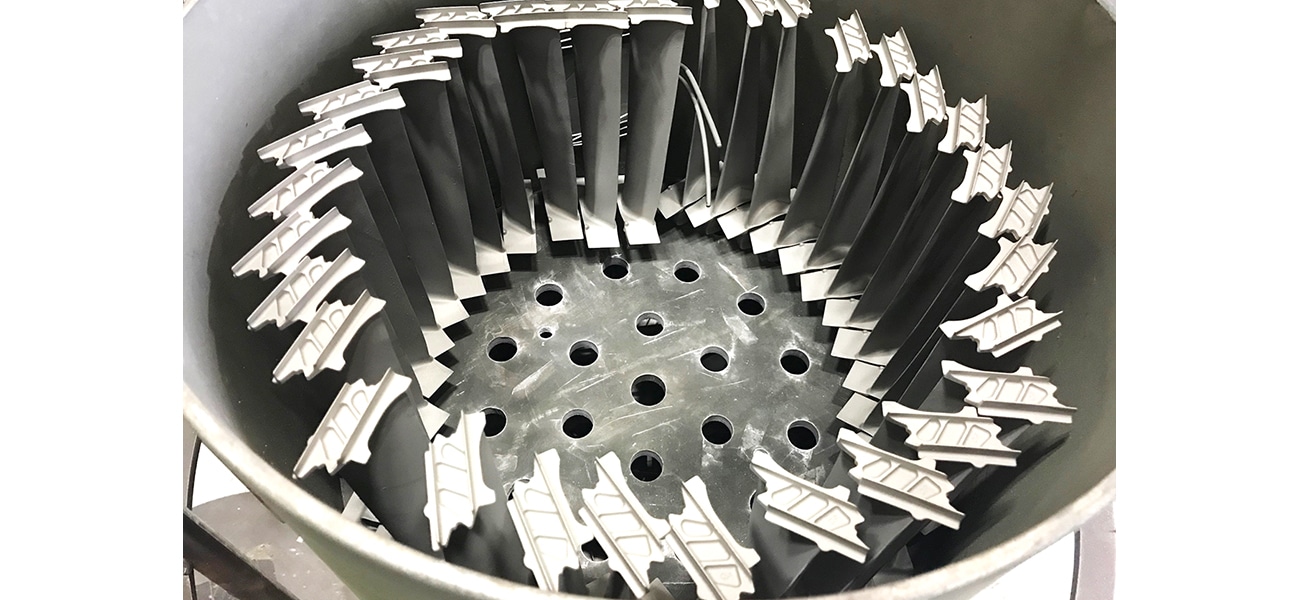
HIP for Castings: How Hot Isostatic Pressing Improves Cast Components

Hot Isostatic Pressing reducing internal porosity in metal castings
Source by hip-for-casting

Metal casting makes it possible to manufacture complex and near-net-shape components efficiently. However, gas porosity, shrinkage voids and other internal defects can form while molten metal solidifies.

These defects may not be visible from the outside, but they can affect the consistency, fatigue performance and service life of a cast component.

Hot Isostatic Pressing, commonly called HIP, is used to densify suitable castings by applying high temperature and uniform inert-gas pressure. The process can reduce sealed internal porosity and improve the overall soundness of the cast material.

Table of Contents

Why Does Porosity Form in Castings?

During casting, molten metal is poured or injected into a mould and allowed to solidify. As the metal cools, its volume changes. If sufficient liquid metal is not available to compensate for this shrinkage, internal voids can remain.

Porosity may also develop because of:

  • Gas trapped in the molten metal
  • Shrinkage during solidification
  • Incomplete feeding
  • Irregular cooling
  • Mould or process conditions
  • Contamination
  • Complex component geometry

Even well-controlled casting processes may leave small amounts of residual gas or shrinkage porosity. These defects can become stress-concentration points, particularly in components exposed to repeated or high mechanical loads.

How Does HIP Treat a Casting?

During the HIP process, the casting is placed inside a furnace contained within a high-pressure vessel.

A typical cycle includes:

  1. Loading the casting into the HIP hot zone
  2. Closing the pressure vessel
  3. Introducing a high-purity inert gas
  4. Increasing temperature and pressure
  5. Holding the casting at the specified conditions
  6. Cooling and depressurising the system
  7. Removing and inspecting the processed casting

Argon is commonly used because it is inert under many processing conditions. The gas surrounds the component and applies pressure uniformly from every direction.

The elevated temperature makes the metal more responsive to deformation, while the external pressure forces the internal surfaces of suitable pores toward each other. Plastic deformation, creep and diffusion bonding help shrink and close the voids.

How Does HIP Reduce Casting Porosity?

Internal porosity consists of empty spaces within the cast material. These spaces reduce the effective density of the component and can create local weak points.

During HIP, three mechanisms contribute to porosity reduction:

Plastic Deformation

The material around a pore changes shape under pressure, reducing the volume of the internal void.

Creep

At elevated temperature, the metal gradually deforms under sustained pressure. This allows the pore to continue shrinking during the holding stage.

Diffusion Bonding

As the internal pore surfaces come into contact, atomic diffusion helps bond them together during the final stages of densification.

The result is a denser and more uniform casting with fewer internal discontinuities.

Benefits of HIP for Castings

Reduced Internal Microporosity

HIP can reduce suitable shrinkage porosity, creep voids and internal defects that are sealed from the casting surface.

Improved Material Consistency

Porosity can cause variation in mechanical properties between different areas of a casting or between separate production batches. Reducing these defects can narrow the variation in performance.

Better Fatigue Performance

Internal pores can act as initiation points for fatigue cracks. Removing suitable microporosity can improve fatigue resistance and extend the useful life of components exposed to repeated loads.

Improved Ductility and Toughness

A denser internal structure may improve ductility, impact strength and fracture toughness, depending on the alloy and initial casting quality.

Better Machined Surface Quality

Machining can expose hidden pores beneath the casting surface. By reducing internal porosity before machining, HIP can help produce cleaner machined surfaces.

Lower Casting Rejection Risk

HIP may recover suitable castings that would otherwise fail radiographic or other internal-quality inspections. This can help reduce scrap and recover value from high-cost cast components.

Which Casting Materials Can Be HIP Processed?

HIP can be considered for many cast metals, including suitable:

  • Aluminium alloys
  • Titanium alloys
  • Nickel-based superalloys
  • Cobalt alloys
  • Stainless steels
  • Copper alloys
  • Iron-based alloys

The correct process cycle depends on the alloy, component geometry, pore condition and required properties. Material compatibility and contamination risks must be reviewed before processing.

Schedule A Call

+91 990-000-3300

Typical Cast Components Treated with HIP

Casting densification is used for components where internal quality and reliability are particularly important, including:

  • Turbine and engine components
  • Structural aerospace castings
  • Medical implants
  • Automotive engine parts
  • Valve bodies
  • Petrochemical equipment
  • Tooling and dies
  • General engineering components

The suitability of HIP depends on the casting material, defect type, surface condition and required performance.

Can HIP Repair Every Casting Defect?

No. HIP is highly effective for certain types of internal, sealed porosity, but it is not a universal casting-repair method.

HIP may not effectively correct:

  • Surface-connected porosity
  • Large structural cracks
  • Dimensional inaccuracies
  • Incorrect alloy chemistry
  • Contaminated defects
  • Extensive inclusions
  • Defects containing high-pressure trapped gas

When a pore is connected to the casting surface, the processing gas may enter it and equalise the pressure. This can prevent the pressure difference needed to close the void. Best results are generally achieved when porosity is internal and the casting surface remains intact.

HIP should therefore complement good foundry practices rather than replace process control, inspection and correct casting design.

When Should Castings Be HIP Processed?

HIP can be considered when:

  • Internal porosity affects component acceptance
  • Fatigue life is important
  • Machining exposes subsurface pores
  • Material-property consistency must be improved
  • The casting is expensive to replace
  • Rejection and scrap rates are commercially significant
  • The component will operate under demanding loads

Processing is often most effective before extensive machining because the original casting skin can help keep internal pores sealed from the external gas.

Selecting a HIP System for Castings

The correct HIP system should be selected according to:

  • Casting dimensions
  • Required hot-zone diameter and length
  • Alloy and processing temperature
  • Required gas pressure
  • Component weight
  • Batch quantity
  • Cycle frequency
  • Research or production capacity

A laboratory HIP may support alloy and cycle development, while pilot and production systems provide greater hot-zone capacity for larger components and regular production batches.

American Isostatic Presses identifies defect healing of castings as a common HIP application and offers systems ranging from research units to production equipment.

HIP Solutions from Lodestar 3D

Lodestar 3D helps Indian foundries, research teams and manufacturers evaluate AIP HIP systems for casting densification and related materials-processing requirements.

The evaluation can cover the casting material, component size, required pressure, furnace temperature, hot-zone capacity and expected production volume.

Explore Lodestar 3D’s Hot Isostatic Pressing technology solutions or review the available AIP laboratory, scale-up and production HIP systems.

Conclusion

HIP for castings uses elevated temperature and uniform inert-gas pressure to reduce suitable internal porosity. Plastic deformation, creep and diffusion bonding work together to close internal voids and improve casting density.

The process can support better fatigue performance, improved consistency, cleaner machined surfaces and lower rejection risk. However, successful densification depends on the alloy, defect type, casting surface and selected HIP cycle.

Talk to a Lodestar 3D HIP expert to evaluate the appropriate AIP system for your casting dimensions, material and production requirements.

FAQ's

What casting defects can HIP reduce?

HIP can reduce suitable sealed internal microporosity, including certain shrinkage voids and internal defects. Its effectiveness depends on the defect type and casting condition.

Usually not as effectively. If the processing gas enters a surface-connected pore, the pressure may equalise and prevent the pore from closing.

A solid, gas-tight casting generally retains its overall form because pressure acts uniformly. Small dimensional changes may occur depending on the porosity level and process conditions.

Yes. Suitable aluminium castings can be densified through HIP to reduce internal porosity and improve consistency. The process cycle must be developed for the specific alloy and casting.

No. HIP should be used alongside correct casting design, foundry process control and quality inspection. It is not a substitute for addressing preventable manufacturing defects.

    Agree to our terms and conditions.