

The Role of Welding Technology in WAAM: The Engine Behind Metal Additive Manufacturing
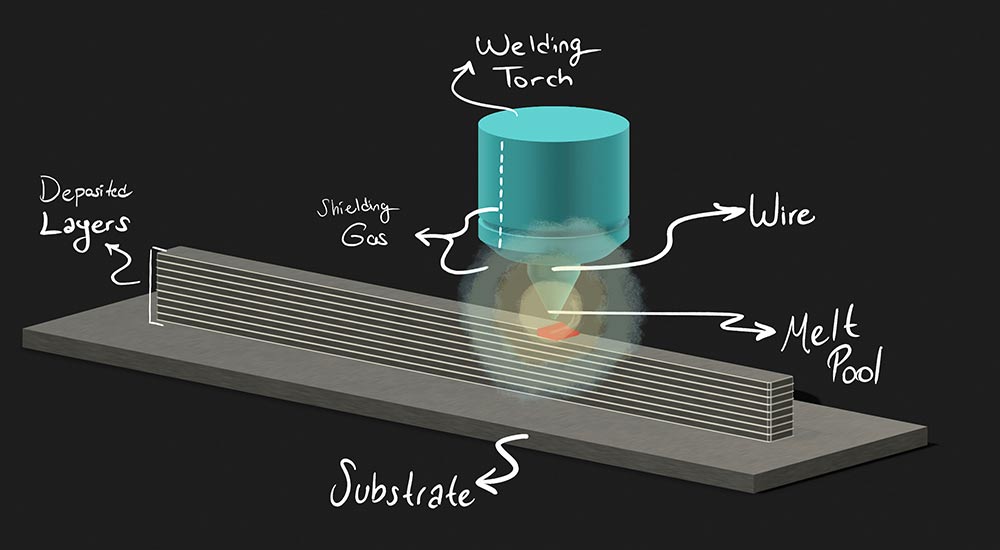
When people discuss Wire Arc Additive Manufacturing (WAAM), they often focus on robotics, automation, and metal 3D printing capabilities. However, the true driving force behind WAAM is welding technology. Without advanced welding processes, WAAM would simply not exist.
Welding provides the heat source, material deposition mechanism, and metallurgical bonding required to build metal components layer by layer. In many ways, WAAM can be viewed as the evolution of welding technology into the world of digital manufacturing.
As industries seek faster production methods, reduced material waste, and greater design freedom, welding technology has become the foundation of modern metal additive manufacturing. Understanding its role helps manufacturers appreciate why WAAM is transforming industries such as aerospace, automotive, energy, defense, and research.
Table of Contents
From Traditional Welding to Additive Manufacturing
For decades, welding has been used to join metal parts together. The primary goal was creating strong and durable connections between components. WAAM takes this concept one step further.
Instead of joining two separate parts, welding technology is used to create an entirely new part from raw metal wire. The welding arc generates the heat needed to melt the wire feedstock, while robotic systems control where the material is deposited.
This transformation has changed welding from a joining process into a manufacturing process. Today, advanced welding systems can create complex metal geometries that would be difficult or expensive to produce using conventional manufacturing methods.
Why Welding Is the Heart of WAAM?
Every WAAM process depends on a stable and controlled welding arc. The welding system determines:
- Deposition rate
- Heat input
- Layer quality
- Surface finish
- Mechanical properties
- Production speed
Even the most advanced robot cannot produce a high-quality WAAM component if the welding process is unstable. Consistent arc behavior ensures uniform material deposition, strong layer bonding, and reliable part performance.
This is why selecting the right welding technology is one of the most important decisions when implementing a WAAM system.
How Welding Controls Material Deposition?
In WAAM, the welding arc melts the continuously fed wire and creates a molten pool. The robot then moves along a programmed path while the molten metal solidifies layer by layer.
The welding process directly influences:
Layer Thickness
Proper welding parameters help maintain consistent layer heights throughout the build process.
Bead Geometry
The shape and width of each deposited weld bead affect the final dimensions of the component.
Heat Distribution
Controlled heat input reduces distortion and minimizes residual stresses.
Interlayer Bonding
Strong metallurgical bonding between layers ensures structural integrity and long-term durability.
Because of these factors, welding quality directly impacts the quality of the final WAAM component.

Key Welding Technologies Used in WAAM
GMAW-AM: High Productivity Manufacturing
Gas Metal Arc Welding (GMAW-AM) is often selected for large-scale metal additive manufacturing because of its high deposition rates.
Benefits include:
- Faster production
- Higher material utilization
- Lower manufacturing costs
- Excellent productivity
This process is commonly used for manufacturing large structural components where build speed is a priority.
GTAW-AM: Precision Manufacturing
Gas Tungsten Arc Welding (GTAW-AM) offers greater control over the welding process.
Advantages include:
- Superior surface quality
- Improved dimensional accuracy
- Lower spatter generation
- Better control of heat input
This technology is frequently used in research environments and high-precision manufacturing applications.
PAW-AM: Advanced Process Control
Plasma Arc Welding (PAW-AM) provides a concentrated heat source and exceptional arc stability.
Benefits include:
- Improved penetration control
- Enhanced deposition accuracy
- Better process repeatability
- Consistent weld quality
PAW-AM is often used for specialized industrial applications that require tight process control.
The Importance of Arc Stability in WAAM
Arc stability is one of the most critical aspects of welding-based additive manufacturing.
An unstable arc can cause:
- Porosity
- Irregular layer formation
- Surface defects
- Reduced mechanical strength
- Dimensional inaccuracies
Modern WAAM systems incorporate advanced welding power sources capable of maintaining stable arc conditions throughout the build process.
At Lodestar 3D, advanced process control technologies help ensure reliable deposition quality across different materials and component geometries.
Welding Technology and Material Performance
The welding process influences more than just geometry. It also affects the internal structure of the material.
Key material properties impacted by welding include:
- Tensile strength
- Yield strength
- Fatigue resistance
- Hardness
- Grain structure
By optimizing welding parameters, manufacturers can tailor material properties to meet specific application requirements.
This capability is particularly valuable in industries where component performance and reliability are critical.
Welding Automation: The Future of WAAM
At Lodestar 3D, welding technology forms the foundation of our WAAM platforms.
Our solutions include:
Compact System
Designed for manufacturers seeking efficient and scalable metal additive manufacturing.
Special System
Built for advanced industrial applications requiring customized manufacturing capabilities.
Lab System
Developed for universities, research institutes, and innovation centers focused on process development and material research.
Each system combines advanced welding technology, robotic control, and intelligent manufacturing software to deliver reliable WAAM performance.
Lodestar 3D's Welding-Driven WAAM Solutions
At Lodestar 3D, welding technology forms the foundation of our WAAM platforms.
Our solutions include:
Compact System
Designed for manufacturers seeking efficient and scalable metal additive manufacturing.
Special System
Built for advanced industrial applications requiring customized manufacturing capabilities.
Lab System
Developed for universities, research institutes, and innovation centers focused on process development and material research.
Each system combines advanced welding technology, robotic control, and intelligent manufacturing software to deliver reliable WAAM performance.
Conclusion
While robotics and automation often receive the spotlight, welding technology remains the true engine behind Wire Arc Additive Manufacturing. It controls material deposition, determines component quality, influences mechanical properties, and drives manufacturing efficiency.
As WAAM continues to gain adoption across industries, advances in welding technology will play a central role in improving productivity, precision, and process reliability. For organizations investing in metal additive manufacturing, understanding the importance of welding is essential to unlocking the full potential of WAAM.
FAQ's
1. What is the role of welding technology in WAAM?
Welding technology serves as the core of Wire Arc Additive Manufacturing (WAAM) by providing the heat source and material deposition process needed to build metal components layer by layer.
2. Which welding processes are commonly used in WAAM?
The most commonly used welding processes in WAAM are Gas Metal Arc Welding (GMAW-AM), Gas Tungsten Arc Welding (GTAW-AM), and Plasma Arc Welding (PAW-AM), each offering different benefits in terms of speed, precision, and process control.
3. Why is arc stability important in WAAM?
Arc stability ensures consistent material deposition, strong layer bonding, and high-quality component production. An unstable arc can lead to defects such as porosity, irregular layers, and reduced mechanical performance.
4. How does welding technology affect the quality of WAAM parts?
Welding parameters directly influence layer thickness, bead geometry, heat distribution, surface finish, and mechanical properties, making them critical to the overall quality and reliability of WAAM components.
5. What are the advantages of using robotic welding systems in WAAM?
Robotic welding systems improve precision, repeatability, automation, and production efficiency while enabling the manufacture of complex metal geometries with minimal human intervention.
6. Which industries benefit most from welding-based WAAM technology?
Industries such as aerospace, automotive, defense, energy, marine, and industrial manufacturing benefit from WAAM due to its ability to produce large, high-performance metal components with reduced material waste and shorter lead times.