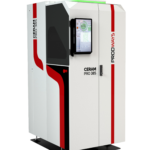
What Is WAAM? A Complete Guide to Wire Arc Additive Manufacturing
Source:Metalworm.com
Manufacturing industries are constantly searching for faster, more efficient, and cost-effective ways to produce high-quality metal components. One technology that has emerged as a game changer in recent years is Wire Arc Additive Manufacturing (WAAM). This advanced metal additive manufacturing process combines robotic automation with welding technology to create large, complex, and high-strength metal parts layer by layer.
Unlike conventional manufacturing methods that remove material through machining, WAAM builds components by depositing metal wire directly onto a substrate. This approach significantly reduces material waste, shortens production time, and enables the creation of parts that would be difficult or expensive to manufacture using traditional techniques.
At Lodestar 3D, we provide advanced WAAM solutions designed for industrial manufacturing, research institutions, and specialized production environments. Our systems help organizations leverage the full potential of metal additive manufacturing for faster innovation and improved productivity.
Table of Contents
Understanding Wire Arc Additive Manufacturing
Wire Arc Additive Manufacturing is a metal 3D printing process that uses an electric arc as a heat source and a continuously fed metal wire as the feedstock material. The wire is melted by the arc and deposited layer by layer according to a digitally programmed toolpath.
The process is controlled by robotic systems that precisely manage movement, deposition rates, and material placement. As each layer solidifies, the next layer is deposited until the final component is completed.
WAAM is particularly suitable for producing:
Large-scale metal components
Near-net-shape parts
Structural components
Repair and remanufacturing applications
Complex industrial parts
Its ability to manufacture large metal structures at relatively high deposition rates makes WAAM one of the most promising technologies in industrial metal additive manufacturing.
How Does WAAM Work?
The WAAM process begins with a digital CAD model that is converted into a machine-readable toolpath. The robotic system follows this path while feeding metal wire into an electric arc.
The manufacturing process typically involves:
Creating a 3D CAD model.
Generating a deposition path using specialized software.
Feeding metal wire through the welding torch.
Melting the wire using an electric arc.
Depositing molten metal layer by layer.
Building the component until the desired geometry is achieved.
Performing post-processing if required.
Advanced robotic systems ensure high path accuracy, repeatability, and synchronous motion control throughout the manufacturing process.
GMAW-AM (Gas Metal Arc Welding Additive Manufacturing)
GMAW-AM is one of the most widely used WAAM methods due to its high deposition rate and excellent productivity.
Key advantages include:
Higher energy efficiency
Higher deposition rates
Better material utilization
Lower porosity
Reduced production time
Improved mechanical properties
In this process, a continuous metal wire is fed through a welding gun while shielding gas protects the molten weld pool from atmospheric contamination. The electrical arc melts both the wire and substrate, enabling efficient layer-by-layer deposition.
GTAW-AM uses a non-consumable tungsten electrode to generate the arc. The filler wire is introduced separately into the molten pool.
Benefits of GTAW-AM include:
Excellent process control
Superior surface quality
High precision deposition
Reduced heat input
Although deposition rates are generally lower than GMAW-AM, GTAW-AM is often preferred for applications requiring enhanced accuracy and surface finish.
PAW-AM is similar to GTAW-AM but uses a highly concentrated plasma arc.
In this process:
An arc forms between a tungsten electrode and a water-cooled nozzle.
Inert gas becomes ionized to create plasma.
The plasma jet generates a controlled melt pool.
Metal wire is deposited into the molten region.
The concentrated energy source provides excellent precision and stability, making PAW-AM suitable for specialized manufacturing applications.
Key Advantages of WAAM Technology
High Deposition Rates
Compared to many powder-based metal additive manufacturing technologies, WAAM offers significantly higher deposition rates. This enables manufacturers to produce large components much faster.
Reduced Material Waste
Traditional machining can result in substantial material loss. WAAM uses only the material needed for part creation, reducing waste and improving sustainability.
Wire Arc Additive Manufacturing is used to produce large metal parts, near-net-shape components, repair structures, tooling, prototypes, and low-volume industrial parts. It is commonly used in aerospace, automotive, defense, energy, heavy engineering, and R&D applications.
Yes. WAAM is a type of metal 3D printing. It uses metal wire and an electric arc instead of metal powder and a laser or electron beam. It is mainly used for large metal components where deposition speed and material efficiency are important.
WAAM can process many weldable metals, including carbon steel, stainless steel, aluminium alloys, titanium alloys, nickel alloys, and other engineering metals. The material must be selected based on weldability, mechanical properties, and application requirements.
Yes. WAAM parts usually require post-processing such as CNC machining, heat treatment, stress relief, inspection, and surface finishing. WAAM produces near-net-shape parts, not usually final finished parts directly.
WAAM can support production for large, customized, low-volume, or high-value metal parts. For very high-volume small parts, conventional manufacturing may still be more suitable. The decision depends on part size, material, geometry, cost, and production volume.