How Does WAAM Technology Work?
Large metal component manufacturing has always carried a difficult trade-off. Conventional processes such as casting, forging, welding, and CNC machining are reliable, but they often involve long lead times, high material waste, expensive tooling, and limited design flexibility. WAAM Technology changes this equation by using metal wire and arc heat to build components layer by layer.
WAAM stands for Wire Arc Additive Manufacturing. It is a metal additive manufacturing process where a continuously fed metallic wire is melted using an electric arc and deposited in layers to create a near-net-shape part.
For manufacturers working in aerospace, automotive, medical, defense, heavy engineering, energy, and R&D, WAAM Technology offers a practical route to large-format metal additive manufacturing. It combines the familiarity of welding, the accuracy of robotic motion, and the flexibility of digital manufacturing.
Lodestar 3D supports industries across India with industrial 3D printers, additive manufacturing software, materials, surface treatment solutions, and expert technical support. With headquarters in Jayanagar, Bengaluru, and pan-India operations, Lodestar 3D helps manufacturers evaluate and implement the right additive manufacturing technologies for their production goals.
[Internal Link: Product Page for Metal Additive Manufacturing]
Table of Contents
What Is WAAM Technology?
WAAM Technology is a metal 3D printing process that uses wire as the feedstock and an electric arc as the heat source.
The process is simple in principle:
A metal wire is fed into a deposition head. An electric arc melts the wire. The molten metal is deposited on a base plate or previously deposited layer. The material cools and solidifies. The process repeats layer by layer until the required part shape is formed.
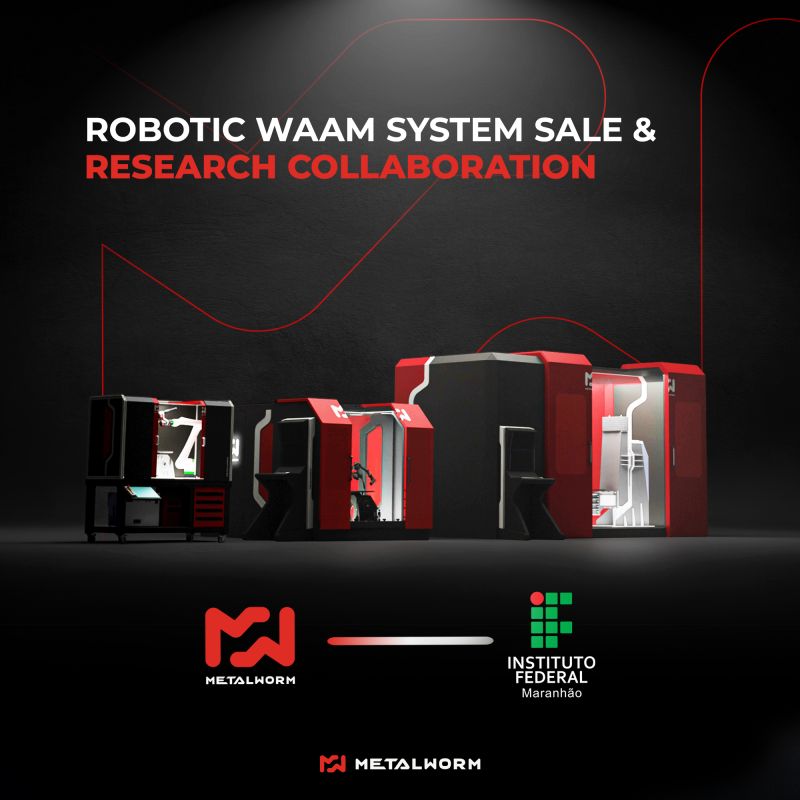
In practical industrial use, WAAM is usually performed with a robotic arm, gantry system, slider, or multi-axis motion platform. These systems guide the welding torch along a programmed path, allowing the machine to build large metal components with controlled deposition.
WAAM belongs to the broader category of Directed Energy Deposition, also known as DED. In DED processes, material is fed into a focused energy source and deposited directly onto a surface.
Unlike powder bed fusion methods such as MPBF or EBM, WAAM does not use a bed of metal powder. It uses wire. This makes the process especially suitable for large metal parts where build volume, deposition speed, and material efficiency are more important than extremely fine feature resolution.
How Does WAAM Technology Work?
WAAM Technology works through a controlled sequence of digital design preparation, material feeding, arc melting, robotic deposition, thermal control, and post-processing.
The process can be understood in seven main stages.
Stage 1: CAD Model and Digital Build Preparation
Every WAAM project begins with a digital 3D model. Engineers create or import the part geometry using CAD software.
The model is then prepared for additive manufacturing. This stage is critical because WAAM does not simply “print” a shape directly. The part must be converted into a deposition strategy that the machine can follow.
During build preparation, engineers define:
- Build orientation
- Layer height
- Deposition path
- Torch angle
- Bead width
- Material addition sequence
- Machining allowance
- Support or fixture requirements
- Thermal control strategy
This digital workflow is one of the reasons WAAM fits well into Industry 4.0 manufacturing. Design, simulation, toolpath planning, production, inspection, and improvement can be connected through a data-driven process.
For large industrial parts, build planning also includes distortion control. Since WAAM uses arc heat, thermal behavior must be considered before production begins.

Stage 2: Metal Wire Feedstock Selection
WAAM uses metallic wire as its raw material. The wire is continuously fed into the deposition zone during the build.
Common WAAM materials include:
- Carbon steel
- Stainless steel
- Aluminum alloys
- Titanium alloys
- Nickel alloys
- Bronze
- Other weldable engineering metals
Wire feedstock offers several industrial advantages. It is easier to store and handle than metal powder. It also supports high material utilization because the wire is deposited only where material is required.
Material selection depends on the application. For example, aerospace components may require titanium or aluminum alloys. Defense and heavy engineering components may require steel or high-strength alloys. Energy applications may require corrosion-resistant or heat-resistant metals.
The right wire selection directly affects:
- Mechanical strength
- Ductility
- Fatigue resistance
- Corrosion resistance
- Heat resistance
- Weldability
- Final part performance
This is why WAAM implementation must involve both design engineering and metallurgical understanding.
Stage 3: Arc Heat Generation
After the wire feedstock is selected, the next step is controlled melting.
WAAM uses an electric arc as the heat source. The arc generates enough heat to melt the incoming wire and create a molten pool on the build surface.
Different arc-based welding processes may be used in WAAM, including:
- Gas Metal Arc Welding
- Gas Tungsten Arc Welding
- Plasma Arc Welding
- Cold Metal Transfer
Each process has a different effect on heat input, deposition stability, bead shape, surface finish, and metallurgical quality.
For example, a process with higher heat input may support faster deposition but may also increase distortion risk. A lower heat input process may offer better control but may reduce deposition speed.
Important arc-related parameters include:
- Arc current
- Arc voltage
- Heat input
- Wire feed rate
- Travel speed
- Shielding gas flow
- Torch-to-work distance
These parameters must be controlled carefully to achieve repeatable layer quality.
Stage 4: Layer-by-Layer Metal Deposition
Once the wire melts, the molten metal is deposited onto the base plate or the previous layer.
The deposited metal forms a bead. As the bead cools, it solidifies and bonds metallurgically with the layer below it. The machine then deposits the next bead and the next layer.
This layer-by-layer process gradually creates the full 3D geometry.
A simplified WAAM process flow is:
- Metal wire is fed into the torch
- Electric arc melts the wire
- Molten metal is deposited onto the surface
- The deposited layer cools and solidifies
- The machine moves to the next path
- Additional layers are deposited
- The part grows to near-net shape
This is different from traditional welding, where the goal is to join two existing components. In WAAM, the welding principle is used to create a new component from deposited material.
The quality of each layer affects the final part. Poor layer bonding, inconsistent bead geometry, or uncontrolled heat can lead to dimensional errors, porosity, distortion, or uneven mechanical properties.
Stage 5: Robotic Motion Control
Industrial WAAM systems usually use robotic motion control.
The deposition head may be mounted on:
- Robotic arm
- Gantry system
- Linear slider
- Rotary positioner
- Multi-axis motion platform
Robotic motion allows the torch to follow a programmed path with repeatable movement. This is especially important for large parts, curved structures, complex geometries, and repair applications.
Robotic WAAM can control:
- Torch path
- Travel speed
- Torch angle
- Deposition direction
- Layer sequence
- Build height
- Access to complex areas
With robotic peripherals such as positioners and gantries, WAAM can produce larger components than many enclosed metal powder bed systems.
This makes WAAM useful for industries that need large metal structures, heavy-duty components, custom tooling, and repair of expensive metal assets.
Stage 6: Thermal Control and Process Monitoring
Thermal control is one of the most important technical aspects of WAAM Technology.
Because WAAM uses an electric arc, the part experiences repeated heating and cooling cycles. These thermal cycles can affect microstructure, residual stress, distortion, bead quality, and mechanical performance.
Key thermal and process variables include:
- Interpass temperature
- Cooling rate
- Heat accumulation
- Layer dwell time
- Bead overlap
- Substrate temperature
- Shielding gas stability
- Deposition sequence
If heat is not managed properly, the part may warp or show inconsistent properties. For this reason, industrial WAAM systems often use sensors, cameras, scanners, or software monitoring tools.
Advanced process monitoring can help track:
- Bead height
- Bead width
- Arc stability
- Temperature behavior
- Layer geometry
- Surface condition
- Defect formation
For production-grade additive manufacturing, monitoring is not optional. It is part of building a repeatable and reliable process.
Stage 7: Post-Processing and Final Finishing
WAAM usually produces near-net-shape components. This means the printed part is close to the required final shape, but it normally requires post-processing before use.
Common post-processing steps include:
- CNC machining
- Stress relief
- Heat treatment
- Surface finishing
- Dimensional inspection
- Non-destructive testing
- Metallurgical testing
- Final quality validation
CNC machining is often used to achieve tight tolerances on functional surfaces. Heat treatment may be required to improve mechanical properties or relieve residual stress. Surface finishing may be needed to reduce roughness and improve functional performance.
This is where the full additive manufacturing ecosystem becomes important. A WAAM machine alone is not enough. Manufacturers need the right combination of design strategy, process planning, inspection, machining, and finishing.
Lodestar 3D supports this complete workflow through industrial 3D printing technologies, materials, software, and surface treatment solutions such as DLyte.
[Internal Link: Product Page for DLyte Surface Finishing]
Why WAAM Technology Is Important for Industrial Manufacturing
WAAM Technology is valuable because it solves practical manufacturing problems.
It is not simply a new way to create prototypes. It is a production-oriented metal additive manufacturing process for large, high-value, and complex parts.
1. Low equipment cost
Compared with many advanced metal additive manufacturing systems, WAAM can offer a lower investment route because it is based on wire feedstock, arc heat, and welding-style deposition hardware.
This makes it attractive for manufacturers exploring metal additive manufacturing for large parts.
2. Fast production
WAAM can achieve high deposition rates, making it suitable for large-volume metal components.
For parts that would take long machining hours or require expensive tooling, WAAM can reduce production time.
3. Low material waste
In conventional machining, material is removed from a solid block. This can create significant scrap, especially with expensive metals.
WAAM adds material only where needed. This improves material efficiency and supports more sustainable production.
4. Low part production cost
WAAM can reduce production cost by lowering material waste, reducing tooling dependency, shortening development cycles, and simplifying assemblies.
This cost advantage becomes more visible in large, low-volume, customized, or high-value components.
5. Short post-processing time
WAAM parts are near-net-shape. While they require finishing, the total number of production steps can be lower compared with conventional routes involving casting, welding, rough machining, and final machining.
6. Part consolidation
WAAM can help engineers reduce the number of subcomponents in an assembly.
Instead of producing several pieces and joining them later, WAAM can produce certain geometries as one integrated component. This reduces assembly effort and may improve rigidity.
7. Freedom of design
WAAM supports complex geometries, curved structures, reinforced forms, and topology-optimized designs.
This gives engineers more freedom to design for function rather than only for conventional manufacturability.
8. Eco-friendly manufacturing
WAAM supports low-material-consumption manufacturing by reducing scrap and improving raw material utilization.
For industries focused on sustainability, this is a meaningful advantage.
Industrial Applications of WAAM Technology
WAAM Technology is especially useful where part size, material cost, lead time, or production flexibility is important.
Aerospace
Aerospace manufacturers often work with expensive materials and complex structural requirements.
WAAM can support:
- Titanium components
- Aluminum structures
- Large brackets
- Aircraft tooling
- Structural ribs
- Repair applications
- Low-volume production parts
The ability to reduce material waste is highly relevant in aerospace, where buy-to-fly ratios can be high.
Automotive
Automotive and mobility companies can use WAAM for product development, tooling, fixtures, and low-volume metal components.
Applications include:
- Prototype metal parts
- EV platform development
- Motorsport components
- Welding fixtures
- Forming tools
- Lightweight structures
- Functional testing parts
WAAM allows faster design validation without waiting for expensive tooling.
Defense
Defense manufacturing often requires localized production, replacement parts, and high-value metal components.
WAAM can support:
- Vehicle components
- Naval structures
- Replacement parts
- Large metal prototypes
- Repair of expensive assets
- Mission-specific components
For defense supply chains, the ability to produce or repair parts locally can be strategically important.
Heavy Engineering
WAAM is suitable for large metal components used in industrial machinery and heavy equipment.
Applications may include:
- Large housings
- Tooling
- Shafts
- Structural members
- Repair build-ups
- Custom metal parts
For large-format parts, WAAM can be more practical than powder bed systems because it is not limited by a small build chamber.
Energy and Oil & Gas
Energy and oil and gas applications often involve demanding materials and large parts.
WAAM can be used for:
- Pump components
- Turbine-related parts
- Corrosion-resistant structures
- Large repair applications
- Pressure equipment support parts
- Custom industrial components
WAAM Technology vs Other Metal 3D Printing Processes
WAAM is not the only metal additive manufacturing process. The right technology depends on the application.
WAAM vs Metal Powder Bed Fusion
Metal Powder Bed Fusion is suitable for smaller, highly detailed metal components. It is useful for complex internal channels, fine features, and high-precision parts.
WAAM is better suited for large components where high deposition rate, lower material waste, and build size are more important than fine detail.
WAAM vs EBM
Electron Beam Melting, or EBM, is a powder bed process that uses an electron beam in a vacuum environment. It is often used for high-performance metal parts, especially in aerospace and medical applications.
WAAM offers larger build flexibility and wire-based deposition but usually needs more post-processing.
WAAM vs CNC Machining
CNC machining provides excellent accuracy and surface finish. WAAM provides near-net-shape metal deposition.
In many industrial workflows, WAAM and CNC machining are used together. WAAM creates the part close to the required shape, and CNC machining finishes critical surfaces.
WAAM vs Casting
Casting is suitable for high-volume production but requires molds, patterns, and longer setup cycles.
WAAM is useful for low-volume, customized, large, or fast-turnaround components where tooling cost is a challenge.
The Lodestar 3D Ecosystem for WAAM and Additive Manufacturing
WAAM implementation requires more than equipment selection. A successful additive manufacturing program needs a complete ecosystem.
Lodestar 3D helps manufacturers evaluate and implement industrial additive manufacturing through:
- Industrial 3D printers
- Metal and polymer additive manufacturing systems
- SLS and SLA technologies
- Materials
- Additive manufacturing software
- DLyte surface finishing solutions
- Technical support
- Application guidance
- Training and service support
Lodestar 3D works with global OEMs such as Arcam, Shining 3D, Nexa3D, EPlus 3D, and DLyte. This enables customers to access advanced technologies across the additive manufacturing value chain.
For manufacturing heads and R&D teams, this ecosystem approach is important. The success of WAAM or any industrial additive manufacturing process depends on matching the right technology to the right application.
[Internal Link: Case Study]
Implementation Roadmap for WAAM Technology
A structured implementation roadmap helps manufacturers reduce risk and improve ROI.
Step 1: Identify suitable parts
The best WAAM candidates usually have one or more of the following characteristics:
- Large metal geometry
- High material waste in machining
- Long lead time
- Expensive tooling
- Low to medium production volume
- Repair requirement
- Part consolidation opportunity
- Complex geometry
- Supply chain dependency
Step 2: Compare current manufacturing cost
Before adopting WAAM, companies should compare it with the existing manufacturing process.
Important factors include:
- Raw material cost
- Tooling cost
- Machining hours
- Assembly effort
- Scrap rate
- Lead time
- Inspection cost
- Supplier dependency
- Post-processing cost
This helps build a clear technical and commercial case.
Step 3: Select the right material and process parameters
Material and parameter selection define part quality.
Critical WAAM parameters include:
- Wire feed rate
- Travel speed
- Arc current
- Arc voltage
- Layer height
- Bead width
- Shielding gas flow
- Interpass temperature
Parameter validation is essential before production.
Step 4: Print test builds
Initial builds should be used to validate geometry, deposition quality, thermal behavior, and mechanical performance.
Testing may include dimensional inspection, tensile testing, hardness testing, metallurgical analysis, and non-destructive testing.
Step 5: Plan finishing and machining
Machining allowance and finishing requirements should be planned before printing.
This ensures the printed component can reach final tolerance and surface quality requirements.
Step 6: Scale into production
After validation, manufacturers can scale WAAM into production, repair, or hybrid manufacturing workflows.
Scaling may include automation, monitoring, operator training, quality documentation, and standard operating procedures.
Conclusion: WAAM Technology for Practical Industrial Additive Manufacturing
WAAM Technology is one of the most practical methods for large-scale metal additive manufacturing. It uses a continuously fed metal wire and electric arc heat source to build near-net-shape parts layer by layer.
Its key advantages include low material waste, fast production, lower tooling dependency, design freedom, part consolidation, and suitability for large metal components. For industries such as aerospace, automotive, defense, energy, and heavy engineering, WAAM provides a strong bridge between welding, robotics, digital manufacturing, and Industry 4.0.
The process is powerful, but it requires correct application selection, material planning, thermal control, parameter validation, machining strategy, and finishing support.
Lodestar 3D helps manufacturers evaluate WAAM Technology and other industrial additive manufacturing solutions based on real production requirements. With 15+ years of expertise in high-value capital equipment, pan-India support, and partnerships with global OEMs, Lodestar 3D provides the technical ecosystem needed to move from additive manufacturing exploration to production-ready implementation.
To understand whether WAAM Technology is suitable for your component, production challenge, or R&D requirement, consult Lodestar 3D’s additive manufacturing experts.
Request a technical consultation or quote for your specific manufacturing application.
[Internal Link: Contact for Quote]
Frequently Asked Questions About WAAM Technology
1. How does WAAM Technology work?
WAAM Technology works by feeding metal wire into an electric arc. The arc melts the wire, and the molten metal is deposited layer by layer to build a near-net-shape part.
2. Is WAAM Technology suitable for large metal parts?
Yes. WAAM is especially useful for large metal parts because it offers high deposition rates and is not restricted by the small build chambers used in many powder bed metal 3D printers.
3. Does WAAM require post-processing?
Yes. WAAM parts usually require CNC machining, heat treatment, stress relief, inspection, or surface finishing depending on the final application.
4. What materials can be used in WAAM?
WAAM can use many weldable metals, including steel, stainless steel, aluminum alloys, titanium alloys, nickel alloys, bronze, and other engineering metals.
5. Is WAAM better than traditional manufacturing?
WAAM is better for specific applications such as large metal parts, low-volume production, repair, part consolidation, and high material efficiency. Traditional manufacturing may still be better for very high-volume or high-precision small parts.