

What Applications Is WAAM Suitable For?
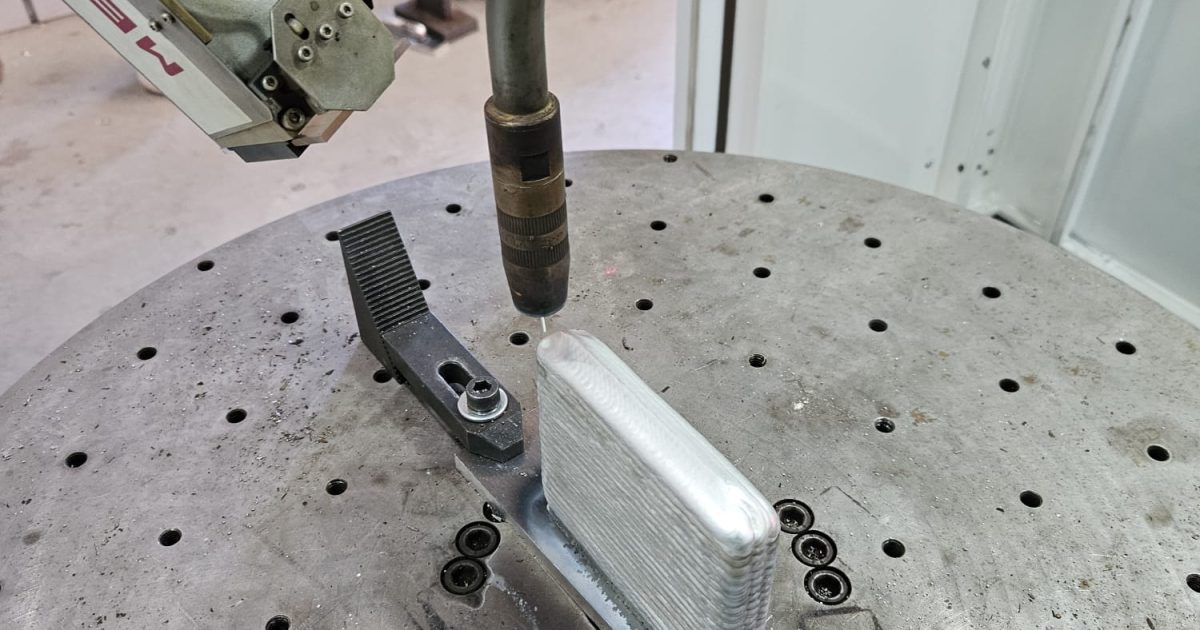
Wire Arc Additive Manufacturing, commonly known as WAAM, is an advanced metal additive manufacturing process used to produce and repair metal components. It builds a part layer by layer by continuously feeding metallic wire into an electric arc, which acts as the heat source.
Unlike conventional manufacturing methods that remove material from a large metal block or require complex moulds and tooling, WAAM deposits material only where it is needed. This makes the technology particularly valuable for producing medium-to-large metal parts, complex geometries, near-net-shape components, and components that would otherwise involve significant material waste or lengthy production processes.
The suitability of WAAM depends on the part size, material, geometry, production volume, surface-finish requirements, and industry-specific quality standards. It may not replace every traditional manufacturing method. However, for the right application, WAAM can help reduce raw-material usage, shorten production timelines, simplify assemblies, and improve manufacturing flexibility.
Table of Contents
What Is the WAAM Manufacturing Process?
WAAM is a form of directed energy deposition used for metal additive manufacturing. In a typical WAAM process, a metallic wire is continuously fed through a deposition system. An electric arc melts the wire, and a robotic system or machine-based setup deposits the molten metal along a programmed path.
Each deposited layer forms the foundation for the next layer. Over time, the component is built into the required three-dimensional shape.
The basic WAAM process includes:
- Creating or optimizing the digital 3D design
- Preparing the deposition path for each layer
- Feeding metallic wire continuously into the system
- Using an arc as the heat source to melt the wire
- Depositing the material layer by layer
- Applying the required finishing processes to achieve final dimensions and surface quality
Because WAAM is a near-net-shape manufacturing process, the deposited component is designed to be close to the final required form. Depending on the application, limited machining, grinding, heat treatment, or surface finishing may still be required.
Which Types of Components Are Best Suited for WAAM?
WAAM is especially suitable for components that have one or more of the following characteristics:
- Medium-to-large dimensions
- High raw-material costs
- Significant material waste during machining
- Complex shapes or customized geometries
- Multiple subcomponents that could be consolidated
- Long lead times when produced through casting or conventional machining
- Low-to-medium production quantities
- Repair or refurbishment requirements
- A need for design flexibility
- A need for near-net-shape manufacturing
WAAM is particularly useful when a component is too large, expensive, or material-intensive to manufacture efficiently using other metal additive manufacturing processes.
Major WAAM Applications Across Industries
1. Aerospace and Aviation Components
The aerospace industry is one of the most relevant application areas for Wire Arc Additive Manufacturing. Aerospace components are often made from high-value materials and may require extensive machining when produced using conventional methods.
WAAM can be used to create near-net-shape parts that require less raw material and less machining than components produced by subtractive manufacturing. It is suitable for selected structural components, frames, ribs, brackets, panels, and customized metal parts where weight optimization, material efficiency, and production flexibility are important.
Why WAAM Is Suitable for Aerospace Applications
- Reduced waste of expensive metallic materials
- Faster production of medium-to-large components
- Greater flexibility for optimized designs
- Potential to consolidate multiple parts into a single component
- Reduced dependence on complex tooling
- Suitability for customized and low-volume production
WAAM can also support the production of parts with complex geometries that would be difficult or expensive to manufacture using traditional processes.


2. Marine and Shipbuilding Components
Marine and shipbuilding applications often require large metal components, corrosion-resistant materials, and replacement parts with long procurement lead times. WAAM can support the manufacturing and repair of selected components used in ships, offshore systems, and maritime equipment.
Potential WAAM applications in the marine industry include propellers, structural components, large metal fittings, replacement parts, and repair work for worn components.
Benefits for Marine Manufacturing
- Ability to manufacture large components
- Reduced reliance on complex casting processes
- Faster production of replacement parts
- Improved raw-material efficiency
- Potential for localized manufacturing and repair
- Support for one-piece production of selected components
For marine businesses, WAAM can be particularly useful when a traditional replacement part is expensive, difficult to source, or associated with a lengthy delivery schedule.
3. Automotive and Mobility Components
WAAM technology can be useful in the automotive sector for prototyping, specialized components, motorsport parts, heavy-vehicle applications, and low-volume production. It is more suitable for selected large or customized metal parts than for mass production of small, identical components.
WAAM enables engineers to test different designs without investing immediately in expensive moulds, dies, or extensive tooling.
Potential Automotive WAAM Applications
- Functional prototypes
- Customized structural parts
- Heavy-vehicle components
- Low-volume metal components
- Specialized brackets and frames
- Motorsport and performance components
- Tooling for vehicle manufacturing
WAAM may also help manufacturers reduce the number of individual parts in an assembly by producing a more integrated one-piece component.
4. Energy, Oil, Gas, and Power-Sector Components
The energy sector frequently requires durable metal components, customized parts, and repair solutions for equipment operating under demanding conditions. WAAM can support selected applications across oil and gas, renewable energy, conventional power generation, and other industrial energy systems.
Potential applications include structural components, flanges, pressure-related parts where technically approved, repair work, replacement components, and parts with complex or customized geometries.
Why the Energy Sector Can Benefit from WAAM
- Faster production of specialized replacement parts
- Reduced material waste
- Potential for repair and component life extension
- Near-net-shape manufacturing of large metal parts
- Improved supply-chain flexibility
- Reduced dependence on large inventories for selected parts
For safety-critical components, the applicable testing, certification, material qualification, and industry standards must always be considered before production use.
5. Industrial Tooling, Moulds, and Manufacturing Equipment
WAAM can help manufacture tooling, dies, mould-related components, jigs, fixtures, and industrial equipment parts. Conventional tooling production can be expensive and time-consuming, particularly when large metal blocks must be machined extensively.
By depositing material only where required, WAAM can help create a near-net-shape base that is subsequently finished to meet the intended dimensions.
Examples of Industrial Applications
- Large jigs and fixtures
- Tooling inserts
- Mould-related structures
- Dies
- Customized machine parts
- Industrial frames
- Replacement equipment components
This approach can reduce unnecessary material removal and shorten the time required to produce customized manufacturing tools.
6. Repair, Refurbishment, and Remanufacturing
WAAM is not limited to manufacturing new components. It can also be applied to the repair and refurbishment of selected worn or damaged metal parts.
Instead of discarding an entire part, material can be deposited in the required areas. The repaired section can then be machined or finished to restore the intended geometry.
Potential Repair Applications
- Worn industrial components
- Dies and tooling
- Rotating equipment parts
- Rails
- Metal surfaces exposed to wear
- High-value machinery parts
- Large components with localized damage
Repair applications can help extend the working life of a component, reduce replacement costs, and decrease the amount of material required compared with manufacturing a completely new part.
7. Heavy Engineering and Large-Scale Metal Components
One of the major strengths of WAAM is its ability to produce large-volume metal components. The build volume can be expanded through robotic peripherals such as gantries, sliders, positioners, and integrated automation systems.
This makes robotic WAAM suitable for industries that require large, heavy, or customized metal parts.
Suitable Heavy-Engineering Applications
- Large structural components
- Industrial machinery parts
- Heavy-equipment components
- Customized frames
- Large metal supports
- Near-net-shape preforms
- Low-volume specialized parts
WAAM offers an alternative when conventional casting, forging, or subtractive manufacturing involves high tooling costs, extensive lead times, or significant material waste.
8. Architecture, Construction, and Customized Metal Structures
WAAM can also support selected architectural, construction, and infrastructure-related applications. The layer-by-layer manufacturing process enables designers and engineers to explore forms that may be difficult to produce through conventional fabrication.
Potential applications include customized metal structures, design-led components, complex connectors, large brackets, structural prototypes, and architectural metal elements.
Advantages for Design-Led Projects
- Greater freedom of design
- Ability to produce complex shapes
- Reduced need to assemble multiple subcomponents
- Potential for customized production
- Efficient material placement
- Support for topology-optimized structures
Engineering validation remains essential when WAAM components are intended for structural use.
9. Research, Development, and Prototype Manufacturing
WAAM is also a valuable technology for research organizations, universities, product-development teams, and industrial innovation centres. It allows teams to explore new materials, test manufacturing strategies, evaluate component designs, and create functional prototypes.
Common R&D Uses
- Material-development studies
- Process-parameter testing
- Robotic manufacturing research
- Design optimization
- Functional prototype production
- Hybrid manufacturing studies
- Testing of complex geometries
WAAM gives engineers the flexibility to develop and refine ideas before investing in large-scale production systems.
Key Features of WAAM Technology
Low Equipment Cost
The investment required for Wire Arc Additive Manufacturing can be lower than for several other directed energy deposition techniques. WAAM commonly uses wire feedstock, an arc-based heat source, and robotic or machine-based movement systems.
Fast Production
WAAM supports faster production of medium-to-large components because material is deposited continuously. It is particularly beneficial when extensive subtractive machining would otherwise be required.
Low Part-Production Cost
The process can reduce manufacturing costs by improving the efficiency of raw-material usage and reducing unnecessary material waste. The overall cost advantage depends on the part design, material, volume, and finishing requirements.
Shorter Post-Processing Requirements
WAAM produces near-net-shape parts. This can reduce the amount of machining required compared with manufacturing a component entirely from a solid block of material.
However, surfaces that require precise dimensions, smooth finishes, or specific tolerances may still require machining or other finishing processes.
Easy Assembly Through Part Consolidation
A component that would conventionally be assembled from several subcomponents may be redesigned as a single part. This can reduce the number of assembly steps and simplify the manufacturing process.
Ability to Manufacture Complex Geometries
The layer-by-layer WAAM process supports the manufacturing of complex shapes. It also creates opportunities for topology optimization and generative design.
One-Piece Rigid Production
A single WAAM-produced component can replace an assembly made from multiple parts in suitable applications. This can support a more integrated structure and reduce the number of joints or assembly operations.
Reduced Number of Production Processes
Because WAAM is a near-net-shape method, it can reduce the number of processes required to move a component from raw material to its final form.
Low Material Waste
WAAM deposits raw material when and where it is required. This approach can reduce scrap compared with machining a component from a substantially larger block of metal.
More Resource-Efficient Manufacturing
WAAM can contribute to more resource-efficient manufacturing by reducing unnecessary raw-material usage and limiting machining waste. The overall environmental impact should be assessed based on the specific component, energy source, material, logistics, and production workflow.
Freedom of Design
WAAM enables engineers to manufacture complex geometries, explore topology-optimized components, and evaluate generatively designed parts.
High-Volume Component Manufacturing
The fast deposition rate of WAAM supports the production of physically large components. Robotic peripherals such as sliders, positioners, and gantry systems can further expand the available production volume.
Benefits of Using WAAM for the Right Application
When the component is suitable for Wire Arc Additive Manufacturing, the process can provide several advantages:
- Reduced tooling requirements
- Lower material waste
- Faster production of large components
- Improved use of expensive raw materials
- Greater design flexibility
- Simplified assemblies
- Fewer manufacturing steps
- Near-net-shape production
- More efficient repair of selected metal parts
- Greater flexibility for low-volume and customized manufacturing
- Potential for localized production of replacement parts
The value of WAAM is particularly strong when manufacturers compare the complete production workflow rather than only the initial deposition process.
Factors to Evaluate Before Selecting WAAM
Although WAAM offers several advantages, it is important to assess whether the technology is appropriate for the intended component.
Component Size
WAAM is generally more valuable for medium-to-large metal components than for very small, high-detail parts.
Geometry
The design must be suitable for layer-by-layer deposition. Complex geometries may require careful path planning and robotic positioning.
Material Selection
The availability and suitability of the metallic wire must be considered. The required mechanical properties and industry standards should also be reviewed.
Surface Finish
WAAM parts may require finishing processes such as machining or grinding, particularly where accurate dimensions, smooth surfaces, or tight tolerances are required.
Production Quantity
WAAM is often attractive for low-to-medium production quantities, large customized components, prototypes, replacement parts, and repair applications. Conventional methods may remain more economical for certain high-volume mass-production requirements.
Testing and Certification
Components used in aerospace, marine, energy, structural, and other regulated industries may require material qualification, testing, inspection, and certification before they can be used in production environments.
Conclusion
Wire Arc Additive Manufacturing offers a flexible and efficient method for producing medium-to-large metal components. Its layer-by-layer deposition process, use of continuously fed metallic wire, and arc-based heat source make it especially valuable for near-net-shape manufacturing, complex geometries, part consolidation, repair, and customized production.
The most relevant WAAM applications include aerospace components, marine parts, automotive prototypes, energy-sector equipment, industrial tooling, heavy-engineering components, architectural structures, repairs, and research projects.
WAAM should not be treated as a universal replacement for casting, forging, machining, or other additive manufacturing methods. Instead, it should be selected where its strengths deliver measurable value: reduced material waste, lower tooling requirements, shorter production timelines, fewer assembly steps, improved raw-material efficiency, and greater design freedom.
For manufacturers evaluating large-format metal 3D printing, WAAM provides a practical pathway to produce complex, high-value components with a more efficient and flexible manufacturing workflow.
- Why is welding technology considered the foundation of WAAM?
Welding technology provides the heat source and material deposition process required to build metal parts layer by layer, making it the core technology behind Wire Arc Additive Manufacturing (WAAM). - What welding processes are used in WAAM systems?
WAAM commonly uses Gas Metal Arc Welding (GMAW-AM), Gas Tungsten Arc Welding (GTAW-AM), and Plasma Arc Welding (PAW-AM), depending on the required build speed, precision, and application. - How does welding technology affect the quality of WAAM components?
Welding parameters influence layer thickness, bead geometry, surface finish, mechanical properties, and interlayer bonding, directly impacting the final component quality. - What is the importance of arc stability in Wire Arc Additive Manufacturing?
A stable welding arc ensures consistent material deposition, strong metallurgical bonding, and reduced defects such as porosity, distortion, and dimensional inaccuracies. - How do robotic welding systems improve WAAM manufacturing?
Robotic welding systems enhance precision, repeatability, automation, and process control, enabling the efficient production of complex metal components. - Which industries benefit from welding-based WAAM technology?
Industries such as aerospace, automotive, defense, energy, marine, and industrial manufacturing use WAAM to produce large, high-performance metal parts with reduced material waste and shorter lead times.
FAQ's
What is WAAM used for?
WAAM is used to manufacture, repair, and refurbish metal components. It is particularly suitable for medium-to-large parts, complex shapes, low-to-medium production volumes, customized components, and near-net-shape manufacturing.
Which industries use WAAM technology?
WAAM technology can be used across aerospace, aviation, marine, shipbuilding, automotive, energy, oil and gas, heavy engineering, industrial tooling, construction, architecture, research, and repair-related applications.
Is WAAM suitable for large components?
Yes. Large-component manufacturing is one of the most important WAAM applications. Robotic systems, gantries, positioners, and sliders can be used to expand the available build volume.
Can WAAM manufacture complex geometries?
Yes. The layer-by-layer process provides greater freedom to manufacture complex shapes. It can also support topology-optimized and generatively designed components.
Does WAAM reduce material waste?
WAAM deposits metallic wire only where it is required. This can reduce material waste compared with processes that machine a part from a substantially larger block of metal.
Can WAAM be used to repair metal parts?
Yes. WAAM can be used to deposit material onto selected worn or damaged areas of a component. The deposited area can then be finished to restore the required geometry.
Is post-processing required after WAAM production?
Post-processing may be required depending on the application. Machining, grinding, heat treatment, or surface finishing may be needed to achieve the intended dimensions, tolerances, and performance requirements.
Is WAAM an eco-friendly manufacturing process?
WAAM can support more resource-efficient manufacturing because it reduces unnecessary raw-material consumption and machining waste. However, the overall environmental impact depends on the material, energy usage, logistics, component design, and manufacturing workflow.
Is WAAM suitable for mass production?
WAAM is generally best suited for medium-to-large components, customized parts, prototypes, repairs, and low-to-medium production quantities. Its suitability for mass production depends on the component design, manufacturing economics, deposition rate, and required finishing processes.