

What Applications and Industries Can a WAAM Compact System Serve?
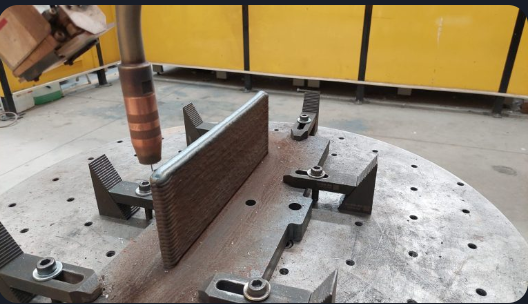
Manufacturers frequently encounter metal components that are expensive to machine, slow to cast, difficult to source, or uneconomical to produce in low volumes. These challenges create strong opportunities for industrial WAAM applications.
Wire Arc Additive Manufacturing, or WAAM, uses a continuously fed metallic wire and a controlled heat source to build near-net-shape components layer by layer. A WAAM Compact System integrates this deposition process with an industrial robot, positioner, software, safety systems, and process-monitoring technologies.
WAAM is particularly relevant for medium and large metal components. It can support new-part production, tooling, repair, remanufacturing, feature addition, functional prototypes, and material research.
For CTOs, manufacturing heads, R&D managers, and design engineers, the key question is not whether WAAM can manufacture a metal part. The more important question is whether it can reduce cost, material waste, tooling dependency, lead time, or supply-chain risk for a specific application.
Table of Contents
What Makes a Component Suitable for WAAM?
Not every metal part is a good WAAM candidate. The strongest opportunities usually share several characteristics.
Medium or large component size
WAAM is useful for components that are too large for many enclosed powder-bed metal additive manufacturing systems.
Robotic movement and external positioners provide greater flexibility for producing substantial metal structures without using a powder-filled build chamber.
High material waste
Large aerospace, defense, and engineering parts are often machined from billets, plates, forgings, or solid blocks.
When much of the original material is removed, manufacturers face:
- Higher raw-material costs
- Long machining cycles
- Tool wear
- Large quantities of metal scrap
- Additional recycling and handling
WAAM deposits material closer to the required geometry, reducing the amount of rough machining needed.
Expensive tooling
Casting, forging, molding, and forming processes frequently require molds, patterns, dies, or dedicated fixtures.
These tools may not be commercially practical for prototypes, engineering changes, replacement parts, or low-volume production.
WAAM can manufacture directly from digital design data, reducing dependence on application-specific tooling.
Low production volumes
WAAM can be especially useful for:
- One-off components
- Customized metal parts
- Limited production batches
- Functional prototypes
- Replacement components
- Specialized industrial tooling
It allows manufacturers to produce without committing to the tooling costs associated with high-volume processes.
Long supply-chain lead times
Imported parts, obsolete spares, and discontinued components can cause extended equipment downtime.
A validated digital manufacturing process can enable more localized production and reduce dependence on distant suppliers.
Repairable high-value components
Replacing a complete metal component may be unnecessary when only one area is worn, damaged, or undersized.
WAAM can deposit material onto selected regions before machining and inspection. This makes repair and remanufacturing important commercial applications.
Primary WAAM Application Categories
Near-net-shape metal part production
WAAM can build a component close to its required final geometry. The deposited structure is then machined, heat-treated, inspected, and finished according to the application.
Suitable parts may include:
- Structural frames
- Brackets
- Housings
- Ribs
- Flanges
- Rings
- Cylindrical structures
- Custom machinery components
Near-net-shape production is particularly valuable when conventional manufacturing removes a large amount of costly material.
Tooling, molds, and dies
Industrial tooling is one of the strongest application areas for robotic WAAM.
Potential examples include:
- Forming tools
- Large molds
- Casting tools
- Welding fixtures
- Assembly fixtures
- Trimming tools
- Inspection fixtures
WAAM can build the main tool volume before working surfaces, mounting locations, holes, and dimensional features are machined.
Repair and remanufacturing
WAAM can add new material to an existing part rather than replacing the entire component.
Potential repair applications include:
- Worn edges
- Damaged surfaces
- Corroded regions
- Eroded tooling
- Undersized features
- Expensive machinery parts
- Components that are no longer available
A repair process normally involves damage assessment, surface preparation, controlled deposition, machining, inspection, and final validation.
Feature addition
WAAM can add functional geometry to an existing plate, forging, casting, or preform.
Engineers may use this approach to add:
- Mounting bosses
- Reinforcement ribs
- Flanges
- Structural supports
- Connection features
- Localized thickness
This hybrid method avoids manufacturing the complete component through additive deposition.
WAAM Applications in Aerospace
Aerospace manufacturing places high value on material efficiency, lightweight design, structural performance, and supply-chain control.
Many aerospace parts are machined from expensive titanium, aluminium, nickel alloys, or high-performance steels. The original raw material may be significantly heavier than the finished component.
Potential aerospace WAAM applications include:
- Large structural preforms
- Ribs and stiffeners
- Frames and brackets
- Composite manufacturing tools
- Satellite structures
- Ground-support equipment
- Repair-development projects
- Low-volume metal components
WAAM can reduce the amount of costly material removed during machining. It also allows engineers to explore topology-optimized and consolidated designs.
Aerospace adoption requires strict process qualification, material traceability, heat treatment, inspection, mechanical testing, fatigue assessment, and documentation.

WAAM Applications in Defense
Defense manufacturing often involves specialized equipment, long service lives, low production quantities, and components that are difficult to obtain from original suppliers.
Relevant WAAM applications include:
- Replacement metal parts
- Vehicle structures
- Customized mounting components
- Naval components
- Functional prototypes
- Tooling and fixtures
- Repair of high-value equipment
- Localized spare-part production
Digital inventory is an important opportunity. Instead of physically storing every low-demand spare, organizations can maintain validated design files, material requirements, deposition parameters, machining instructions, and inspection procedures.
This can reduce reliance on obsolete tooling and long international supply chains.
Defense applications must still be evaluated for operating conditions, material performance, certification, security, and component criticality.
WAAM Applications in Automotive
WAAM is not intended to replace high-speed automotive processes such as stamping, die casting, forging, or injection molding.
Its strongest automotive use cases are found in product development, tooling, motorsport, specialty vehicles, and low-volume production.
Applications may include:
- Forming and stamping tools
- Welding fixtures
- Assembly fixtures
- Prototype structural parts
- Motorsport components
- EV development tooling
- Heavy-vehicle components
- Repair of large dies and tools
WAAM enables engineering teams to update a digital design and produce a revised metal tool without restarting a lengthy tooling-development process.
For automotive companies, the business case should compare total lead time, tooling investment, machining effort, and design-iteration speed.
WAAM Applications in Industrial Engineering
Industrial engineering includes customized machinery, heavy equipment, production systems, and replacement components.
Many of these parts are produced in low quantities but are large, heavy, or expensive to machine.
Potential applications include:
- Machinery frames
- Large housings
- Structural supports
- Custom flanges
- Industrial brackets
- Robotic fixtures
- Material-handling components
- Replacement machine parts
- Repair of worn equipment
WAAM can be combined with CNC machining in a hybrid workflow. Additive deposition creates the main geometry, while machining produces precision holes, bores, threads, mating faces, and datum surfaces.
This approach can be valuable for machine builders that frequently customize equipment for individual customers.
[Internal Link: Industrial Engineering Solutions]
WAAM Applications in Foundry and Casting
WAAM can complement traditional foundry and casting operations.
Potential applications include:
- Metal molds
- Dies and tooling
- Trimming tools
- Pattern-related metal components
- Core-making equipment
- Handling fixtures
- Repair of worn tools
- Low-volume cast-part alternatives
Faster tooling production
Conventional tooling production may involve patternmaking, casting, heat treatment, rough machining, and final machining.
WAAM can build the main metal volume directly from digital data. Critical working surfaces can then be machined to specification.
Reduced tooling cost
Dedicated casting tools may not be economical for short production runs or urgent replacement requirements.
WAAM offers an alternative route without committing to the complete conventional tooling process.
Mold and die repair
When only a selected area of a mold or die is damaged, WAAM can add material to that region. The tool can then be re-machined and returned to production after inspection.
Greater design flexibility
Layer-by-layer deposition supports customized tool geometry, reinforced sections, and localized material addition.
WAAM Applications in Research and Education
WAAM combines robotics, welding science, materials engineering, additive manufacturing, sensors, software, and process control.
Universities, technical institutes, and corporate R&D centers can use WAAM for:
- Metal additive manufacturing education
- Material characterization
- Process parameter development
- Thermal-cycle analysis
- Robot toolpath research
- Machine-vision development
- Sensor integration
- Anomaly-detection studies
- Multi-material research
- Metallurgical analysis
Researchers can study the relationship between wire-feed speed, heat input, deposition speed, interpass temperature, bead geometry, distortion, microstructure, and mechanical performance.
MetalWorm offers dedicated systems for laboratory research as well as integrated industrial production environments.
Other Industries with WAAM Potential
Energy and oil and gas
Potential applications include turbine-related structures, large flanges, valves, heat-resistant parts, pressure-related components, and equipment repair.
Pressure-containing components require detailed qualification, inspection, and compliance with applicable standards.
Marine and shipbuilding
WAAM may support propellers, marine fittings, structural components, replacement ship parts, repair applications, and customized naval components.
Rail and heavy transportation
Opportunities include replacement parts, structural brackets, tooling, repair of worn components, and maintenance fixtures.
Architecture and industrial design
WAAM can create customized metal structures, large sculptural forms, functional architectural components, and low-volume design elements.
When WAAM May Not Be the Right Choice
Another process may be more appropriate when a component requires:
- Extremely small dimensions
- Very fine features
- Complex enclosed internal channels
- Tight tolerances without machining
- High as-built surface quality
- Very high production volumes
- Thin unsupported structures
- Materials that cannot be deposited reliably from wire
Metal Powder Bed Fusion may be better for small, intricate parts. CNC machining may remain suitable for simple precision components. Casting or forging may be more economical for high-volume production.
WAAM should be selected only when it provides a measurable technical or commercial advantage.
Conclusion: Finding High-Value WAAM Applications
The strongest WAAM applications are found where conventional manufacturing creates excessive material waste, long tooling cycles, costly assemblies, repair challenges, or supply-chain delays.
Aerospace companies can explore large structural preforms and tooling. Defense manufacturers can investigate replacement parts and localized production. Automotive teams can shorten tooling-development cycles. Foundries can manufacture and repair molds and dies. Industrial engineering companies can produce customized machinery components, while research institutions can develop new materials, sensors, and production methods.
A successful WAAM program begins with careful application selection. It then requires material evaluation, deposition-path planning, process monitoring, machining, inspection, and commercial validation.
Lodestar 3D helps manufacturers across India evaluate MetalWorm WAAM solutions for production, tooling, repair, and research requirements. Its technical team can assess part geometry, material, production volume, current manufacturing challenges, and post-processing needs before recommending an appropriate WAAM solution.
Speak with Lodestar 3D to identify high-value WAAM opportunities within your current component portfolio and request a technical consultation for your manufacturing requirement.
FAQ's
WAAM is relevant to aerospace, defense, automotive, industrial engineering, foundry and casting, research, energy, oil and gas, marine, rail, and heavy-equipment manufacturing.
It can produce near-net-shape structures, tooling, brackets, frames, housings, flanges, molds, fixtures, repair features, and customized industrial components.
Yes. WAAM can add material to worn or damaged areas. The repaired component must be machined, inspected, and validated before use.
WAAM is generally more suitable for automotive tooling, prototypes, motorsport, specialty vehicles, and low-volume parts than for high-volume commodity components.
Begin with a large, costly, low-volume, long-lead, or material-intensive component. Compare its existing cost, waste, tooling, machining time, and supply-chain risk against a WAAM-based manufacturing route.