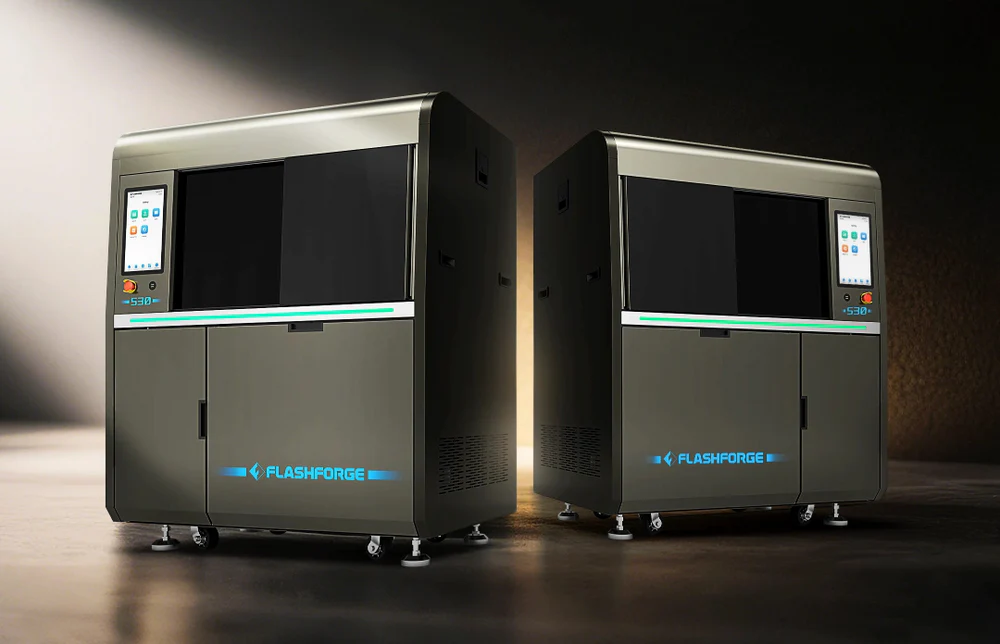
How the WaxJet 510 Multi-Jet Wax 3D Printer Improves Jewelry Casting Accuracy
Additive manufacturing has transformed how products are designed and manufactured. One of the most accurate and widely used technologies in this field is Stereolithography (SLA). This advanced 3D printing technology uses ultraviolet lasers to cure liquid resin into solid parts layer by layer.
SLA printing is known for its high precision, smooth surface finish, and ability to produce complex geometries. It is widely used in industries such as automotive, aerospace, medical, and product design.
Industrial printers such as the Eplus3D EP-A450 Industrial SLA 3D Printer supplied by Lodestar 3D enable manufacturers to produce high-quality prototypes and functional parts with exceptional accuracy.
In this article, we explain the SLA 3D printing process step-by-step, helping you understand how this powerful technology works.
Table of Contents
What is SLA 3D Printing?
SLA (Stereolithography) is a resin-based 3D printing technology that uses a laser to cure liquid photopolymer resin into solid layers.
The process involves:
A tank filled with liquid resin
A UV laser system
A build platform
Software that controls the printing process
The laser selectively cures the resin layer by layer to form the final object.
Because of its precision, SLA technology is commonly used for:
Rapid prototyping
Medical models
Casting patterns
Engineering components
Detailed product designs
Step-by-Step SLA 3D Printing Process
Step 1: 3D Model Design
The first step in SLA printing is creating a 3D digital model using CAD software.
Common design tools include:
SolidWorks
AutoCAD
Fusion 360
Blender
The model is then exported as a STL file, which is the standard format used in 3D printing.
This digital model contains all the geometric information required to build the object.
Step 2: File Preparation and Slicing
Once the design is ready, the file is imported into specialized printing software.
Industrial SLA printers like the Eplus3D EP-A450 Industrial SLA 3D Printer use dedicated software to prepare the print.
During this stage:
The model is sliced into hundreds or thousands of thin layers
Print orientation is adjusted
Support structures are generated
Layer thickness is defined
Typical layer thickness ranges between 0.05 mm and 0.25 mm, allowing extremely detailed prints.
Step 3: Resin Tank Preparation
The printer’s resin tank is filled with liquid photopolymer resin.
Different types of resins may be used depending on the application, such as:
Standard resin
Engineering resin
Flexible resin
Dental resin
Castable resin
The printer ensures the resin surface is evenly distributed before printing begins.
Step 4: Laser Curing Process
This is the core stage of the SLA printing process.
A UV laser beam traces the cross-section of the object on the resin surface.
When the laser hits the resin:
The liquid resin hardens instantly
The first layer of the object is formed
The material solidifies according to the design
High-precision printers like the Eplus3D EP-A450 Industrial SLA 3D Printer use advanced laser systems to ensure extremely fine detail and accuracy.
Step 5: Layer-by-Layer Printing
After the first layer is cured:
The build platform moves slightly downward.
A new layer of resin flows over the previous layer.
The laser cures the next layer.
This process repeats hundreds or thousands of times until the entire object is completed.
This layer-by-layer manufacturing method allows complex shapes that are difficult to produce using traditional methods.
Step 6: Printing Completion
Once all layers are printed:
The build platform lifts the finished object from the resin tank.
Excess liquid resin drips back into the tank.
At this stage, the printed part is complete but still requires post-processing.
Step 7: Washing the Printed Part
Freshly printed SLA parts are usually coated with uncured resin.
The part is cleaned using:
Isopropyl alcohol (IPA)
Specialized cleaning machines
This step removes excess resin and improves surface quality.
Step 8: Post-Curing
After cleaning, the printed object undergoes UV post-curing.
The part is placed inside a curing chamber where UV light fully hardens the resin.
Post-curing improves:
Strength
Durability
Thermal stability
Final material properties
Step 9: Support Removal and Finishing
Support structures created during printing must be removed.
Finishing steps may include:
Sanding
Polishing
Painting
Surface treatment
These finishing processes enhance the appearance and functionality of the printed part.
WaxJet 3D Printing Precision Perfected Born for K-Gold Jewelry Casting
SLA technology offers several advantages over other additive manufacturing methods.
High Precision
SLA printers produce extremely detailed parts with excellent dimensional accuracy.
Smooth Surface Finish
Parts require minimal finishing compared to other 3D printing technologies.
Complex Geometries
SLA can create intricate shapes that are difficult to manufacture using traditional methods.
Rapid Prototyping
Manufacturers can test product designs quickly and reduce development time.
Industrial Applications of SLA Printing
SLA 3D printing is widely used across many industries.
Automotive Industry
Used for:
Prototype components
Design testing
Interior parts
Aerospace Industry
Used for:
Lightweight prototypes
Aerodynamic testing models
Engineering validation
Medical Industry
Used for:
Dental models
Surgical planning
Medical device prototypes
Consumer Product Development
Used for:
Product design prototypes
Packaging models
Electronics housings
Industrial solutions offered by Lodestar 3D help businesses adopt SLA printing for advanced manufacturing.
Why Industrial SLA Printers Matter
Professional manufacturing requires reliable and precise machines.
Industrial systems such as the Eplus3D EP-A450 Industrial SLA 3D Printer provide:
Large build volume (450 × 450 × 350 mm)
High scanning speed
Accurate laser curing
Reliable production quality
These capabilities make SLA printers ideal for industrial applications requiring accuracy and consistency.
Conclusion
The SLA 3D printing process is one of the most precise additive manufacturing technologies available today. By using a UV laser to cure liquid resin layer by layer, SLA printers can produce highly detailed prototypes, functional parts, and manufacturing tools.
From digital design and slicing to laser curing and post-processing, each step plays a crucial role in achieving high-quality results.
Industrial printers like the Eplus3D EP-A450 Industrial SLA 3D Printer, supplied by Lodestar 3D, help manufacturers leverage this technology for faster product development, improved accuracy, and efficient production workflows.
As additive manufacturing continues to evolve, SLA printing will remain a key technology in modern manufacturing