Wire Arc Additive Manufacturing Solutions for High-Performance Industries
Explore MetalWorm robotic WAAM systems with Lodestar 3D for aerospace, defence, automotive, maritime, energy, oil & gas, heavy engineering and research applications in India.
Manufacture Large Metal Components with Robotic Wire Deposition
Wire Arc Additive Manufacturing uses metallic wire as feedstock and an arc-based heat source to deposit material layer by layer. Robotic motion and positioning systems guide the deposition path and component orientation during manufacturing.
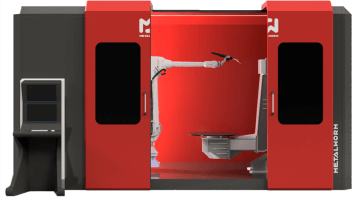
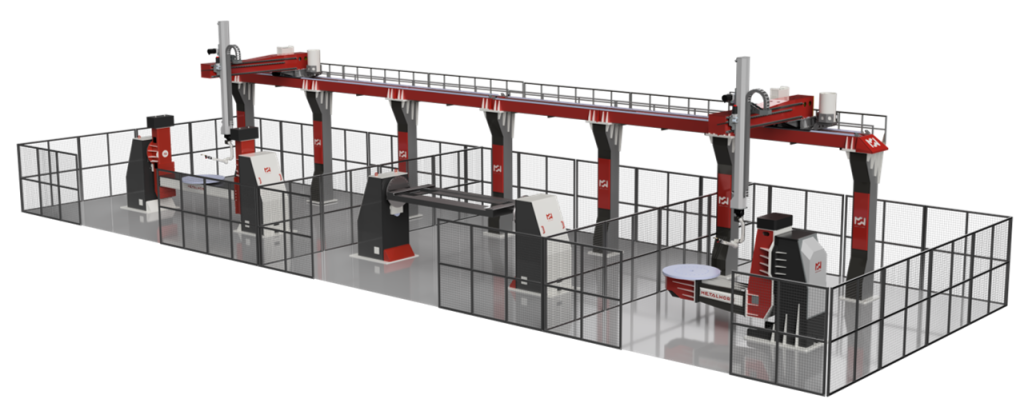
MetalWorm systems cover Compact, Special and Lab configurations, while Lodestar 3D helps Indian manufacturers and research teams evaluate the system category according to part size, payload, motion, application and process-development requirements.
Support medium- and large-format metal additive manufacturing.
Use wire feedstock for automated robotic deposition.
Evaluate suitable components for repair, rebuilding or modification.
Support industrial production, tooling, prototyping and WAAM research.
Relevant Industry Sectors
Industries Using Robotic WAAM Technology
Robotic WAAM is evaluated across industries where large metal components, specialised production, repair, tooling or advanced manufacturing research are relevant.
Aerospace & Space
WAAM can support selected large structural parts, tooling, prototypes and near-net-shape metal components for aerospace and space manufacturing.
Defence
Robotic WAAM can be evaluated for specialised components, repair requirements and low-volume metal manufacturing where part size and material are suitable.
Automotive
Automotive teams can assess WAAM for selected tooling, prototypes, custom metal structures and specialised manufacturing applications.
Marine & Shipbuilding
Large-format robotic deposition can support suitable marine components, repair applications and complex metal geometries.
Oil & Gas
WAAM can be evaluated for selected valves, flanges, connection components, repair requirements and other specialised metal parts.
Energy & Power
Energy applications can use robotic WAAM for selected large metal components, development parts and repair-oriented manufacturing routes.
Heavy Engineering
Heavy engineering organisations can evaluate WAAM for large custom components, near-net-shape structures, tooling and selected repair applications.
Research & Education
Universities, laboratories and R&D teams can study materials, process parameters, robotic paths and WAAM manufacturing strategies using research-oriented systems.
Industry Value
What WAAM Can Improve in the Manufacturing Route
Performance depends on the material, geometry and validated deposition process, but WAAM can provide useful manufacturing options for suitable industrial components.
1
Part Scale
Support medium- and large-format metal component manufacturing.
2
Material Use
Build near-net-shape parts by depositing material where required.
3
Flexibility
Use robotic paths and positioning configurations around the application.
4
Repair
Add material to suitable existing components for rebuilding or modification.
5
Development
Support process studies, prototypes and industrial WAAM research.
Cross-Industry Applications
How Industries Use Wire Arc Additive Manufacturing
These application routes show how robotic WAAM can fit into manufacturing, repair and research workflows.
Large Metal Part Manufacturing
Build medium- and large-format near-net-shape metal components using robotic wire deposition.
Tooling & Mould Structures
Produce suitable metal tooling, mould structures and manufacturing aids using additive deposition.
Repair & Remanufacturing
Add material to suitable high-value components for repair, restoration or geometry modification.
Custom & Low-Volume Components
Evaluate WAAM for specialised metal components where conventional tooling may be inefficient for small production quantities.
Prototype & Process Development
Develop robotic paths, deposition strategies and functional prototypes before moving toward industrial production.
Research & Material Studies
Study wire materials, heat input, process parameters, robotics and WAAM behaviour in research environments.
MetalWorm WAAM Systems Through Lodestar 3D
Choose a WAAM System for Your Application
MetalWorm systems are grouped into Compact, Special and Lab configurations. Select the category according to work envelope, payload, positioning, production and research requirements
Compact System
Integrated Robotic WAAM Cells
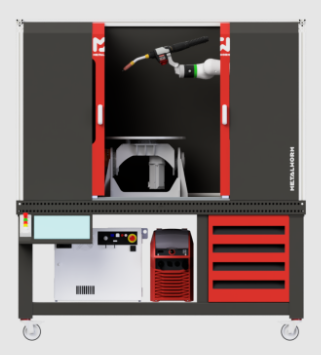
Compact systems combine robotic deposition and component positioning within integrated system architectures.
Lodestar 3D helps Indian manufacturers, research organisations and engineering teams evaluate MetalWorm robotic WAAM systems according to component size, material, work envelope, payload, positioning, process and application requirements.
Application Review: Define the component, industry use case, material and intended WAAM manufacturing objective.
System Selection: Compare Compact, Special and Lab configurations according to the project requirement.
Technical Coordination: Structure work-envelope, positioner, payload, robot and application information for technical discussions.
Project Planning: Coordinate technical and commercial discussions for the selected robotic WAAM configuration.
WAAM is used and evaluated across aerospace, defence, automotive, maritime, oil and gas, energy, heavy engineering and research applications where large-format metal deposition is relevant.
WAAM can be evaluated for medium- and large-format metal components, tooling, specialised structures, prototypes and selected repair or rebuilding applications.
MetalWorm Compact and Special Systems cover different work envelopes, payloads, positioning configurations and production requirements. Selection depends on the actual application.
MW-LAB is the research-oriented system for universities, laboratories and industrial R&D teams studying WAAM materials, parameters and robotic processes.
Lodestar 3D can help structure component size, material, payload, positioning, production and research requirements before evaluating an appropriate MetalWorm configuration.
Find the Right MetalWorm WAAM System with Lodestar 3D
Share your industry, material, component dimensions, work envelope, payload, positioning requirements and intended manufacturing application.