
Call Us 24/7
+91 9900003300Send Us Mail
support@lodestar3d.com
Call Us 24/7
+91 9900003300Send Us Mail
support@lodestar3d.comLodestar 3D is the exclusive distributor of Prodways Printers’ ceramic 3D printing solutions in India, helping manufacturers, foundries, research centers, and advanced ceramic teams evaluate the right CERAM PRO system for production and R&D workflows.
Prodways combines proprietary MOVINGLight® DLP technology with configurable ceramic processing platforms for complex, high-resolution industrial ceramic parts.
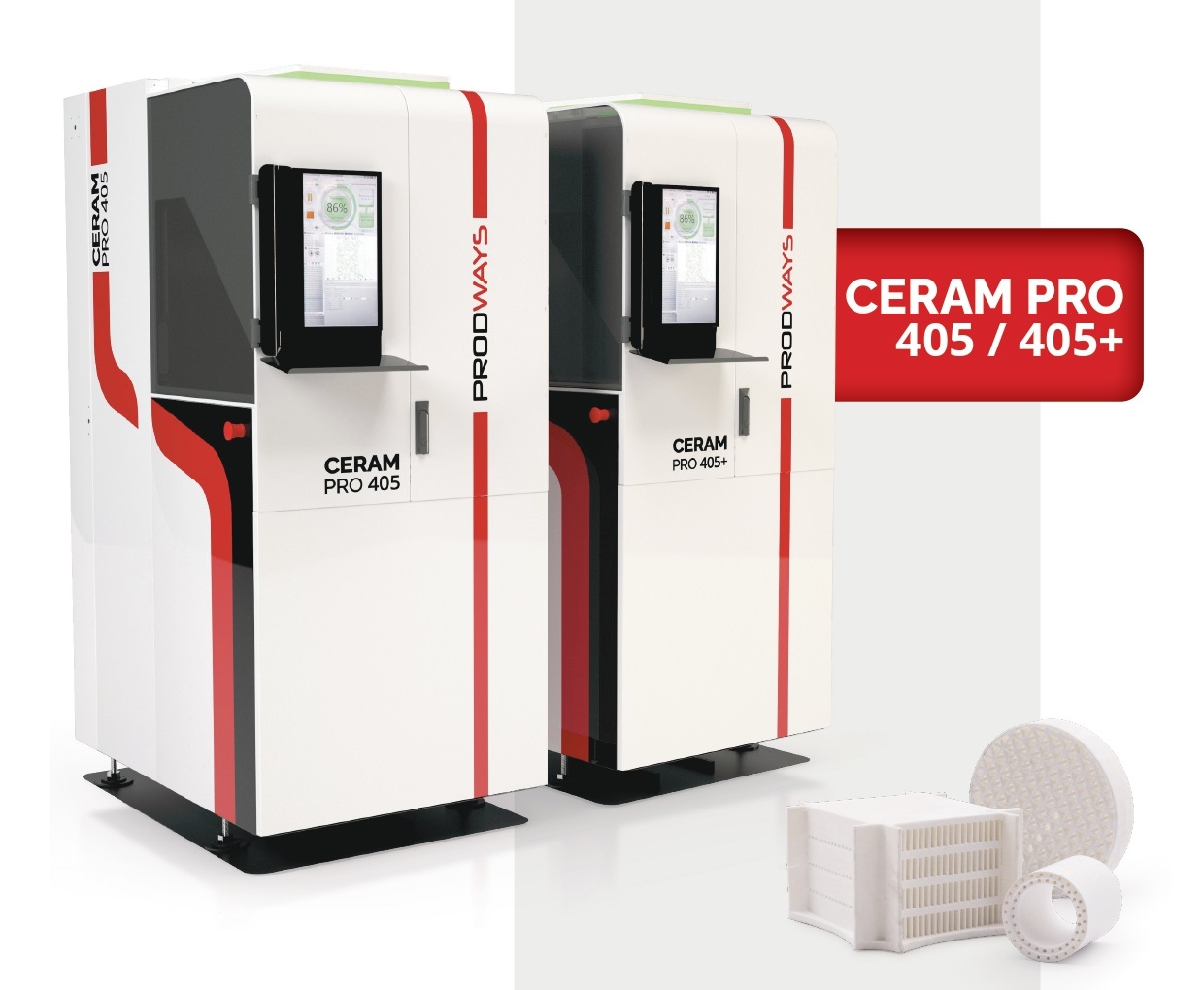
Designed for demanding ceramic production and development workflows.
Suitable for specialist ceramic formulations and process development.
Supported in India by Lodestar 3D’s application and service team.
Prodways CERAM PRO printers use proprietary MOVINGLight® DLP ceramic 3D printing technology to selectively cure ceramic-loaded photosensitive material layer by layer.
The modular top-down platform supports precise light projection, configurable build areas and controlled processing of demanding ceramic formulations.

Supports complex ceramic patterns, cores, and casting-related workflows where geometry and detail matter.
Useful for high-performance ceramic parts, prototypes, and functional components after validated firing workflows.
Helps universities, labs, and R&D teams test materials, geometries, and advanced ceramic concepts.
Supports experimentation with alumina, silica, and other ceramic material systems where validated.
Suitable for evaluation in advanced manufacturing workflows that require lightweight, heat-resistant ceramic geometries.
Enables additive manufacturing learning for ceramic materials, DLP printing, debinding, and sintering workflows.
Supports evaluation for insulation, filtration, thermal, and industrial ceramic part development.
Before recommending a system, Lodestar 3D can review the part geometry, ceramic material, tolerances, expected shrinkage, throughput, furnace availability and post-processing workflow.
This structured approach helps ensure that the selected Prodways configuration matches the intended technical and production requirements.
Final material properties depend on material selection, print parameters, debinding, sintering, finishing, and quality-control validation.
Lodestar 3D distributes Prodways ceramic 3D printing solutions in India including Ceram PRO 365, Ceram PRO 385 / 385+, and Ceram PRO 405 / 405+.
The CERAM PRO range is used for ceramic additive manufacturing workflows such as investment casting related applications, technical ceramics, advanced material development, and R&D.
The main difference is wavelength and material workflow. Ceram PRO 365 operates at 365 nm and is positioned with silica and alumina ceramic material compatibility. Ceram PRO 385 operates at 385 nm and Ceram PRO 405 operates at 405 nm, with open-material positioning for application-specific workflows.
Ceram PRO 385 and Ceram PRO 405 use a single DLP head. Ceram PRO 385+ and Ceram PRO 405+ use two DLP heads, making them better suited when higher throughput is required.
Ceram PRO 365 is listed with alumina material compatibility through TETHON 3D ALUMINA A100, and Lodestar also lists silica and alumina slurry compatibility. Final material use should be confirmed with Lodestar and Prodways documentation for the required application.
Pricing depends on the model, wavelength, DLP head configuration, material workflow, installation, training, and support requirements. Request a quote from Lodestar 3D for exact pricing.
Ceramic 3D printing can support R&D, pilot production, and production workflows depending on application validation, material stability, debinding, sintering, inspection, and repeatability requirements.
Confirm part size, material, wavelength, throughput, tolerance, shrinkage, post-processing, furnace availability, facility readiness, training, and support requirements before selecting a model.
Lodestar 3D distributes Prodways ceramic 3D printing solutions in India including Ceram PRO 365, Ceram PRO 385 / 385+, and Ceram PRO 405 / 405+.
The CERAM PRO range is used for ceramic additive manufacturing workflows such as investment casting related applications, technical ceramics, advanced material development, and R&D.
The main difference is wavelength and material workflow. Ceram PRO 365 operates at 365 nm and is positioned with silica and alumina ceramic material compatibility. Ceram PRO 385 operates at 385 nm and Ceram PRO 405 operates at 405 nm, with open-material positioning for application-specific workflows.
Ceram PRO 385 and Ceram PRO 405 use a single DLP head. Ceram PRO 385+ and Ceram PRO 405+ use two DLP heads, making them better suited when higher throughput is required.
Ceram PRO 365 is listed with alumina material compatibility through TETHON 3D ALUMINA A100, and Lodestar also lists silica and alumina slurry compatibility. Final material use should be confirmed with Lodestar and Prodways documentation for the required application.
Pricing depends on the model, wavelength, DLP head configuration, material workflow, installation, training, and support requirements. Request a quote from Lodestar 3D for exact pricing.
Ceramic 3D printing can support R&D, pilot production, and production workflows depending on application validation, material stability, debinding, sintering, inspection, and repeatability requirements.
Confirm part size, material, wavelength, throughput, tolerance, shrinkage, post-processing, furnace availability, facility readiness, training, and support requirements before selecting a model.