
Call Us 24/7
+91 9900003300Send Us Mail
support@lodestar3d.com
Call Us 24/7
+91 9900003300Send Us Mail
support@lodestar3d.comCeramic printing is not only about printer size. Buyers must align wavelength, ceramic slurry, resolution, part geometry, debinding, sintering and finishing.
Evaluate ceramic AM for investment casting related applications, complex mold geometries and development workflows.
Create complex ceramic shapes, functional prototypes and application-specific ceramic components where material and process are validated.
Use open parameters and controlled workflows to test ceramic materials, part geometries, sintering profiles and new production approaches.
Support lightweight, complex and high-performance ceramic development projects where advanced thermal or geometric needs exist.
Explore ceramic AM for development parts, thermal testing, tooling concepts and faster iteration of complex engineering designs.
Assess ceramic 3D printing for parts and prototypes that require resistance to demanding temperature, wear or environmental conditions.
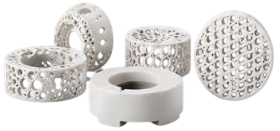
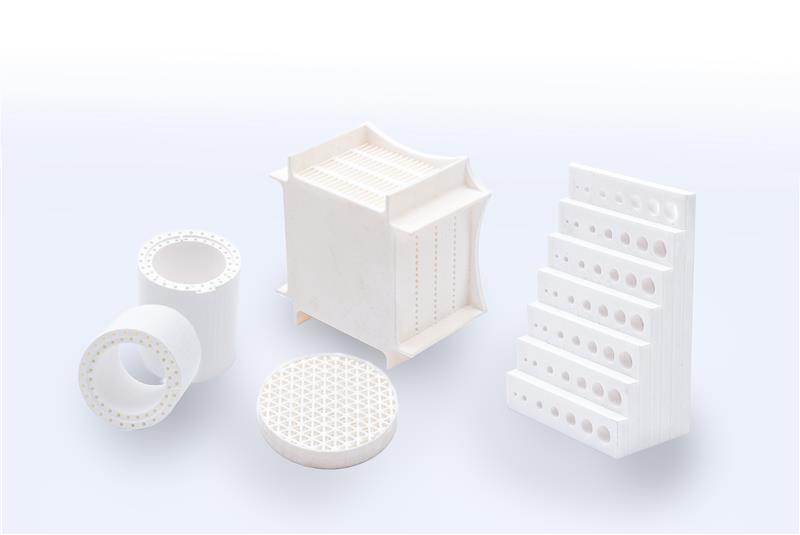
The final ceramic part depends on more than printer specifications. Material loading, wavelength, exposure strategy, part orientation, shrinkage, support strategy, debinding and sintering must be considered before production.
Create ceramic molds, cores, shells or casting-related development parts for faster iteration and complex metal casting workflows.
Produce application-specific ceramic prototypes and parts where geometry, thermal resistance, corrosion resistance or hardness is required.
Experiment with ceramic materials, wall thickness, lattice structures, sintering profiles and new product designs in controlled R&D workflows.
Support advanced part development where lightweight, high-temperature or complex ceramic components are being evaluated.
Use ceramic AM for test components, thermal development, complex prototypes and faster engineering validation cycles.
Evaluate ceramic parts for environments involving heat, corrosion, wear or demanding operating conditions.
Explore ceramic material and geometry research where validated printer, material, processing and regulatory workflows are available.
Develop ceramic fixtures, insulators, tooling aids, test parts and small-batch ceramic components for engineering teams.
| Advantage | What It Means for Industrial Buyers? |
|---|---|
|
Complex ceramic geometries |
Print shapes that are difficult or expensive to create with conventional ceramic tooling and machining. |
|
Reduced development lead time |
Move from CAD to ceramic green parts faster, then iterate through firing and finishing cycles during R&D. |
|
High-resolution details |
DLP ceramic printing supports fine features, controlled surfaces and repeatable layer-by-layer part creation. |
|
Open process flexibility |
Open parameters help R&D teams evaluate ceramic materials, exposure settings and application-specific workflows. |
|
Batch-friendly build planning |
The modular build platform and large envelope options allow multiple ceramic parts to be planned in one build. |
|
Advanced material potential |
Evaluate silica, alumina and other ceramic material workflows based on printer wavelength, slurry behavior and end-use needs.
|
| Printer | Best Fit | Key Details |
|---|---|---|
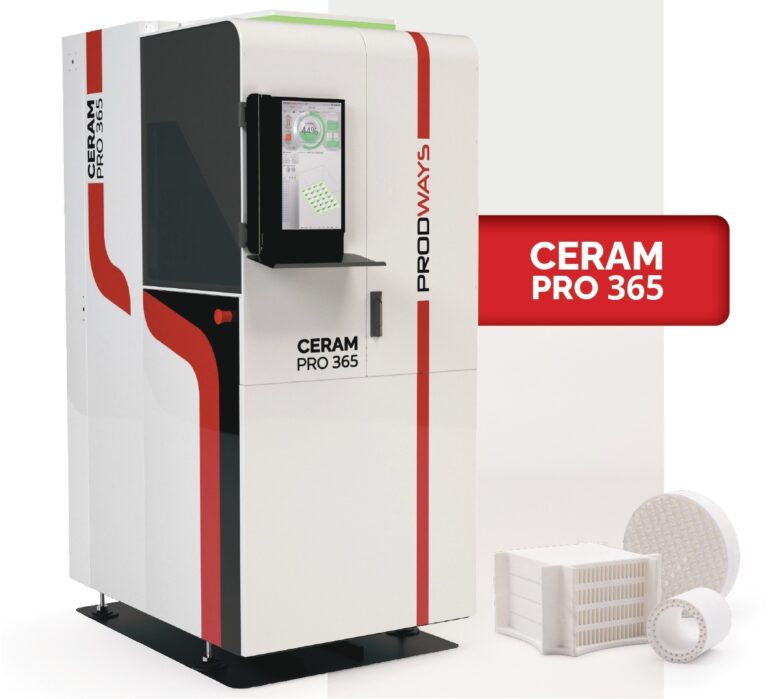
| CERAM PRO 365 | High-resolution ceramic printing, investment casting development, technical ceramics and R&D workflows. | UV-LED DLP, 365 nm wavelength with 385/405 nm versions on demand; 130 mW/cm² light power; qualified with silica and alumina slurries from SINTX; 264 × 328 × 350 mm max build envelope; 31 μm native pixel size; 50–175 μm layer thickness; 510 kg printer weight. |
| CERAM PRO 385 | 385 nm ceramic DLP workflows needing a larger build envelope and open parameter flexibility. | UV-LED DLP, 385 nm wavelength with 365/405 nm versions on demand; 90 mW/cm² light power; 300 × 445 × 350 mm max build envelope; 42 μm native pixel size; 50–175 μm layer thickness. |
| CERAM PRO 385+ | Higher-throughput 385 nm ceramic printing where dual DLP head configuration can improve productivity. | Dual DLP heads for faster throughput; 385 nm wavelength; open parameter compatibility; 90 mW/cm² projector power; 300 × 445 × 350 mm max build envelope; 42 μm native pixel size; 50–175 μm layer thickness. |
| CERAM PRO 405 | 405 nm ceramic DLP workflows where material compatibility and 42 μm pixel size are suitable. | UV-LED DLP, 405 nm wavelength with 365/385 nm versions on demand; 90 mW/cm² light power; 300 × 445 × 350 mm max build envelope; 42 μm native pixel size; 50–175 μm layer thickness; platform from 75 × 40 mm up to 300 × 445 mm. |
| CERAM PRO 405+ | Higher-throughput 405 nm ceramic printing with dual-head DLP capability for production-oriented use cases. | Dual DLP heads; 405 nm wavelength; open parameter compatibility; 90 mW/cm² projector power; 300 × 445 × 350 mm max build envelope; 42 μm native pixel size; 50–175 μm layer thickness. |
| Material / Process Area | Common Use | Important Buyer Considerations |
|---|---|---|
| Silica ceramic slurry | Investment casting, molds, cores and casting-related ceramic applications. | Review green strength, thermal behavior, dimensional stability and compatibility with the selected CERAM PRO wavelength. |
| Alumina ceramic slurry | Technical ceramic prototypes, engineering components, R&D and high-temperature applications. | Confirm curing behavior, sintered properties, shrinkage compensation and final application performance. |
| Open ceramic parameters | R&D teams evaluating new slurry systems or custom ceramic workflows. | Requires testing discipline, controlled parameter changes, process records and post-sintering validation. |
| Debinding and sintering | Transforms printed green parts into final ceramic components. | Furnace capability, shrinkage, warpage, temperature profile, holding time and support strategy should be planned before production. |
From the first conversation to production-ready ceramic parts, we’re with you at every step.
| Technology | Best For | Key Difference |
|---|---|---|
|
Ceramic DLP |
Investment casting, technical ceramics, ceramic R&D, high-temperature ceramic parts and ceramic prototypes. |
Uses ceramic-loaded slurry and requires cleaning, debinding and sintering to create final ceramic components. |
|
Polymer SLA |
High-detail resin prototypes, appearance models, master patterns, tooling aids and smooth surface parts. |
Uses photopolymer resin and usually involves resin cleaning and curing rather than ceramic firing. |
|
Polymer SLS |
Functional nylon parts, production jigs, end-use polymer components and support-free batch production. |
Uses polymer powder bed fusion and is not used when the final requirement is a fired ceramic material. |
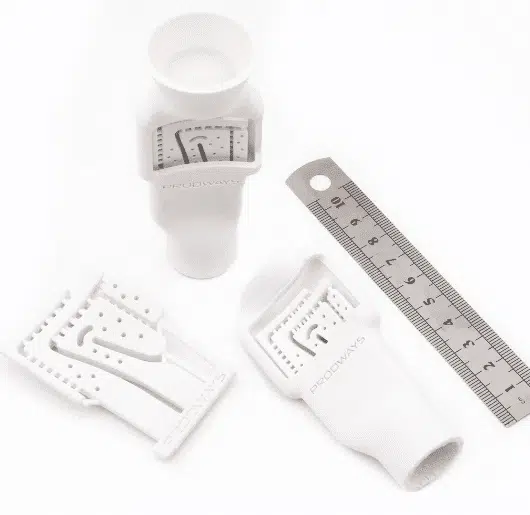
A ceramic 3D printer is an additive manufacturing system designed to create ceramic components from digital designs using ceramic-loaded materials followed by post-processing steps such as cleaning, debinding, and sintering.
odestar 3D offers CERAM PRO ceramic printer systems including CERAM PRO 365, CERAM PRO 385, CERAM PRO 385+, CERAM PRO 405, and CERAM PRO 405+.
Ceramic 3D printer supports investment casting related applications, technical ceramics, R&D, aerospace and defense development, automotive testing, energy applications, oil and gas, and general engineering use cases where ceramic material properties and complex geometry are needed.
The main difference is wavelength and configuration. CERAM PRO 365 is a 365 nm system with 31 μm native pixel size. CERAM PRO 385 / 385+ and CERAM PRO 405 / 405+ use 385 nm and 405 nm workflows respectively, with 42 μm native pixel size and single or dual DLP head options depending on model.
The plus models, CERAM PRO 385+ and CERAM PRO 405+, are positioned for higher throughput with dual DLP head configurations. They should be evaluated when faster production or larger batch output is required.
Yes, ceramic 3D printing can support final-use ceramic parts when the printer, ceramic slurry, design, cleaning, debinding, sintering and inspection workflow are validated for the intended application.
Lodestar’s CERAM PRO 365 page mentions silica and alumina slurries from SINTX. Material selection should be confirmed based on wavelength, application, firing cycle and final property requirements.
Start with the application, ceramic material, target part size, required resolution, throughput and post-processing capability. Lodestar 3D can then help compare CERAM PRO 365, 385/385+ and 405/405+ for your workflow.