WaxJet 530 Price in India: Features, Applications, and Cost
Introduction to WaxJet 3D Printing Technology
The jewelry manufacturing industry has evolved rapidly in the past decade, largely due to the adoption of digital technologies. Among the most transformative innovations is wax 3D printing, which has significantly changed how jewelry patterns are designed and produced. Traditional wax modeling required skilled artisans to manually carve intricate designs. While this method still exists, it is time-consuming, labor-intensive, and often prone to inconsistencies. Wax 3D printers have emerged as a powerful alternative, enabling jewelers to create highly detailed wax models directly from digital CAD designs.
Industrial wax printers such as WaxJet 510 and WaxJet 530 are designed specifically for investment casting workflows used in jewelry manufacturing. These machines produce precise wax patterns that are later used to create metal jewelry pieces through the casting process. Because the printing process is automated, it significantly reduces production time while maintaining consistent quality. Jewelry manufacturers can now produce multiple intricate patterns simultaneously, which is particularly useful for large-scale production environments.
Another key advantage of wax 3D printing technology is the level of detail it can achieve. Modern printers can produce layer thicknesses as small as 0.008 mm, allowing manufacturers to replicate even the most complex designs with exceptional precision. This capability is crucial for jewelry pieces that involve delicate filigree structures, gemstone settings, and highly intricate textures.
By integrating digital design tools with wax printing technology, manufacturers can streamline their entire production workflow. Designers can quickly modify designs, test prototypes, and move directly into production without the delays associated with manual modeling. As a result, wax 3D printing has become an essential technology for jewelry businesses seeking efficiency, scalability, and high-quality results.
Table of Contents
What Is WaxJet Printing?
WaxJet printing is an advanced form of multi-jet 3D printing technology specifically developed for producing high-resolution wax patterns. Instead of using plastic filaments or resin materials like many traditional 3D printers, WaxJet printers use specialized direct casting wax materials. These materials are designed to burn out cleanly during the casting process, leaving behind a precise mold for metal jewelry production.
The technology works by depositing extremely thin layers of molten wax onto a build platform. Multiple print heads move across the platform, placing tiny droplets of wax in precise locations based on the digital design file. Once a layer is completed, the printer adds another layer on top, gradually building a highly detailed wax model. Because the layers are so thin, the final result has a smooth surface finish and excellent dimensional accuracy.
One of the defining characteristics of WaxJet technology is its ability to produce ultra-fine details. This is particularly important for jewelry applications, where even minor design imperfections can affect the final product. With layer resolutions as fine as 0.008–0.015 mm, WaxJet printers can capture intricate textures, tiny engravings, and complex geometries that would be extremely difficult to produce manually.
Another benefit of WaxJet printing is efficiency. Traditional wax carving can take hours or even days to complete, depending on the complexity of the design. With WaxJet printers, multiple patterns can be produced simultaneously, dramatically reducing production time. This makes the technology highly valuable for jewelry manufacturers who need to produce both custom pieces and large batches quickly.
Why Wax 3D Printing Is Important for Jewelry Manufacturing
The jewelry industry demands precision, creativity, and consistency. Customers expect unique designs, flawless craftsmanship, and fast delivery times. Traditional manufacturing methods often struggle to meet these expectations, especially when producing complex designs in large quantities. This is where wax 3D printing technology plays a critical role.
One of the biggest advantages of wax 3D printing is its ability to translate digital designs into physical models with remarkable accuracy. Jewelry designers often use CAD software to create intricate designs that include detailed engravings, gemstone settings, and complex geometric patterns. WaxJet printers can reproduce these designs exactly as they appear in the digital model, ensuring that the final cast piece matches the designer’s vision.
Another important benefit is speed. Manual wax carving is a time-consuming process that requires skilled artisans. Even experienced craftsmen may need several hours to produce a single complex wax model. With a wax 3D printer, multiple models can be produced automatically in a fraction of the time. This increased efficiency allows manufacturers to respond quickly to market demands and customer orders.
Consistency is another factor that makes wax 3D printing essential for jewelry production. Manual processes often lead to small variations between pieces, which can be problematic for large production runs. WaxJet printers eliminate this issue by producing identical patterns for each print cycle. This ensures uniform quality across every piece in a batch.
Finally, wax 3D printing encourages innovation. Designers are no longer limited by the constraints of manual modeling techniques. They can experiment with complex shapes, intricate lattice structures, and unique textures that were previously impossible to create by hand. As a result, wax printing technology is enabling a new era of creativity and efficiency in jewelry manufacturing.
Overview of WaxJet 510 and WaxJet 530
The WaxJet 510 and WaxJet 530 are industrial-grade wax 3D printers designed specifically for jewelry casting applications. These machines combine high precision, efficient production capabilities, and advanced printing technology to deliver consistent results for jewelry manufacturers.
The WaxJet 510 is designed as a reliable solution for manufacturers who require high precision but moderate production volume. It features a single print head and offers excellent resolution for producing detailed wax patterns. This printer is particularly suitable for small to medium jewelry workshops that need a balance between accuracy and production efficiency.
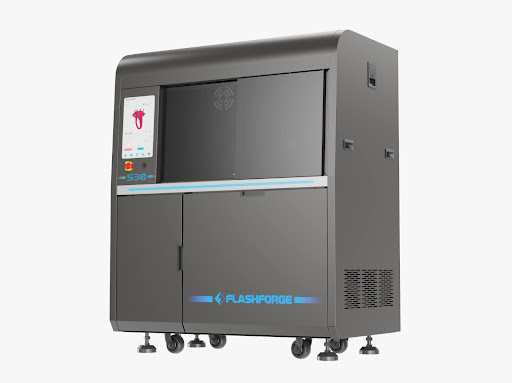
The WaxJet 530, on the other hand, is built for higher productivity. It features three print heads, allowing it to produce wax patterns significantly faster than the WaxJet 510. This increased printing capacity makes it an ideal choice for large jewelry manufacturers and casting houses that handle high production volumes.
Both printers use multi-jet printing technology and support specialized wax materials designed for direct casting applications. They produce wax patterns with ultra-smooth surfaces and extremely fine details, reducing the need for post-processing before casting.
In addition to their technical capabilities, these printers are designed to integrate seamlessly with modern digital workflows. Designers can create models using CAD software and send them directly to the printer for production. This streamlined workflow reduces manual intervention and improves overall production efficiency.
WaxJet 530 Price in India
For jewelry manufacturers considering this technology, one of the most common questions is about the WaxJet 530 price in India. Industrial 3D printers represent a significant investment, so understanding their cost structure is essential before making a purchasing decision.
The average market price of the WaxJet 530 in India is approximately ₹51,00,000, although the exact price may vary depending on the supplier, installation services, and additional accessories included in the package. Similarly, the WaxJet 510 typically costs around ₹27,00,000, making it a more affordable option for businesses with lower production requirements.
These prices reflect the advanced technology and industrial capabilities of the machines. WaxJet printers are designed to operate in professional manufacturing environments where reliability, accuracy, and efficiency are critical.
WaxJet Printer Price Comparison
Printer Model
Approx Price in India
Print Heads
Build Volume
WaxJet 510
₹27,00,000
Single
289 × 208 × 100 mm
WaxJet 530
₹51,00,000
Three
289 × 208 × 150 mm
While the price of the WaxJet 530 may appear high initially, many manufacturers find that the investment pays off through increased productivity, reduced labor costs, and improved design capabilities.
Technical Specifications of WaxJet 510 vs WaxJet 530
Understanding the technical specifications of the WaxJet printers helps businesses evaluate which model best fits their production requirements.
Feature
WaxJet 510
WaxJet 530
Technology
Multi-Jet Wax Printing
Multi-Jet Wax Printing
Build Volume
289 × 208 × 100 mm
289 × 208 × 150 mm
Print Heads
Single
Three
Layer Thickness
0.008 – 0.015 mm
0.008 – 0.015 mm
Accuracy
±0.008 mm
±0.008 mm
Material Type
Direct Casting Wax
Direct Casting Wax
Power Requirement
220V / 50 Hz
220V / 50 Hz
These specifications highlight the key differences between the two machines. While both printers offer exceptional precision and surface quality, the WaxJet 530 provides a larger build volume and higher productivity due to its multiple print heads.
Key Features of WaxJet 530
The WaxJet 530 stands out as a powerful industrial wax 3D printer designed for high-volume jewelry production. One of its most important features is the multi-jet printing system, which uses three synchronized print heads to deposit wax layers quickly and accurately. This allows manufacturers to produce multiple wax patterns simultaneously, significantly increasing production efficiency.
Another important feature is its ultra-fine layer resolution, which enables the printer to produce extremely detailed models. This level of precision is essential for jewelry pieces that include delicate filigree patterns, engraved text, or intricate gemstone settings.
The printer also delivers ultra-smooth surface finishes, which reduce the need for manual polishing before casting. This helps streamline the production process and ensures consistent results across large batches.
Additionally, the WaxJet 530 is designed for reliability and continuous operation. Industrial jewelry manufacturers often run their printers for extended periods, and the WaxJet system is built to handle demanding production schedules without compromising quality.
Applications of WaxJet 3D Printers
WaxJet printers are widely used in various segments of the jewelry industry due to their ability to produce highly detailed wax patterns.
Jewelry Manufacturing
Jewelry manufacturers use WaxJet printers to create wax models for rings, necklaces, bracelets, earrings, and pendants. These patterns are later used in the investment casting process to produce metal jewelry pieces. The precision of the printed wax models ensures that the final cast product matches the original design accurately.
Casting Foundries and Design Studios
Casting foundries rely on wax printers to produce consistent wax models for large production runs. Design studios also use them to prototype new jewelry designs before moving into full-scale manufacturing.
The flexibility of WaxJet technology allows businesses to produce both custom one-off pieces and large production batches, making it suitable for a wide range of jewelry production workflows.
Benefits of Using WaxJet Printers for Jewelry Production
Adopting WaxJet printing technology offers several significant advantages for jewelry manufacturers.
Faster Production and Reduced Manual Work
One of the most important benefits is the ability to automate wax pattern production. Instead of relying on manual carving, manufacturers can print multiple patterns simultaneously, reducing production time and labor costs.
Improved Casting Accuracy
Another major advantage is improved accuracy. WaxJet printers produce patterns with tolerances as tight as ±0.008 mm, ensuring precise gemstone settings and high-quality casting results.
These benefits allow manufacturers to increase productivity while maintaining consistent quality across their products.
Why Choose WaxJet Printers from Lodestar3D
Choosing the right supplier is just as important as choosing the right printer. Lodestar Innovations Pvt. Ltd. is an authorized supplier of WaxJet printers in India and provides complete solutions for jewelry manufacturers.
PAN India Installation and Support
Lodestar offers nationwide installation, training, and service support, ensuring that businesses can operate their printers efficiently. Their technical team assists with setup, calibration, and troubleshooting, helping manufacturers get the most out of their equipment.
Materials, Training, and Technical Expertise
The company also supplies specialized wax materials designed specifically for jewelry casting applications. In addition, Lodestar provides training programs to help businesses integrate WaxJet technology into their production workflows.
With extensive experience in industrial 3D printing, Lodestar serves as a reliable partner for companies looking to modernize their jewelry manufacturing processes.
Conclusion
The WaxJet 530 is a powerful industrial wax 3D printer designed to transform jewelry manufacturing. With its multi-jet printing technology, ultra-fine resolution, and high production capacity, it enables manufacturers to produce detailed wax patterns quickly and efficiently.
Although the WaxJet 530 price in India is around ₹51 lakh, the investment can significantly improve productivity and reduce manual labor in jewelry production. When combined with advanced digital design tools and reliable supplier support, WaxJet printers offer a complete solution for modern jewelry casting workflows.
While it can be used by small businesses, the WaxJet 530 is generally more suitable for medium to large jewelry manufacturers due to its industrial capacity and price range.